Key Takeaways
- Revenue Impact: A 1-point increase in your hotel's online review score can boost your Average Daily Rate (ADR) by 11.2%.
- Platform Mastery: Identify and monitor all relevant platforms, from Google Business Profile and TripAdvisor to social media and specialized review sites.
- Proactive Response: Implement timely and tailored response strategies for all reviews—positive, neutral, and negative—to shape guest perception.
- Score Enhancement: Systematically encourage feedback during and after stays, resolving issues on-site to reduce negative reviews by up to 70%.
- Crisis Preparedness: Develop a clear crisis communication plan to manage and mitigate viral negativity, maintaining transparency and trust.
Why Digital Reputation Determines Revenue
In the hotel industry, digital reputation has a direct and determining impact on revenue. According to recent research by Cornell University, a 1-point increase in a hotel's online review score (out of 5) has the potential to increase the average room rate (ADR) by 11.2%. Furthermore, TripAdvisor data indicates that 81% of travelers read at least 6-12 reviews before making a reservation.
These figures clearly demonstrate: Digital reputation management is no longer a "nice to have," but an integral part of revenue management. So, how can you effectively manage reviews, scores, and mentions scattered across dozens of different platforms?
Platform Map: Where Are You Being Talked About?
The first step in hotel reputation management is knowing which platforms your brand is represented and discussed on:
Primary platforms (high impact):
- Google Business Profile: 73% of hotel searches in Turkey begin on Google. Google scores and reviews directly affect visibility in map results.
- TripAdvisor: The most trusted hotel review platform worldwide. 89% of hotels in Turkey are listed on TripAdvisor.
- Booking.com: Review score is one of the most critical factors in its ranking algorithm. Hotels with scores above 8.5 receive 35% more clicks than those below.
Secondary platforms (medium impact):
- Expedia/Hotels.com: Especially important for international guests
- Google Maps: Critical for local search results
- Facebook: Review and recommendation system
- Instagram: Tagging and mentions
Tertiary platforms (to be monitored):
- Twitter/X: Instant complaints and crisis potential
- Reddit/forum sites: Detailed experience sharing
- Şikayetvar.com: Turkey-specific consumer complaint platform
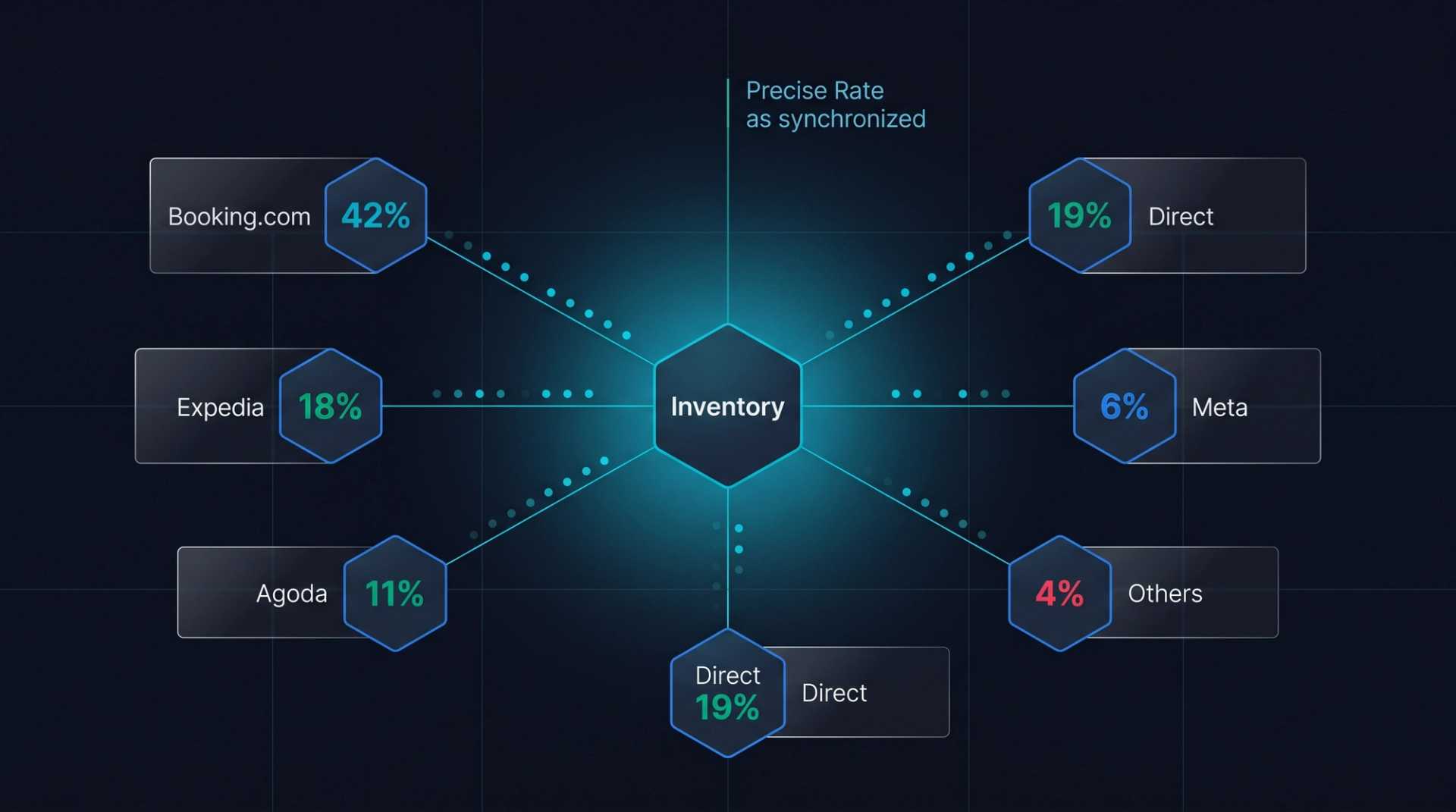
You can monitor all these platforms from a single center and respond quickly, analyzing trends, with OtelCiro's OtelGPT feature.
Related reading: Strategies to Increase Hotel Brand Awareness
Review Monitoring and Early Warning System
The heart of digital reputation management is a proactive monitoring system. Instead of noticing reviews days later, you need to track them in real time:
Daily monitoring routine:
- Morning: Check new reviews on Google Business, TripAdvisor, and Booking.com
- Noon: Review social media mentions and tags
- Evening: Complete unanswered reviews and generate the daily report
Setting up an automatic alert system:
- Set up notifications for your hotel name and variations with Google Alerts
- Track brand mentions with social media monitoring tools
- Keep OTA platform notification settings active
- Set up instant SMS/email notifications for negative reviews
Early warning indicators:
- A drop of more than 0.3 points in the weekly average score
- Negative reviews concentrating on a specific issue (cleanliness, noise, staff)
- Potential for viral negative content on social media
- Increase in competitors' scores (relative position loss)
Response Strategy: How to Reply to Every Review
Responses to reviews directly shape potential guests' perception of your hotel. According to BrightLocal research, 89% of consumers read business responses to reviews, and 57% avoid businesses with unanswered reviews.
Responding to positive reviews (5-4 points):
- Respond within 24 hours
- Use the guest's name
- Refer to a specific detail ("We're glad you enjoyed your spa experience")
- Extend an invitation for a return visit
- Length: 2-4 sentences
Responding to neutral reviews (3 points):
- Respond within 12 hours
- Thank them for positive points
- Promise improvement on criticized issues
- Share contact information to move the dialogue to a private channel
- Length: 3-5 sentences
Responding to negative reviews (2-1 points):
- Respond within 6 hours (urgent)
- Apologize — do not get defensive
- Specifically acknowledge the problem
- Offer a concrete solution or compensation
- Share the contact information of the responsible person
- Length: 4-6 sentences, professional and empathetic tone
An Istanbul hotel, after reducing its negative review response time from 72 hours to 4 hours, recorded a 0.4-point increase in its overall review score and an 18% improvement in repeat guest rates.
Score Improvement Tactics
Improving your review score requires a systematic approach:
Proactive feedback during the stay:
- First night after check-in: Send a short satisfaction survey (WhatsApp or app)
- Intervene immediately if a problem is detected — if an issue is resolved at the hotel, the likelihood of a negative review decreases by 70%
- Before check-out: Conduct an in-person satisfaction inquiry
Post-stay review encouragement:
- Send an automated email with a review link 24-48 hours after check-out
- Prioritize Google or TripAdvisor links (most impactful platforms)
- Make it easy to write a review: One-click redirection
- Offer a small incentive for future stays to those who write a review (complimentary coffee, late check-out)
Caution: What NOT to do:
- Writing or commissioning fake reviews (platform penalties are severe)
- Asking only satisfied guests for reviews (unethical and detectable)
- Attempting to delete negative reviews (damages credibility)
Crisis Management: Preparing for Viral Negativity
In the age of social media, a guest complaint can go viral in minutes. It is essential to prepare your crisis communication plan in advance:
Crisis response protocol:
- First 30 minutes: Identify the situation, inform the team, monitor content
- First 2 hours: Publish the initial official response (empati + promise of investigation)
- First 24 hours: Share a detailed explanation + concrete action plan
- First week: Document and share implemented changes
Golden rules during a crisis:
- Never stay silent — silence creates an perception of guilt
- Do not downplay the problem or blame the guest
- Maintain tight internal communication — conflicting messages escalate the crisis
- Seek professional PR support if necessary
Digital reputation management is not a one-time project but a continuous system. Every review is an opportunity, every response is a brand message. When you manage this system with discipline, your reputation transforms into your strongest competitive advantage.
![Europe's Hotel Construction Boom: 2026 Oversupply Risks [Market Analysis]](https://cdn.sanity.io/images/1la98t0z/production/6dfe59137f56aa14bfcba86d9db3cf05ff89f406-2752x1536.jpg?w=1920&q=50&auto=format&fit=max)