![Hotel D&I: Workforce Strategy for Growth [Guide]](https://cdn.sanity.io/images/1la98t0z/production/df52b05af23f9ccf763c0994575b36d7ef58c81c-2752x1536.jpg?w=1920&q=65&auto=format&fit=max)
Key Takeaways
- Diversity & Inclusion (D&I) is a strategic business imperative, directly boosting hotel profitability by up to 36% and guest satisfaction by 12-18%.
- Effective D&I goes beyond headcount; it creates an inclusive culture where every employee feels valued, fostering a strong sense of belonging, equal opportunity, and respect.
- Inclusive recruitment requires bias-free job postings and structured interview techniques, which can increase hiring decision accuracy by 26% and diversity rates by 30%.
- Cultivating an inclusive work environment involves ongoing unconscious bias training, active Employee Resource Groups (ERGs)—which can raise employee engagement scores by 22%—and continuous leadership support.
- Regularly measuring D&I metrics (representation, promotion, pay equity, satisfaction, turnover) and preparing annual reports are essential for transparent progress tracking and accountability.
Why is Diversity a Strategic Imperative in Hospitality?
Hospitality is, by its very nature, an industry where people from different cultures work together and serve guests from various cultural backgrounds. However, the concepts of diversity and inclusion (D&I) are often perceived merely as a "gesture of goodwill." Yet, data clearly shows that diversity directly impacts business results.
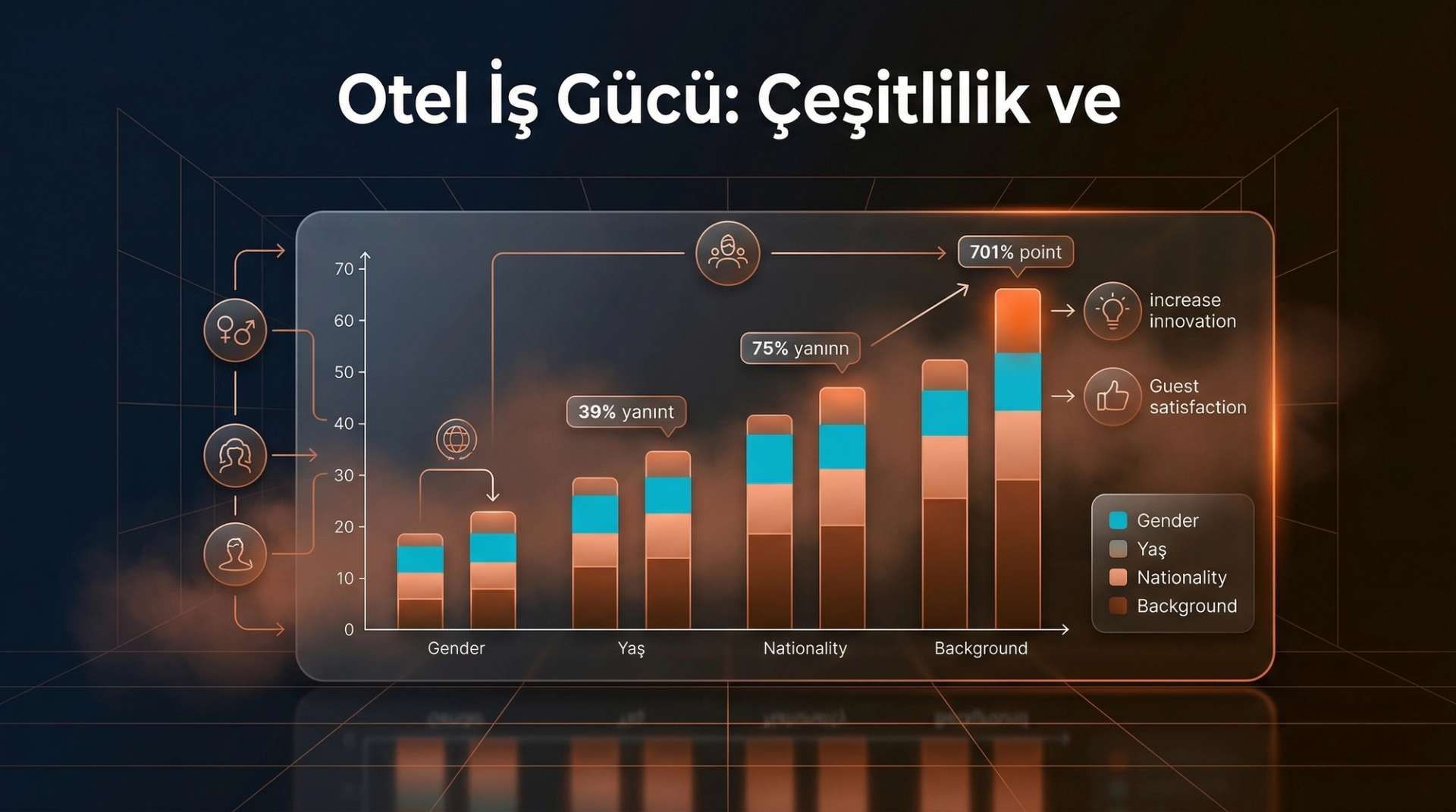
According to McKinsey's 2025 report, companies in the top quartile for workforce diversity achieve 36% higher profitability than the industry average. Hospitality-specific research indicates that hotels with diverse teams have guest satisfaction scores that are 12-18% higher. The reason is simple: diverse perspectives enable a better understanding and fulfillment of different guest needs.
Embed this image on your site
<a href="https://otelciro.com/en/news/hotel-d-i-workforce-strategy-for-growth-guide">
  <img src="https://cdn.sanity.io/images/1la98t0z/production/df52b05af23f9ccf763c0994575b36d7ef58c81c-2752x1536.jpg" alt="Diversity and Inclusion Hotel Workforce" width="800" />
</a>
<p>Source: <a href="https://otelciro.com">OtelCiro</a> — AI Hotel Revenue Management</p>
Related reading: Employee Recognition and Reward Program: Boosting Motivation
Concepts of Diversity and Inclusion
Diversity and inclusion are related but distinct concepts. Diversity answers the question "who is here," while inclusion answers the question "does everyone feel valued?"
Dimensions of Diversity
In hospitality, diversity is a multi-dimensional concept:
- Gender diversity: The proportion of female employees in the Turkish hospitality sector is 33%. This rate drops to 18% at the management level. Addressing gender imbalance across the industry is critical for both fairness and business outcomes.
- Age diversity: The coexistence of different generations, from Gen Z to baby boomers, offers advantages in terms of knowledge transfer and innovation. However, intergenerational communication differences must be managed.
- Ethnic and cultural diversity: Turkey's geographical location and tourism potential make a multicultural workforce both inevitable and advantageous. Staff who speak different languages and understand various cultural sensitivities provide higher quality service to international guests.
- Employment of individuals with disabilities: Beyond legal obligations, the employment of individuals with disabilities in the hospitality sector is important for social responsibility and diversity. Many positions can be successfully filled by individuals with disabilities through physical accommodations and job description adaptations.
- Educational diversity: In addition to staff with tourism education, employees from different disciplines (psychology, communication, data science) contribute diverse perspectives to the hotel's service quality.
Principles of Inclusion
The true value of diversity emerges only within an inclusive culture. Principles of inclusion:
- Sense of belonging: Every employee feeling like a valued part of the team.
- Equal opportunity: Fairness in promotions, training, and task assignments.
- Voice: Employees at all levels being able to freely share their ideas.
- Respect and dignity: Respect for differences and zero tolerance for discrimination.
Inclusive Recruitment Processes
Diversity begins in the recruitment process. Unconscious biases can systematically disadvantage certain groups in traditional hiring methods.
Bias-Free Job Posting
The language of job postings directly influences the applicant profile. Research shows that terms like "aggressive," "dominant," and "competitive" reduce female applications by 20%. Instead, inclusive terms like "collaborative," "innovative," and "growth-oriented" should be used.
Furthermore, unnecessary qualification requirements should be avoided. Restrictions such as "under 35 years old," "male candidates preferred," or "completed military service" are problematic both legally and ethically.
Structured Interview Techniques
Unstructured interviews are the most prone to bias assessment method. With structured interview techniques:
- All candidates are asked the same questions, in the same order.
- Responses are evaluated against a predefined scoring rubric.
- The interview panel consists of at least two individuals and includes diverse profiles.
- The focus is on "can they do the job" rather than "do they fit in."
This approach increases the accuracy of hiring decisions by 26% while also raising diversity rates by 30%.
Attracting Candidates from Diverse Sources
Traditional job posting channels provide access to a candidate pool with a specific demographic profile. To increase diversity:
- Collaborate with NGOs supporting female employment.
- Post job advertisements on platforms for the employment of individuals with disabilities.
- Partner with different universities and vocational schools.
- Offer diversity incentives in employee referral programs.
Fostering an Inclusive Work Culture
Achieving diversity in hiring is not enough; it's essential to create a culture where diverse profiles want to stay. An inclusive culture requires conscious and continuous effort.
Unconscious Bias Training
Everyone has unconscious biases, and these affect decision-making processes. Regular unconscious bias training helps employees recognize and manage their own biases. These training sessions:
- Should be provided to all employees at least once a year.
- Should include more comprehensive and in-depth modules for management.
- Should be supported by case studies and scenario exercises beyond theoretical knowledge.
- Should establish follow-up mechanisms to measure behavioral changes after training.
Employee Resource Groups
Employee Resource Groups (ERGs) are voluntary communities where employees with similar identities or experiences come together. ERGs, such as a women's leadership network, a young professionals group, or an intercultural dialogue platform, strengthen employees' sense of belonging.
To be effective, ERGs should be provided with management support, budget allocation, and visibility. Employee engagement scores in hotels with ERGs are, on average, 22% higher.
Related reading: Exit Interview Analysis: Understanding Reasons for Staff Turnover
Measurement and Reporting
The principle "what you can't measure, you can't manage" also applies to diversity and inclusion efforts. Regular tracking of D&I metrics allows for progress monitoring and evaluation of policy effectiveness.
Key D&I Metrics
- Representation rates: Gender, age, and employees with disabilities ratios (by department and level).
- Promotion rates: Comparison of promotion rates among different groups.
- Pay equity: Analysis of pay gaps based on gender or other factors among employees in the same position.
- Employee satisfaction scores: Inter-group differences in dimensions of belonging, fairness, and respect.
- Turnover rates: Comparison of turnover rates among different groups.
- Complaints and reports: Number of discrimination or harassment reports and resolution times.
OtelCiro's operations management module helps monitor D&I metrics by analyzing staff data by department and category.
Annual D&I Report
Preparing an annual diversity and inclusion report provides both accountability to internal stakeholders and transparency to external stakeholders. This report should include:
- Current state analysis and comparison with the previous year.
- Goals and achievement rates.
- Implemented programs and their impacts.
- Future goals and action plan.
Reflections on Guest Experience
The most tangible outcome of a diverse and inclusive workforce is reflected in the guest experience. Staff who speak different languages, understand various cultural norms, and possess diverse perspectives provide more empathetic and personalized service to international guests.
According to Deloitte research, hotels with diverse teams have:
- Online review scores that are 8-12% higher.
- A repeat visit rate that is 15% higher.
- A guest complaint rate that is 20% lower.
- A market share in the international guest segment that is 25% wider.
These figures clearly demonstrate that diversity and inclusion are not merely social responsibilities but also business strategies that provide profitability and competitive advantage.
Diversity and inclusion are cornerstones of sustainable success in the hospitality sector. A D&I strategy supported by inclusive recruitment processes, unconscious bias training, employee resource groups, and regular measurement mechanisms elevates both employee satisfaction and guest experience. OtelCiro's operations management solutions provide the data infrastructure for this transformation, helping hotels achieve their D&I goals.
![Europe's Hotel Construction Boom: 2026 Oversupply Risks [Market Analysis]](https://cdn.sanity.io/images/1la98t0z/production/6dfe59137f56aa14bfcba86d9db3cf05ff89f406-2752x1536.jpg?w=1920&q=50&auto=format&fit=max)