Key Takeaways
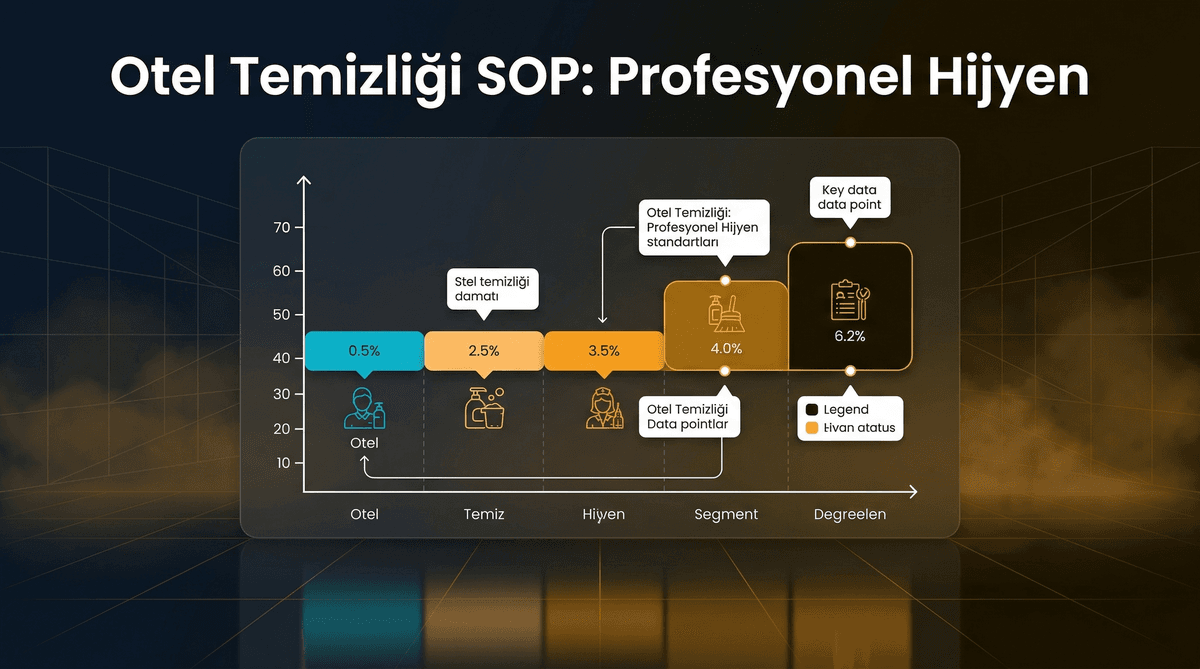
- Implement robust Cleaning SOPs to significantly enhance guest satisfaction and operational efficiency, reducing complaints by 60% and boosting productivity by 25%.
- Follow detailed protocols for guest room (checkout/stayover) and common area cleaning, including specific time targets and quality benchmarks.
- Prioritize chemical management and safety, ensuring proper classification, secure storage, correct dosage, and mandatory PPE use.
- Establish a multi-level quality control system, utilizing staff self-audits, supervisor checks, scoring forms, and ATP hygiene tests.
- Leverage technology for digital work orders, real-time tracking, and performance reporting to optimize cleaning processes and achieve higher quality scores.
Cleaning SOPs: The Foundation of Guest Satisfaction
In the hotel industry, cleanliness is the number one factor influencing guest satisfaction. According to TripAdvisor data, 38% of negative reviews are related to cleanliness complaints, and hotels with cleanliness scores below 4.0 experience an average 22% decrease in occupancy rates. Standard Operating Procedures (SOPs) transform cleaning quality from a person-dependent task into a systematic structure.
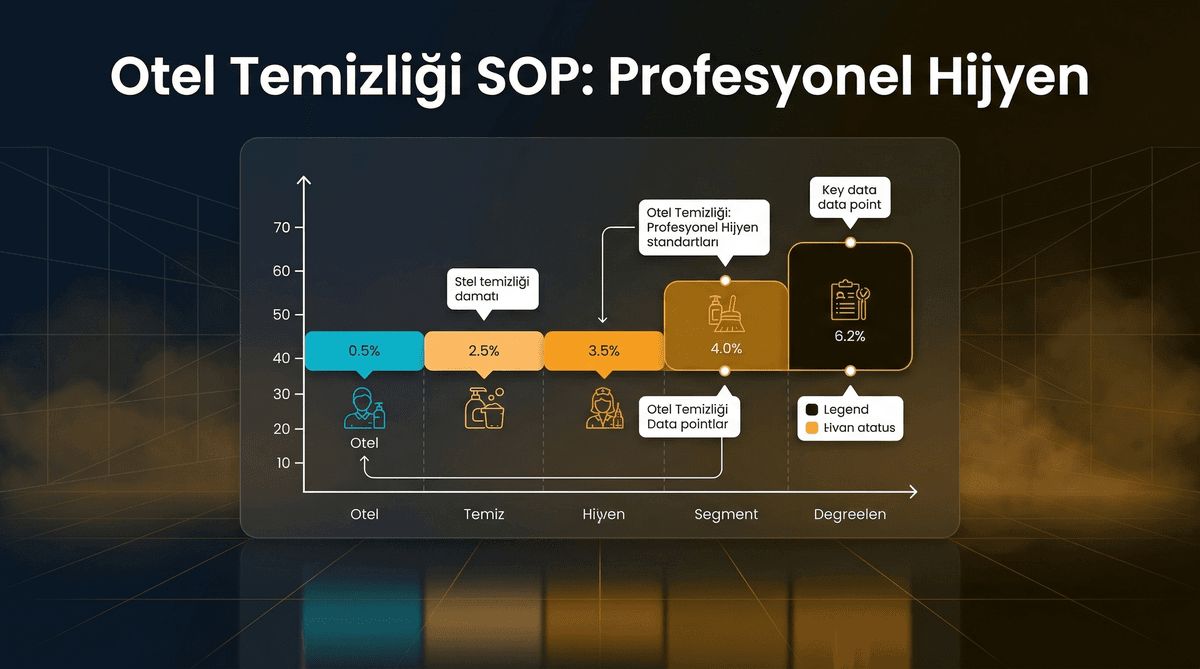
An effective cleaning SOP ensures that every staff member applies the same standards. Industry data shows that hotels implementing SOPs reduce cleanliness complaint rates by 60%, while increasing staff efficiency by 25%. In the post-pandemic era, guest hygiene expectations have permanently risen, and by 2026, these expectations can only be met with systematic SOPs.
Embed this image on your site
<a href="https://otelciro.com/en/news/hotel-cleaning-sops-2026-strategy-guide">
  <img src="https://cdn.sanity.io/images/1la98t0z/production/16db558df084b6a712aed4375042eb7ff37c6aae-1200x669.png" alt="Hotel Cleaning Standard Operating Procedures" width="800" />
</a>
<p>Source: <a href="https://otelciro.com">OtelCiro</a> — AI Hotel Revenue Management</p>
Related reading: Hotel Housekeeping Automation Guide
Guest Room Cleaning Procedures
Room cleaning is the most critical process in housekeeping. Every room cleaning must be done in a specific sequence and standard.
Checkout Room Cleaning Protocol (Target: 35-45 minutes)
Step 1: Preparation (3 minutes)
- Knock on the door three times, announce "Housekeeping," wait 10 seconds, knock again
- Upon entering the room, open all curtains and windows (for ventilation)
- Check minibar and record any missing items
- Conduct a damage/loss inspection
Step 2: Bed and Linens (8 minutes)
- Remove all bed sheets, pillowcases, and duvet covers
- Sort dirty laundry and place it in the laundry bag
- Check the mattress (for stains, damage)
- Make the bed with clean linens in order: fitted sheet, top sheet, duvet, decorative pillows
- Fold bed corners using the hospital corner method
Step 3: Bathroom (12 minutes)
- Collect used towels
- Clean the inside and outside surfaces of the toilet with disinfectant cleaner
- Clean the shower/bathtub area with descaler and disinfectant
- Clean and polish the sink and countertop
- Wipe mirrors and glass surfaces with a streak-free cleaner
- Dry mop the floor
- Place clean towels in standard folding arrangement
- Check amenities and replenish missing items (shampoo, soap, shower gel, toothbrush)
Step 4: General Room (10 minutes)
- Dust all surfaces from top to bottom (lamps, top of cabinets, TV, nightstands)
- Wipe furniture surfaces with a damp cloth
- Check inside drawers and cabinets (for forgotten items)
- Empty trash cans and replace liners
- Restock the minibar
- Organize informational materials (hotel guide, menu)
Step 5: Floor (5 minutes)
- Vacuum the carpet (including corners and edges)
- Mop hard floors if present
- Pay special attention to the entrance area (first impression)
Step 6: Final Check (2 minutes)
- Check all lights, television, and air conditioning
- Set the thermostat to standard temperature (22°C)
- Adjust curtains to standard position
- Perform a final glance before leaving the room
- Close the door and update room status to "clean" on the PMS
Stayover Room Cleaning Protocol (Target: 20-25 minutes)
Different rules apply to occupied guest rooms:
- Never move guest belongings; only tidy them
- Follow bed-making preference (some guests do not want their bed made)
- Do not enter the room if a "Do Not Disturb" sign is present and record the situation
- Replenish bathroom amenities, but do not replace half-full ones
- Group personal items neatly (e.g., desktop items)
Common Area Cleaning Procedures
Common areas are the face of the hotel. It has been proven that a guest forms an opinion about room cleanliness based on the lobby's cleanliness.
Lobby and Reception (Frequency: Hourly check)
| Area | Cleaning Detail | Frequency |
|---|---|---|
| Floor | Vacuum + damp mop | Every 2 hours |
| Furniture | Dusting + disinfectant | Every 4 hours |
| Glass doors | Fingerprint removal | Hourly |
| Countertops | Disinfectant wipe | After each interaction |
| Trash cans | Check and empty | Every 2 hours |
| Flowers/plants | Water check, leaf cleaning | Daily |
| Lighting | Dusting | Weekly |
Restaurant and Bar Areas
Before service (Before each meal):
- Disinfect all tables and chairs
- Vacuum and damp mop the floor
- Clean glass and mirror surfaces
- Check menus and condiment sets
- Replenish salt shakers, pepper shakers, and napkin holders
During service:
- Immediately clean vacated tables (3-minute rule)
- Promptly clean up spills of food/beverages on the floor
- Check restrooms every 30 minutes
After service:
- Deep clean all surfaces
- Disinfect kitchen connection areas
- Remove trash and perform general floor cleaning
Elevators and Corridors
- Elevator buttons and door handles disinfected hourly
- Corridor carpets vacuumed daily, deep cleaned weekly
- Corridor lighting fixtures dusted weekly
- Fire exits and stairwells cleaned daily
Related reading: Hotel Automation and Business Processes
Chemical Management and Safety
The correct use of cleaning chemicals is critical for both effectiveness and safety. Incorrect chemical use accounts for 12% of workplace accidents.
Chemical Classification
| Chemical Type | Use Area | pH Range | Safety Note |
|---|---|---|---|
| Neutral cleaner | General surfaces | 6-8 | Safe, gloves recommended |
| Alkaline cleaner | Grease, oil removal | 10-12 | Gloves and goggles mandatory |
| Acidic cleaner | Limescale, rust removal | 2-4 | Gloves, goggles, ventilation |
| Disinfectant | All surfaces | 6-10 | Contact time important (10 min) |
| Glass cleaner | Glass, mirrors | 7-8 | Safe |
Safety rules:
- All chemicals must be stored in their original packaging
- Chemicals must never be mixed (especially bleach + acid)
- MSDS (Material Safety Data Sheets) must be accessible in every department
- Personal protective equipment (gloves, goggles, apron) must always be used
Dosage Standards
Correct dosage optimizes cost and guarantees cleaning quality. Automatic dosing systems provide 30% chemical savings and consistent results compared to manual dosing.
Quality Control and Audit System
A systematic audit mechanism is essential to verify the implementation of SOPs.
Audit Levels
- Staff self-audit: 2-minute checklist after each room cleaning
- Supervisor audit: Detailed audit of 1 in every 10 rooms (room scoring form)
- Housekeeping manager audit: Daily random full audit of 5 rooms
- General manager/quality audit: Weekly surprise check of 3 rooms
- External audit: Independent hygiene audit twice a year (including ATP test)
Room Scoring Form
Each audit is evaluated on a 100-point scale:
| Category | Weight | Details |
|---|---|---|
| Bathroom hygiene | 30 points | Toilet, shower, sink, floor |
| Bed arrangement | 20 points | Sheet tension, pillow arrangement |
| Dust and surfaces | 20 points | Furniture, lamps, TV, baseboards |
| Floor | 15 points | Carpet vacuum, corner cleaning |
| General order | 15 points | Amenities, minibar, information |
Targets: Average score 90+, no room should be below 80. Rooms scoring below 80 must be recleaned.
ATP Hygiene Test
ATP (Adenosine Triphosphate) testing measures the biological cleanliness of surfaces. Critical touchpoints in hotels (door handle, remote control, key card reader, toilet flush) should be regularly tested:
- 0-10 RLU: Excellent
- 11-30 RLU: Acceptable
- 31-100 RLU: Inadequate — reclean
- 100+ RLU: Critical — apply disinfection protocol
Training and Staff Development
The success of cleaning SOPs depends on staff training. Every new staff member must receive a minimum of 3 days of practical training before starting their duties.
Training program components:
- Basic hygiene training: Handwashing, personal hygiene, chemical safety (4 hours)
- Practical room cleaning training: One-on-one application in a training room (16 hours)
- Common area procedures: Lobby, restaurant, pool area (8 hours)
- Guest communication: Protocol for encountering guests in rooms, complaint management (4 hours)
- Technology training: PMS room status update, digital work order system (2 hours)
Training should be updated at least twice a year with refresher programs and introductions of new products/procedures.
Technology Integration
Digitalizing cleaning processes with operational management platforms provides significant advantages in terms of efficiency and quality control.
Areas of digitalization:
- Digital work orders: Room cleaning assignments are automated, prioritized by occupancy and checkout times
- Real-time tracking: Instantaneous view of each room's cleaning status
- Digital checklist: Filling out forms on tablets instead of paper, adding photos
- Performance reporting: Staff-based efficiency, time per room, audit scores
Hotels implementing a digital SOP system reduce room turnaround time by 18% and increase cleaning quality scores by 12%.
Conclusion
Cleaning SOPs are the operational backbone of a hotel. Properly designed and implemented procedures increase guest satisfaction, reduce complaints, and enhance staff efficiency.
Steps you can take immediately:
- Observe your current cleaning processes and identify non-standard practices
- Adapt the procedures in this guide to your hotel and create a written SOP document
- Create a quality control scoring form and start weekly audits
- Transition to digital cleaning management with the OtelCiro operational platform
Hotels with improved cleaning standards see an average increase of 0.4 points in review scores, and this increase positively impacts annual revenue by 6-8%.
![Europe's Hotel Construction Boom: 2026 Oversupply Risks [Market Analysis]](https://cdn.sanity.io/images/1la98t0z/production/6dfe59137f56aa14bfcba86d9db3cf05ff89f406-2752x1536.jpg?w=1920&q=50&auto=format&fit=max)