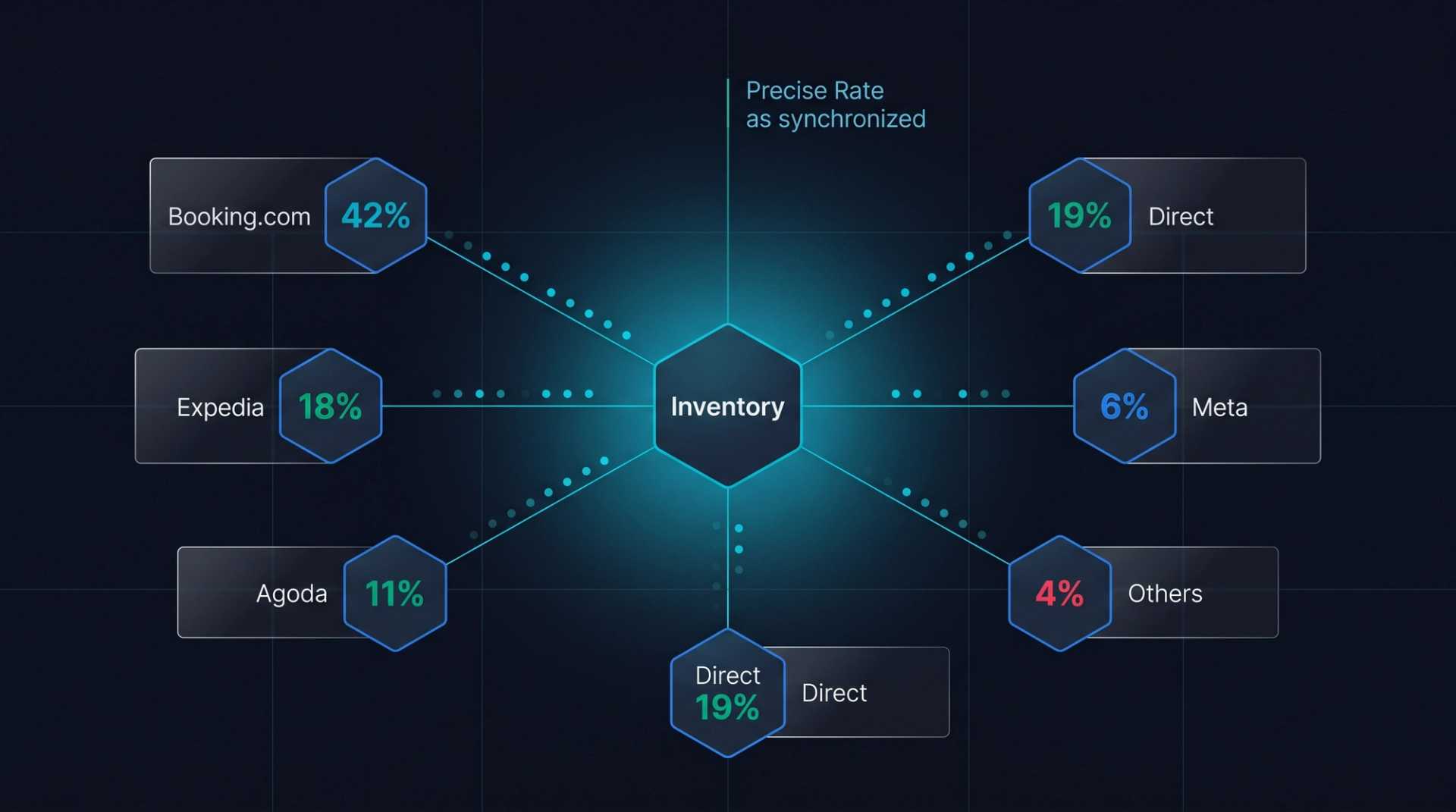
![Hotel Chatbots and AI Assistants: Guest Service Strategy [2026 Guide]](https://cdn.sanity.io/images/1la98t0z/production/a0537d361d0658a3eb6d49a7fb6cd830e0baa7a9-1200x669.png?w=1920&q=65&auto=format&fit=max)
Key Takeaways
- Over 73% of hotel guests prefer using chatbots for routine inquiries like Wi-Fi passwords and check-in times.
- AI assistants are evolving from basic rule-based systems to advanced Generative AI (LLM) models that offer human-like conversation.
- Implementing an AI chatbot can deliver a net ROI of 150-400% through labor savings and increased direct bookings.
- Successful implementation requires seamless PMS integration and a clear handoff protocol for complex human-centric issues.
- The future of hospitality AI lies in proactive, voice-activated assistants that anticipate guest needs.
A Guest Asks a Question at 03:00 AM — Who Answers?
Hospitality is a sector that requires 24/7 service. However, maintaining a full staff at all hours is not economically sustainable. This is exactly where AI chatbots and assistants come into play.
According to a 2025 study by Oracle Hospitality, 73% of hotel guests are willing to receive answers to simple questions (Wi-Fi password, check-in time, parking information) from a chatbot. Even more strikingly, 41% of guests stated they are ready to plan their next stay through an AI assistant.
Hotel chatbots are no longer just a trend; they are a competitive necessity. In this article, we will examine the types of hotel chatbots, the implementation process, and their impact on guest satisfaction.
Embed this image on your site
<a href="https://otelciro.com/en/news/hotel-chatbots-and-ai-assistants-guest-service-strategy-2026-guide">
  <img src="https://cdn.sanity.io/images/1la98t0z/production/a0537d361d0658a3eb6d49a7fb6cd830e0baa7a9-1200x669.png" alt="Hotel chatbot and AI assistant guest service" width="800" />
</a>
<p>Source: <a href="https://otelciro.com">OtelCiro</a> — AI Hotel Revenue Management</p>
Related reading: Hotel Management with Smart PMS: Transitioning from Traditional Systems to AI-Powered Platforms
Related reading: Hotel AI Email Automation: Personalized Communication
Types of Hotel Chatbots
1. Rule-Based Chatbots
These are simple chatbots based on predefined question-and-answer flows. They provide a scripted answer to a question like "What is the check-in time?"
Advantages: Low cost, easy setup, reliable responses Disadvantages: Limited scope, inflexible, cannot answer complex questions
2. AI-Powered Chatbots (NLP)
Chatbots using Natural Language Processing (NLP) technology understand guest intent and generate dynamic responses. They can process open-ended questions such as "Can I book a spa appointment for tomorrow?"
Advantages: Natural conversation experience, self-learning system, wide scope Disadvantages: Medium-high cost, training process required
3. Generative AI Assistants (LLM)
The standout technology of the 2024-2026 period, assistants based on Large Language Models (LLM), generate unique and contextual responses using specific hotel data.
Advantages: Human-like conversation, multi-language support, high personalization Disadvantages: Risk of "hallucinations," cost, data security requirements
Embed this image on your site
<a href="https://otelciro.com/en/news/hotel-chatbots-and-ai-assistants-guest-service-strategy-2026-guide">
  <img src="https://cdn.sanity.io/images/1la98t0z/production/46982eee55bf4225dd55170e11b536c3dcd9b3f4-1200x669.png" alt="Modern hotel API integration ecosystem" width="800" />
</a>
<p>Source: <a href="https://otelciro.com">OtelCiro</a> — AI Hotel Revenue Management</p>
Questions a Hotel Chatbot Should Answer
| Category | Example Questions | Response Rate |
|---|---|---|
| Reservations | Availability, price, cancellation policy | 85%+ |
| General Info | Check-in/out time, address, transport | 95%+ |
| Amenities | Wi-Fi, parking, pool, restaurant | 90%+ |
| Room Services | Room service, extra pillows, minibar | 80%+ |
| Local Area | Nearby restaurants, sightseeing, transport | 75%+ |
| Complaints | Noise, cleaning, technical issues | 60%+ (human handoff) |
Important Rule: For complaints and sensitive issues, the chatbot must always redirect to a human staff member. Automation cannot yet fully replace the empathy required for these situations.
Related reading: e-Invoicing and Digital Accounting in Hotels: GIB Integration Guide (2026)
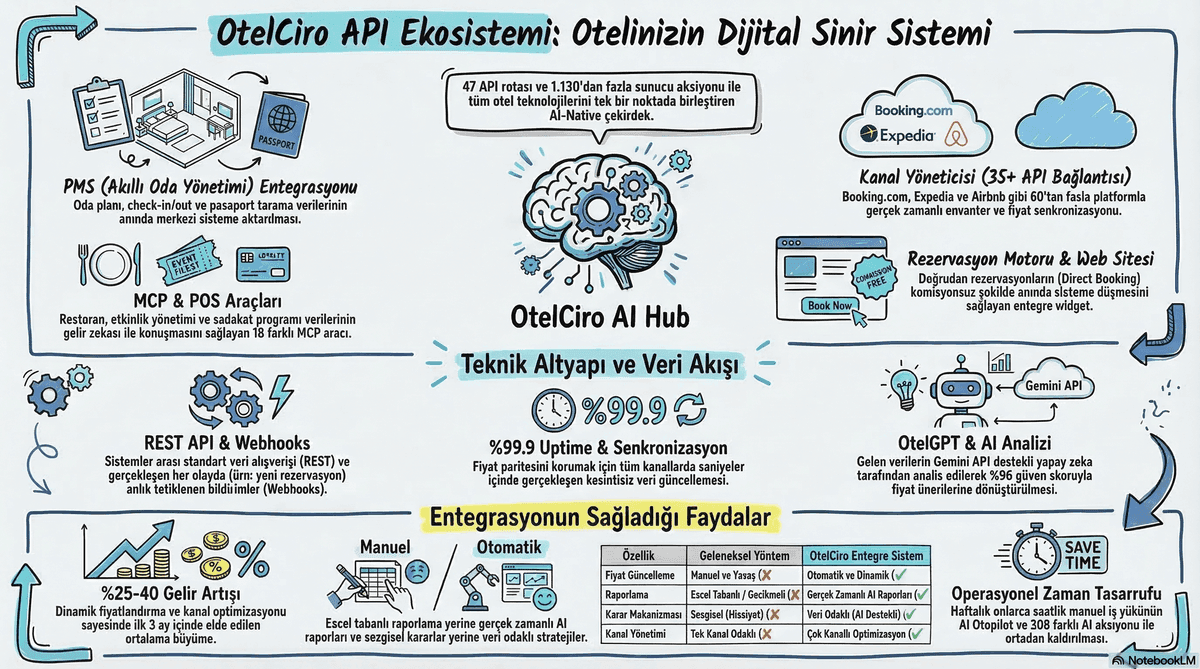
Related reading: Hotel API Integration: The Foundation of Modern Hotel Management
Chatbot Implementation Steps
Step 1: Guest Inquiry Analysis
Categorize questions received at the front desk, via email, and through WhatsApp over the last 6 months. The top 20 most frequently asked questions form the primary scope of your chatbot.
Step 2: Platform Selection
Criteria to consider when evaluating hotel chatbot platforms:
- PMS integration (real-time availability queries)
- Multi-language support (minimum local language + English)
- WhatsApp Business API integration
- Booking.com Messaging API compatibility
- Reporting and analytics
- Seamless handoff to human staff
Step 3: Content Preparation
Build the chatbot's knowledge base:
- All hotel FAQs (Frequently Asked Questions)
- Room types and price ranges
- Restaurant menus and operating hours
- Neighborhood guide (transportation, tourist spots)
- Campaign and package information
Step 4: Testing and Optimization
Test different scenarios before going live, specifically:
- Questions with typos
- Mixed-language queries ("What time is check-in time?")
- Unexpected questions
- Complaint scenarios
Step 5: Phased Rollout
Integrate into your website first, then WhatsApp, and finally the Booking.com messaging system.
Embed this image on your site
<a href="https://otelciro.com/en/news/hotel-chatbots-and-ai-assistants-guest-service-strategy-2026-guide">
  <img src="https://cdn.sanity.io/images/1la98t0z/production/e41b7ac3104ad8488f70d83e78d4135e4a401e88-1200x2150.png" alt="Hotel dynamic pricing model with AI" width="800" />
</a>
<p>Source: <a href="https://otelciro.com">OtelCiro</a> — AI Hotel Revenue Management</p>
ROI Calculation: Does the Chatbot Investment Pay Off?
Estimated ROI calculation for a 100-room hotel:
| Metric | Value |
|---|---|
| Average daily guest inquiries | 40-60 |
| Percentage answered by chatbot | 65-75% |
| Staff time saved | 3-4 hours daily |
| Annual staff cost savings | €12,000-€18,000 |
| Direct bookings via chatbot | 5-15 monthly |
| Annual additional revenue | €8,000-€25,000 |
| Annual chatbot cost | €3,000-€8,000 |
| Net ROI | 150-400% |
The indirect benefits of a chatbot are also vital: faster response times improve Booking.com ranking scores, and 24/7 accessibility increases guest satisfaction.
The Future of AI Assistants: Vocal and Proactive
In 2026, hotel AI assistants are serving guests not just through text, but through voice communication. When a guest tells the smart speaker in their room, "I want breakfast service at 8:00 AM tomorrow," they can be sure the AI assistant will automatically relay the request to the relevant department.
Furthermore, proactive AI assistants offer suggestions by anticipating guest needs: "It will be sunny today, and the sunbeds by the pool are available — would you like to reserve one?"
Related reading: Housekeeping Automation: 7 Steps to Digitalizing Hotel Operations
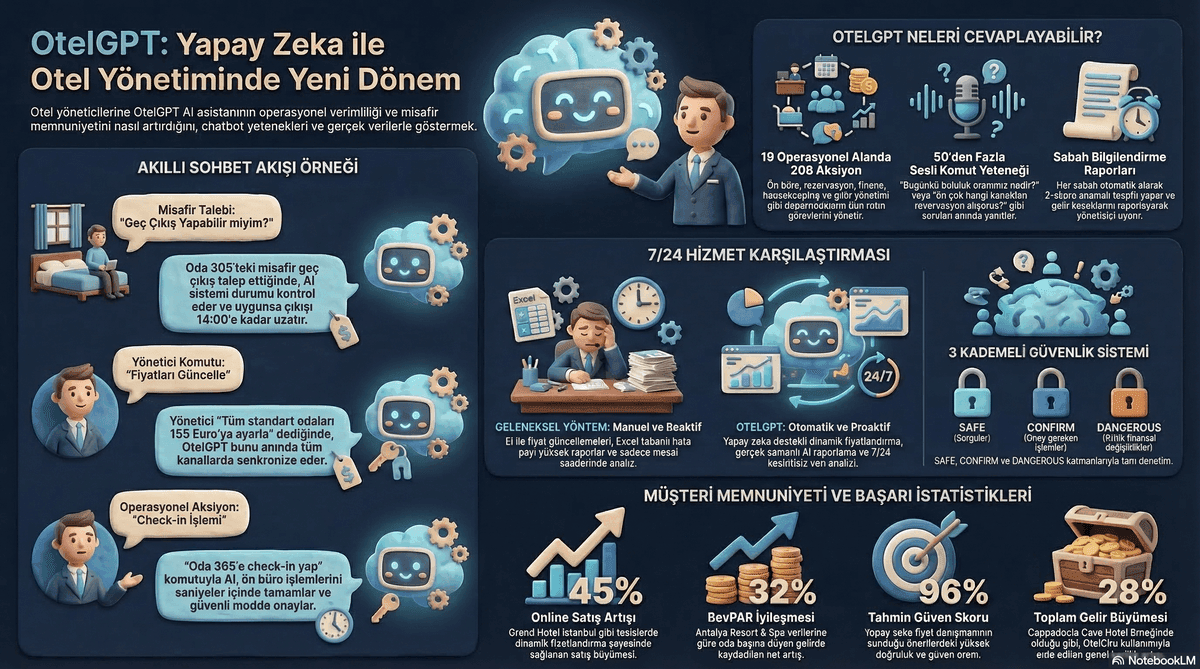
AI Assistant with OtelCiro OtelGPT
OtelCiro’s OtelGPT module offers an AI assistant specifically trained for your hotel. It answers guest questions 24/7, increases direct booking conversions, and lightens the operational load. With multi-language support and PMS integration, it is a complete guest service assistant.
Transform your guest service with OtelGPT
Conclusion
Hotel chatbots and AI assistants have moved from the "nice to have" category to "essential to stay in the race." As guest expectations evolve toward instant responses and 24/7 accessibility, hotels that do not adopt this technology will find themselves at a disadvantage.
Start small — automate your most frequently asked questions first. Then expand the scope, add languages, and multiply your channels.
Discover how you can automate this process with OtelCiro’s OtelGPT.
![Europe's Hotel Construction Boom: 2026 Oversupply Risks [Market Analysis]](https://cdn.sanity.io/images/1la98t0z/production/6dfe59137f56aa14bfcba86d9db3cf05ff89f406-2752x1536.jpg?w=1920&q=50&auto=format&fit=max)