![Hotel BI: Data-Driven Decisions for Revenue Growth [Strategy Guide]](https://cdn.sanity.io/images/1la98t0z/production/18365f26d904a487f2bc0491a9d24c13b5491c6c-1200x669.png?w=1920&q=65&auto=format&fit=max)
Key Takeaways
- Hotels generate vast amounts of data daily, but much of it remains siloed and underutilized, hindering strategic decision-making.
- Business Intelligence (BI) empowers hotels to achieve 15-20% better revenue performance compared to traditional reporting by providing predictive analytics and actionable insights.
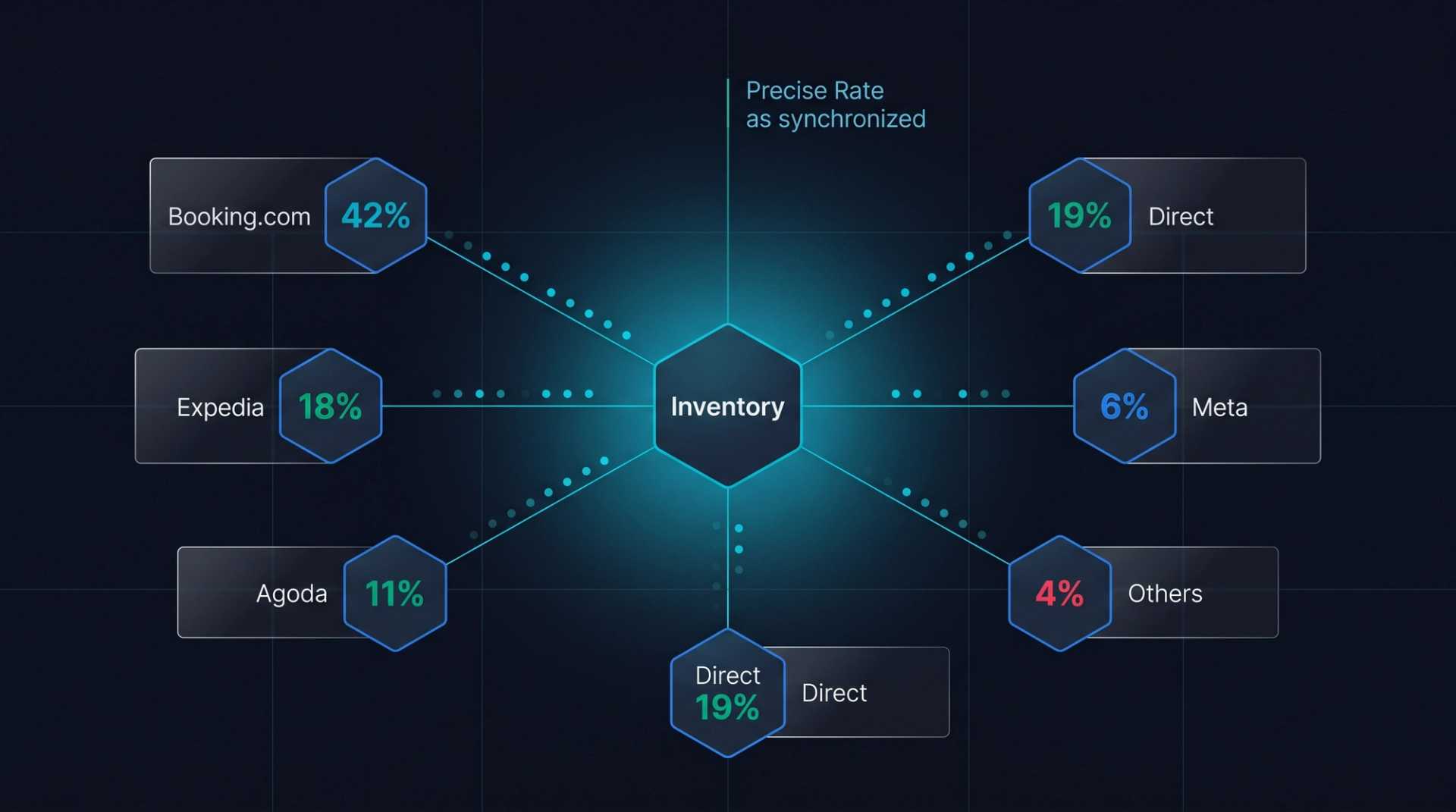
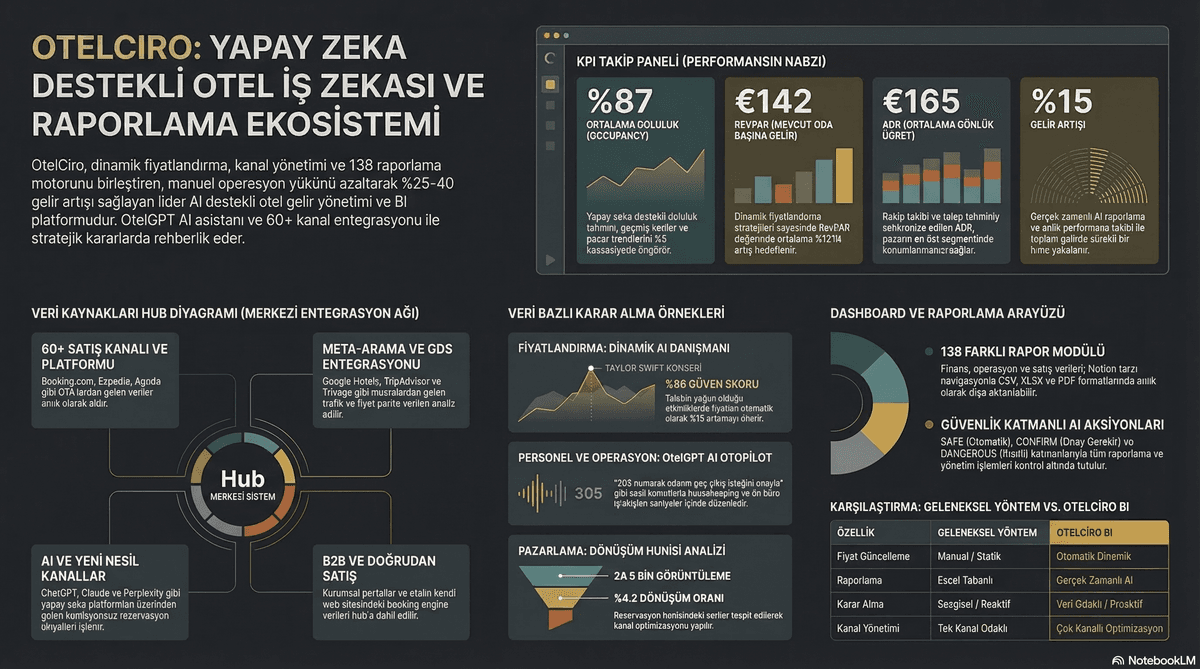
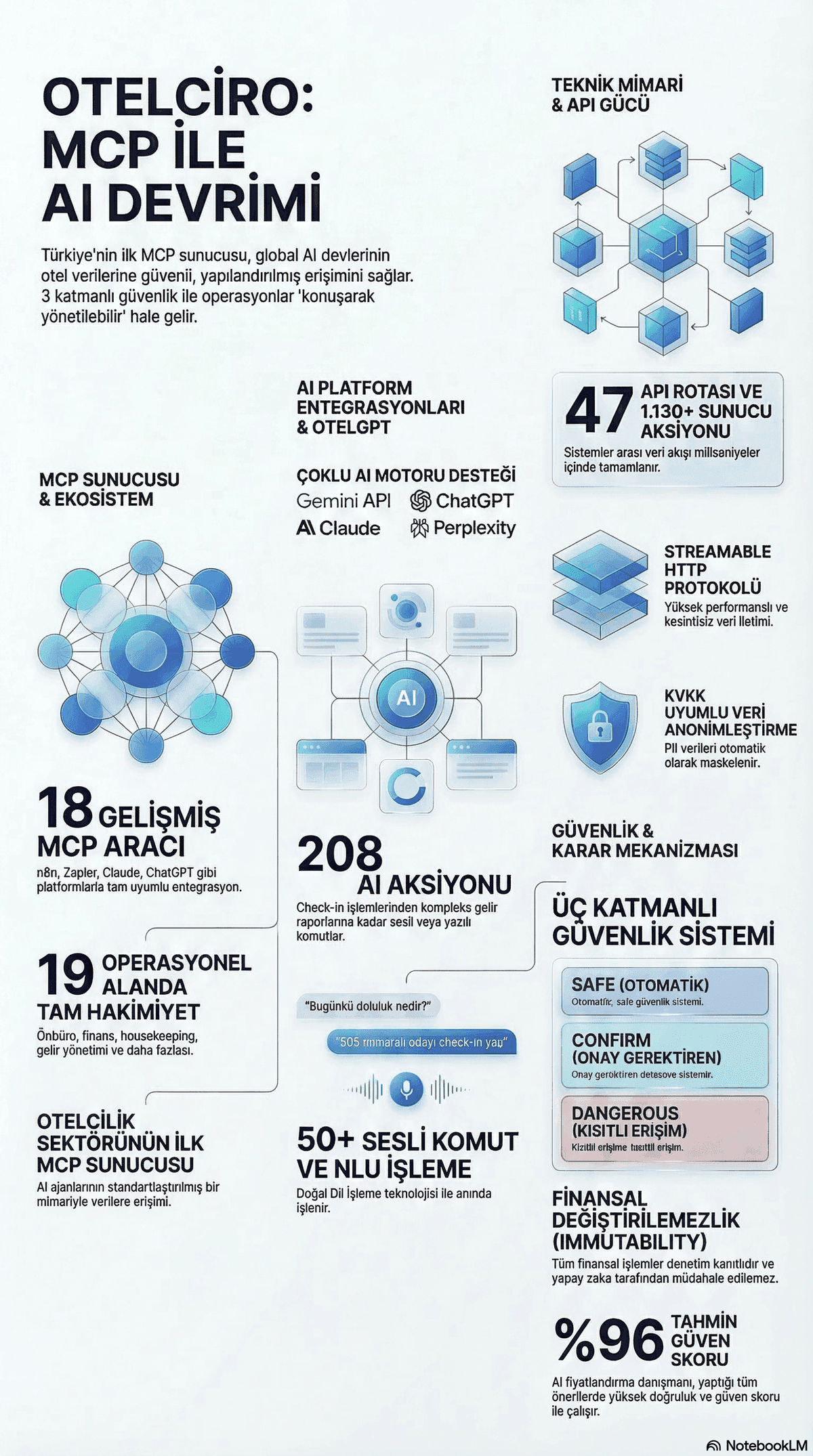
- BI integrates diverse data sources (PMS, CRM, POS, channel managers) into real-time, interactive dashboards for a holistic view of operations.
- Key Performance Indicators (KPIs) covering revenue, distribution, operations, and guest metrics are essential for effective data analysis and strategic adjustments.
- Successful BI implementation involves inventorying data, prioritizing KPIs, establishing robust integrations, designing role-specific dashboards, and fostering an action-oriented data culture.
You Have the Data — But Are You Using It?
An average hotel generates terabytes of data daily from its operations: reservation data, guest profiles, rate changes, channel performance, F&B sales, housekeeping durations, review scores, and much more. However, most of this data remains scattered across different systems and cannot be transformed into strategic decisions.
According to research by Hospitality Financial and Technology Professionals (HFTP), 72% of hotel managers state they want to make data-based decisions but find current reporting tools insufficient. Business Intelligence (BI) is the technology that fills this gap.
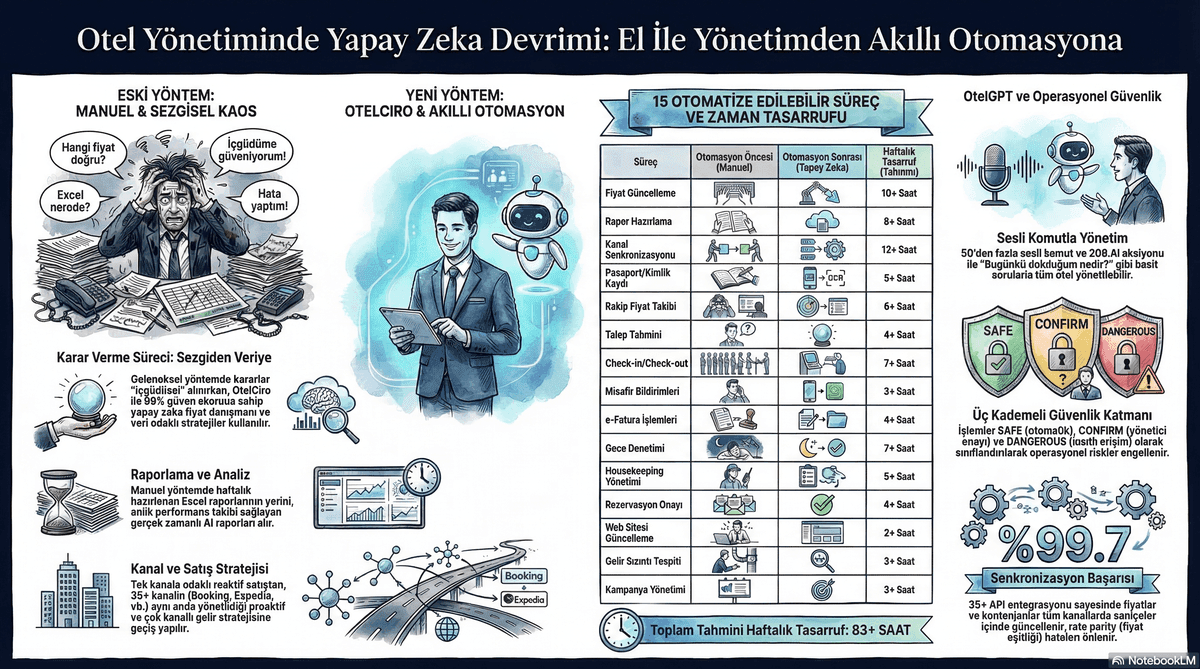
Hotels using BI show 15-20% better revenue performance compared to traditional reporting. This is because BI doesn't just look at the past — it suggests future actions.
Embed this image on your site
<a href="https://otelciro.com/en/news/hotel-bi-data-driven-decisions-for-revenue-growth-strategy-guide">
  <img src="https://cdn.sanity.io/images/1la98t0z/production/18365f26d904a487f2bc0491a9d24c13b5491c6c-1200x669.png" alt="Otel business intelligence dashboard ve veri analitiği" width="800" />
</a>
<p>Source: <a href="https://otelciro.com">OtelCiro</a> — AI Hotel Revenue Management</p>
Related reading: Smart PMS for Hotel Management: Transition from Traditional Systems to AI-Powered Platforms
Related reading: Hotel AI Email Automation: Personalized Communication
BI vs. Traditional Reporting
| Criterion | Traditional Report | Business Intelligence |
|---|---|---|
| Time Focus | Past (what happened?) | Past + Future (what will happen?) |
| Data Source | Single system (PMS) | Multiple source integration |
| Format | Static table/PDF | Interactive dashboard |
| Update | Daily/weekly (manual) | Real-time (automatic) |
| Depth | Superficial metrics | Drill-down analysis |
| Action | Shows data | Suggests action |
| Access | Desktop/email | Web/mobile, anywhere |
Embed this image on your site
<a href="https://otelciro.com/en/news/hotel-bi-data-driven-decisions-for-revenue-growth-strategy-guide">
  <img src="https://cdn.sanity.io/images/1la98t0z/production/ca584d448cd6c3a6150a46c0e1881553f42a99b2-1200x669.png" alt="Otel otomasyon ve iş süreçleri akışı" width="800" />
</a>
<p>Source: <a href="https://otelciro.com">OtelCiro</a> — AI Hotel Revenue Management</p>
Hotel BI Dashboard: Key KPIs
Revenue Metrics
- RevPAR: Revenue per available room
- NRevPAR: Net revenue per available room
- TRevPAR: Total revenue per available room (including F&B, spa)
- ADR: Average daily rate
- Occupancy rate: Rooms sold / available rooms
Distribution Metrics
- Channel share (Booking, Expedia, direct, GDS)
- Channel-based distribution cost
- Channel-based conversion rate
- Rate parity compliance percentage
Operational Metrics
- Average check-in time
- Housekeeping room cleaning time
- Staff efficiency (revenue/employee)
- Energy consumption (per room)
Guest Metrics
- Guest satisfaction score (NPS)
- Average review score (channel-based)
- Repeat visit rate
- Complaint categories and resolution times
Related reading: e-Invoice and Digital Accounting in Hotels: GİB Integration Guide (2026)
Data Sources and Integration
The power of BI comes from combining multiple data sources:
Primary Sources
- PMS: Reservations, check-in/out, room revenue, guest profiles
- Channel Manager: Channel-based sales, inventory usage
- RMS: Rate recommendations, forecast data
- POS: F&B sales, department revenues
- CRM: Guest segmentation, campaign performance
Secondary Sources
- Google Analytics: Website traffic, conversion
- Review platforms: Booking.com, Google, TripAdvisor scores
- Rate shopper: Competitor rate data
- Weather: Demand correlation
- Event calendar: Regional demand impact
Embed this image on your site
<a href="https://otelciro.com/en/news/hotel-bi-data-driven-decisions-for-revenue-growth-strategy-guide">
  <img src="https://cdn.sanity.io/images/1la98t0z/production/213b3b1fc5afe459c03c8d691a6983147d790b17-1200x2150.png" alt="MCP Server ile AI entegrasyon mimarisi" width="800" />
</a>
<p>Source: <a href="https://otelciro.com">OtelCiro</a> — AI Hotel Revenue Management</p>
Strategic Decision Examples with BI
Pricing Decision
Question: Should I increase the rate for next Friday?
BI analysis: Last year, the same Friday had 88% occupancy, this year's pace is 15% higher, competitors have increased rates, there's a convention in the area → Increase rate by 12%
Channel Strategy
Question: Should I exit Booking.com's Genius program?
BI analysis: NRevPAR contribution from Genius guests is 8% lower than standard guests, but Genius contributes 12% to occupancy. Net effect is positive → Stay in Genius but use it during low-demand periods
Operational Decision
Question: How many housekeeping staff should work?
BI analysis: Occupancy forecast is 75%, average cleaning time is 28 min per room → 12 staff are sufficient (20% savings instead of standard 15)
BI Implementation Steps
Step 1: Inventory your data — Which systems contain which data? Step 2: Identify priority KPIs — Instead of trying to measure everything, start with the top 10 critical KPIs. Step 3: Establish data integration — Automate data flow with API integrations. Step 4: Design dashboards — Role-based: GM, revenue manager, operations manager. Step 5: Create an action culture — Seeing the data isn't enough; it needs to be turned into action.
Related reading: Housekeeping Automation: 7 Steps to Digitizing Hotel Operations
Hotel Business Intelligence with OtelCiro
OtelCiro's Reporting module comprehensively addresses hotel BI needs. It facilitates data-driven decision-making with real-time dashboards that unify all data sources, predictive analytics, and actionable recommendations.
Make data-driven decisions with OtelCiro Reporting
Conclusion
Business Intelligence is no longer a luxury in hospitality; it is a necessity. While your competitors make data-driven decisions, managing by intuition is a competitive disadvantage.
Collecting data is easy — the challenge lies in understanding and acting on it. BI tools enable this transformation. Start small: with basic revenue metrics. Then expand the scope to include operations, guest, and marketing data.
Discover how OtelCiro's Reporting can automate this process for you.
![Europe's Hotel Construction Boom: 2026 Oversupply Risks [Market Analysis]](https://cdn.sanity.io/images/1la98t0z/production/6dfe59137f56aa14bfcba86d9db3cf05ff89f406-2752x1536.jpg?w=1920&q=50&auto=format&fit=max)