Key Takeaways
- Growing Market: Historic building conversions into boutique hotels saw a 56% increase from 2020-2026 globally, achieving 25-35% higher ADR than standard boutique hotels.
- Türkiye's Potential: With 18 UNESCO World Heritage Sites and over 82,000 registered historic structures, Türkiye presents one of the world's highest potentials for heritage boutique hotel development.
- Complex Restoration: Projects involve meticulous legal, technical, and aesthetic processes, from structural analysis and conservation board approvals to detailed restoration and operational licensing.
- Unique Guest Experience: Design focuses on balancing authentic historical character with modern comfort, while cultural experience programs and local gastronomy are key differentiators.
- Strategic Management: Optimal operational efficiency for small-scale properties involves cross-trained staff and cloud-based technology, supported by a digital-first marketing strategy leveraging storytelling and diverse sales channels.
Heritage Boutique Hotels: The Economic Value of Cultural Heritage
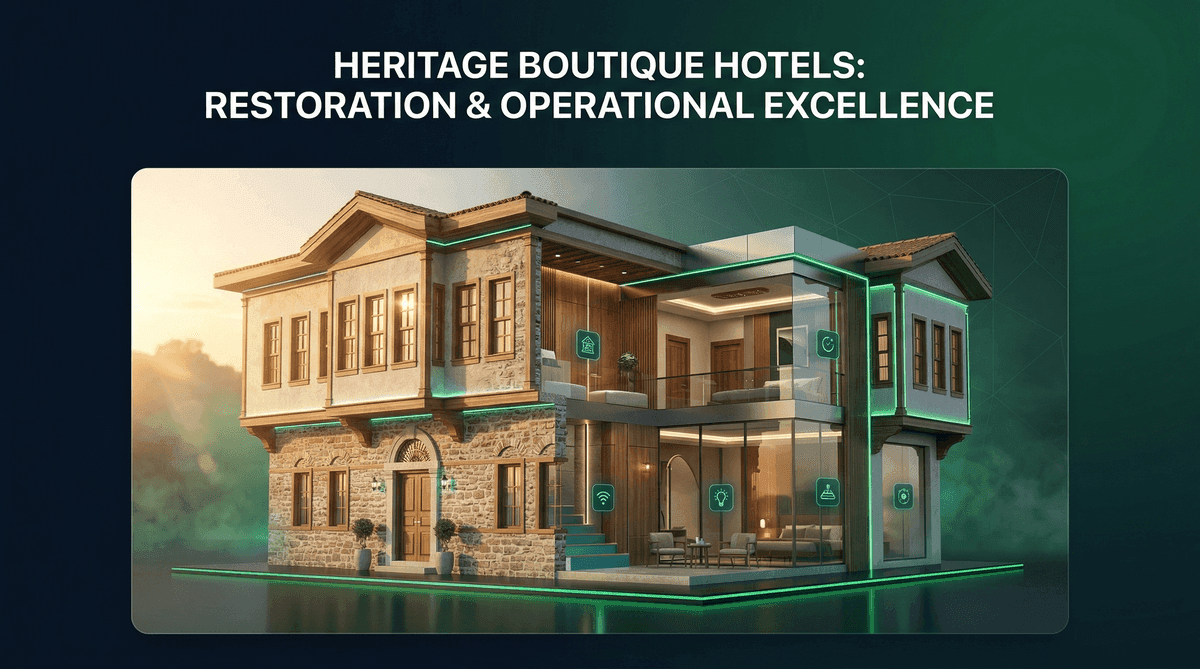
Transforming historic structures into boutique hotels is a unique business model that merges cultural heritage preservation with economic sustainability. According to Heritage Foundation data, projects converting historic buildings into hotels globally increased by 56% between 2020 and 2026. These hotels achieve 25-35% higher ADR compared to standard boutique hotels.
Türkiye's Heritage Potential
Türkiye, with 18 UNESCO World Heritage Sites and over 82,000 registered historic structures, is one of the countries with the highest potential worldwide for heritage boutique hotels:
| Structure Type | Estimated Number | Converted to Hotel | Potential |
|---|---|---|---|
| Ottoman mansion | 12,000+ | ~350 | Very High |
| Greek/Armenian stone house | 8,000+ | ~180 | High |
| Caravanserai | 200+ | ~30 | High |
| Khan and Bezesten (Market Hall) | 400+ | ~45 | Medium |
| Church/monastery | 1,500+ | ~20 | Niche |
| Historic school/hospital | 3,000+ | ~60 | Medium |
The vast majority of these structures can be converted into high-value boutique hotels with the right restoration and operational model.
Related reading: Advantages of Cloud-Based PMS for Hotels
Restoration Process: An A-Z Guide
A heritage boutique hotel project is vastly different from standard hotel construction. It requires skillful management of legal, technical, and aesthetic dimensions.
Phase 1: Feasibility and Structure Assessment (2-4 months)
- Structural analysis: Condition of the load-bearing system, foundation stability, roof structure
- Conservation status: Registration degree (1st, 2nd, or 3rd group) and conservation requirements
- Cost estimation: 1,800-4,500€ per m² (depending on the structure's condition)
- Revenue projection: Regional ADR average, occupancy forecast, and investment return
- Legal risk analysis: Property status, zoning plan, and restoration permits
Phase 2: Project and Approval (6-12 months)
- Survey and restitution drawings: Documenting the existing state and original form of the structure
- Restoration project: Design for conversion compliant with conservation principles
- Conservation board approval: Project submission to the Regional Cultural Heritage Preservation Board
- Zoning and permits: Municipal zoning permit and construction license
Phase 3: Restoration Implementation (8-18 months)
| Work Area | Duration | Cost Ratio | Critical Point |
|---|---|---|---|
| Structural reinforcement | 2-4 months | %25-30 | Earthquake safety |
| Facade and wall restoration | 2-3 months | %15-20 | Preservation of original materials |
| Mechanical installations | 2-3 months | %20-25 | Concealed routing design |
| Interior design | 2-4 months | %15-20 | Period compatibility |
| Landscaping and surroundings | 1-2 months | %5-10 | Garden restoration |
Phase 4: Operating License (2-4 months)
- Tourism Business Certificate application
- Fire safety and evacuation plan approval
- Food production permit (if applicable for a restaurant)
- Environmental and health reports
Room Design: The Balance of Authentic and Modern
The biggest design challenge for a heritage boutique hotel is to preserve its historic character while providing modern comfort standards. Each room should tell a story.
Design Principles
- Each room unique: Different rooms in a historic structure have different characters—this is an advantage, not a disadvantage.
- Revealing original details: Ceiling decorations, wall frescoes, wooden paneling.
- Reversible modern interventions: As per restoration principles, added modern elements should be removable in the future.
- Material palette: Original stone, wood, and metal + contemporary glass and minimalist furniture.
Room Categories
| Category | Size | Price | Feature |
|---|---|---|---|
| Heritage Room | 20-30 m² | 130-200€ | Historic texture, standard comfort |
| Pasha Suite | 35-50 m² | 220-350€ | Special details, premium furniture |
| Harem Suite | 40-60 m² | 300-500€ | Unique architecture, hammam bathroom |
| Mansion Apartment | 60-100 m² | 450-800€ | Independent entrance, private garden |
The average number of rooms in heritage boutique hotels is between 8-25. This small scale provides an advantage for personalized service but can challenge operational efficiency.
Embed this image on your site
<a href="https://otelciro.com/en/news/heritage-boutique-hotels-2026-restoration-operations-guide">
  <img src="https://cdn.sanity.io/images/1la98t0z/production/b4ed56124c219fc165c673d25f15e7c3cbe0793e-1200x669.png" alt="Heritage Boutique Hotel Concept" width="800" />
</a>
<p>Source: <a href="https://otelciro.com">OtelCiro</a> — AI Hotel Revenue Management</p>
Cultural Experience Program
The strongest asset of a heritage boutique hotel is the cultural experience it offers. Guests purchase the feeling of "living inside history."
Experience Portfolio
- Property history tour: Guided tour detailing the history of your hotel and its restoration.
- Ottoman cuisine workshop: Cooking workshop with modern interpretations of period recipes (55-85€/person).
- Traditional handicrafts: Ebru, calligraphy, tile, or ceramic workshop (40-70€/person).
- Hammam experience: Authentic Ottoman hammam or collaboration with a historic hammam.
- Historic neighborhood walk: Guided cultural exploration tour (30-50€/person).
- Music nights: Turkish classical music or Sufi music concerts.
Gastronomy Strategy
A heritage boutique hotel's restaurant can serve not only overnight guests but also external customers. This provides both revenue diversification and brand awareness:
- Focus on local cuisine: Modern interpretations of regional recipes.
- Seasonal menu: Seasonal menu changes using local and seasonal ingredients.
- Chef's table experience: Special dining experience with the chef (120-200€/person).
- Breakfast culture: Traditional 'Serpme' breakfast (a rich, spread-out breakfast) — 91% of heritage hotels prefer 'Serpme' over buffets.
F&B revenue can constitute 25-35% of total revenue—this rate is higher than that of standard boutique hotels.
Related reading: Hotel Business Intelligence and Reporting
Operational Management
Operational management of a small-scale heritage boutique hotel requires different approaches than larger hotels.
Staffing and Technology
For an 8-15 room heritage boutique hotel, optimal staffing is 9-13 people—staff costs range between 30-38% of revenue. Efficiency should be increased through cross-training and multi-tasking.
On the technology side, cloud-based PMS, channel manager, online booking engine, and WhatsApp Business communication are indispensable. 67% of heritage hotel guests prefer communication via WhatsApp.
Marketing and Channel Strategy
A heritage boutique hotel is a brand that sells through storytelling. The building's history, the restoration story, and the region's cultural richness are the core materials for marketing.
Digital Marketing
- Content marketing: Blog posts, video documentaries, and podcasts telling the property's story.
- Instagram and Pinterest: Visual storytelling—heritage hotel photos achieve a 4.5% engagement rate.
- TripAdvisor and Google Reviews: Review management—82% of heritage hotel guests leave reviews.
- Influencer partnerships: Collaboration with culture, history, and architecture influencers.
- SEO: Long-tail keywords such as " historic hotel," "mansion hotel," "heritage boutique."
Channel Distribution
The ideal sales channel strategy for a heritage boutique hotel:
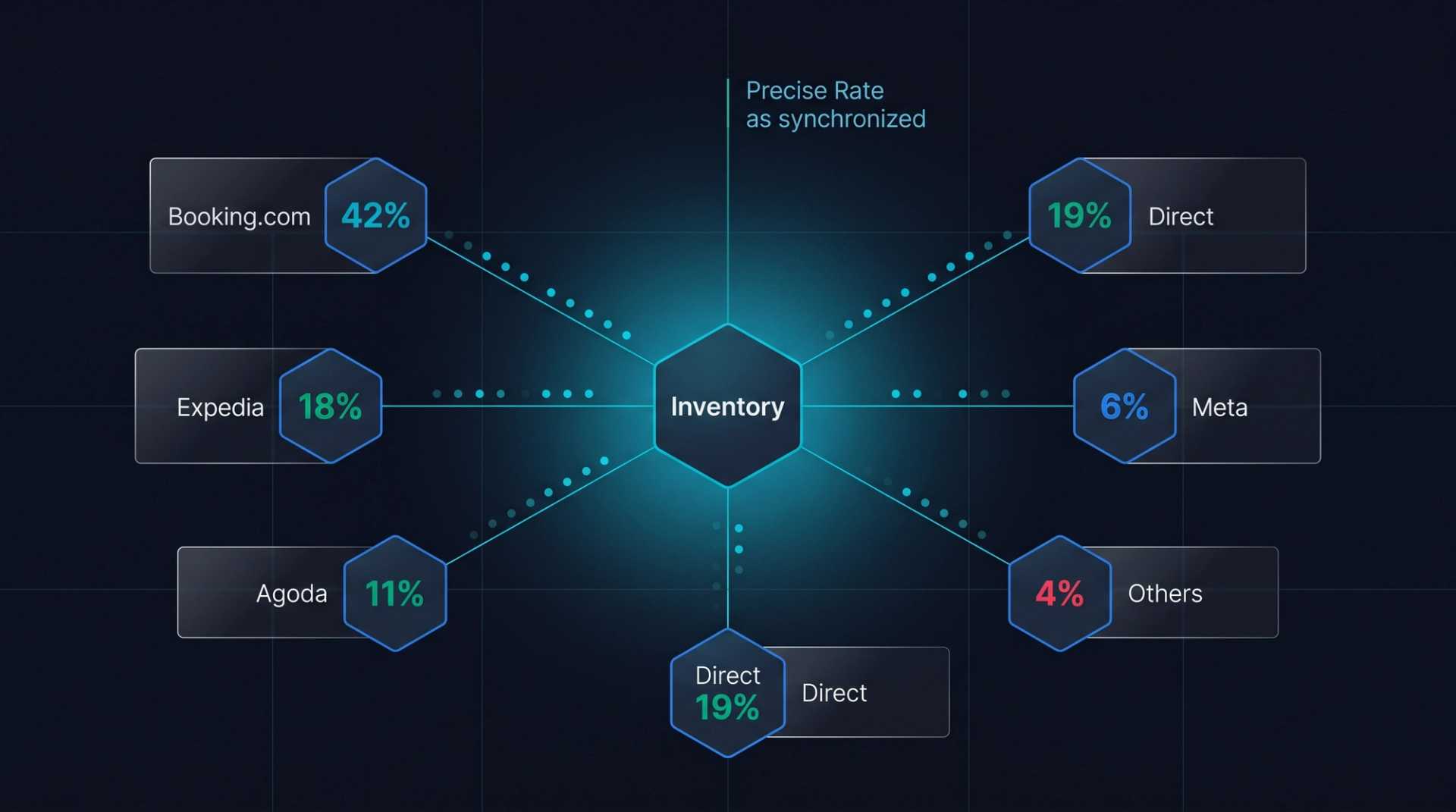
- Direct website: %45-55 (due to story power)
- Booking.com: %15-20 (discoverability)
- Boutique hotel platforms: %10-15 (Small Luxury Hotels, Relais & Châteaux)
- Google Hotels: %5-10
- Cultural tour operators: %5-10
- Wedding and event platforms: %5-10
Pricing
The pricing power of heritage boutique hotels comes from the perception of uniqueness. Since each room is different, room-based pricing (open pricing) is the most effective method:
- Small heritage room: standard ADR
- Room with special details: +%20-30 premium
- Suite and apartment: +%50-100 premium
- Weekend: +%15-25 premium
- Holidays and festivals: +%30-50 premium
Related reading: Hotel Open Pricing and Dynamic Pricing Strategy
Conclusion: The Future of History in Boutique Hotels
The heritage boutique hotel is one of the most effective models for preserving Türkiye's cultural heritage while generating economic value. With the right property selection, quality restoration, and a smart operational strategy, a historic structure can transform into an asset that generates income for generations.
As cultural tourism demand reaches historic highs in 2026, investing in heritage boutique hotels stands out as both a profitable venture and a societal responsibility. Türkiye's 82,000 historic structures represent an enormous potential waiting to be realized.
To optimize your heritage boutique hotel's operational efficiency and revenue management, explore OtelCiro's operational ecosystem.

![Europe's Hotel Construction Boom: 2026 Oversupply Risks [Market Analysis]](https://cdn.sanity.io/images/1la98t0z/production/6dfe59137f56aa14bfcba86d9db3cf05ff89f406-2752x1536.jpg?w=1920&q=50&auto=format&fit=max)