Key Takeaways
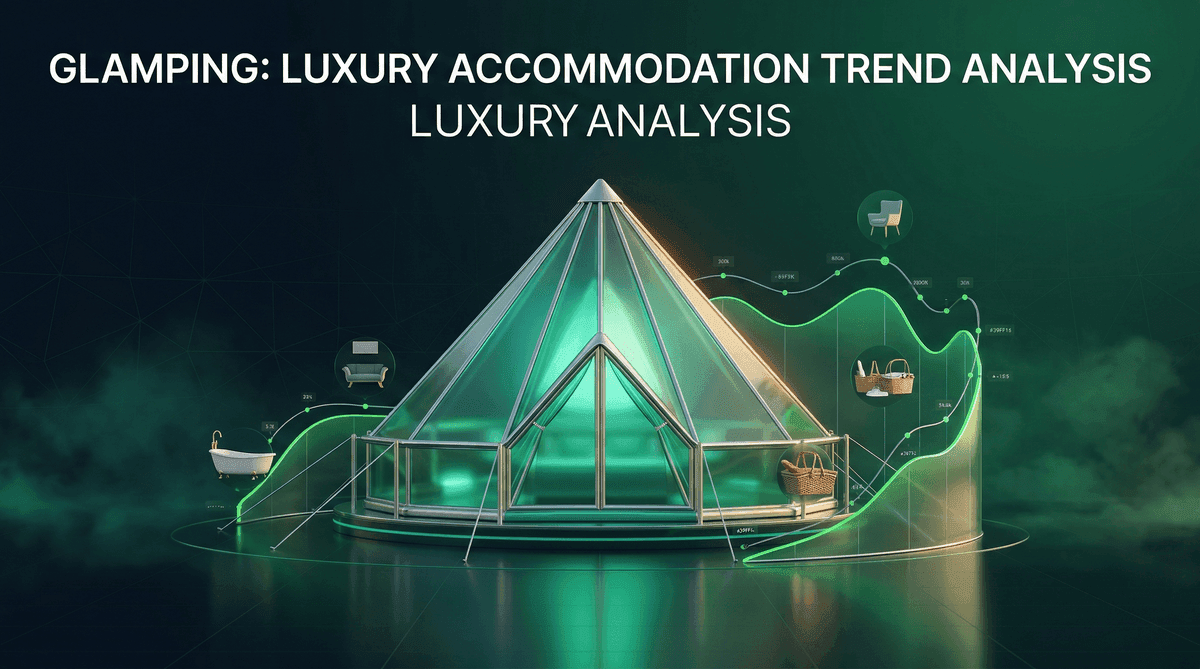
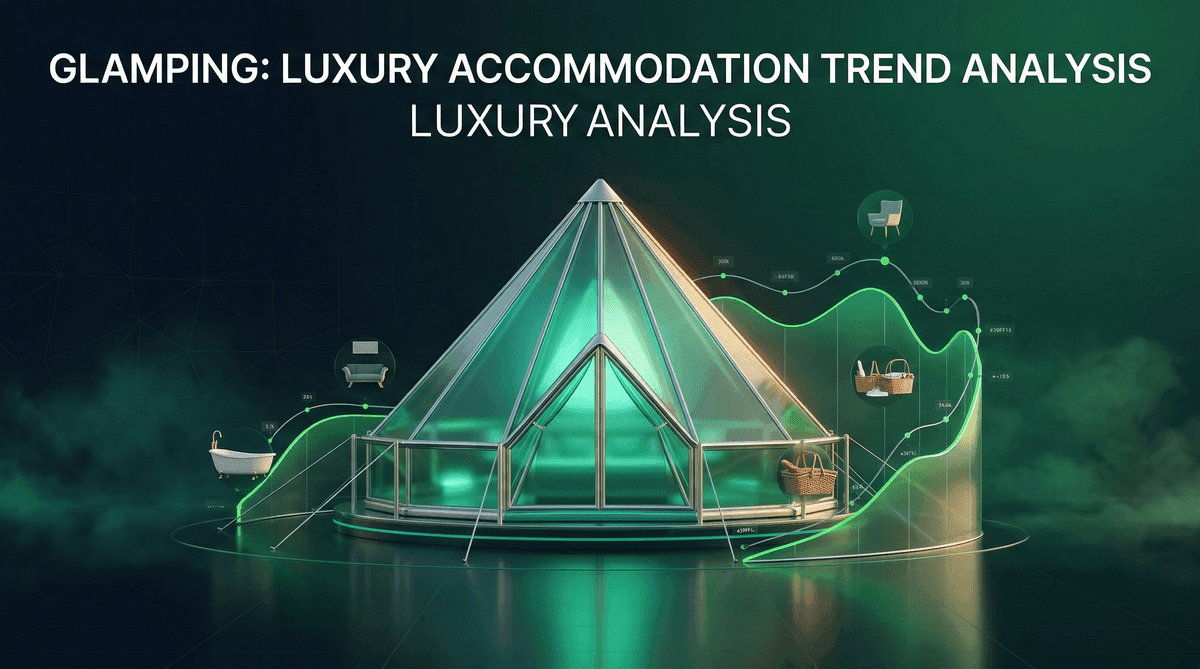
- The global glamping market is projected to exceed $12.5 billion by 2030, with an 18.2% CAGR, significantly outpacing traditional hotel growth.
- Glamping offers diverse concepts (safari tents, domes, treehouses) with varying investment costs (e.g., 120,000-250,000 TL for safari tents, 200,000-450,000 TL for domes).
- Glamping guests spend 45% more on non-accommodation activities and show strong demand in spring/autumn, extending profitable seasons.
- Despite operational challenges (infrastructure, staffing), glamping boasts a 2.5-4 year payback period and 45-55% GOP margins, outperforming boutique hotels.
- Turkey offers unique regional glamping opportunities, from coastal agro-tourism to Cappadocia's dome glamping, with strong regional RevPARs and occupancy.
Luxury in Nature: Why the Glamping Trend is Exploding
One of the most remarkable ascents in the hospitality sector over the last five years has been in the glamping segment. Glamping, short for "glamorous camping," has captured the attention of both investors and travelers as a concept that merges the tranquility of nature with the comfort of luxury accommodation.
While the global glamping market is projected to reach $5.4 billion in 2025, 2030 projections indicate this figure will exceed $12.5 billion. The compound annual growth rate (CAGR) of 18.2% significantly surpasses that of the traditional hotel industry. In Turkey, glamping facilities have shown a 340% increase over the last three years, with over 600 licensed glamping businesses operating nationwide in 2026.
Embed this image on your site
<a href="https://otelciro.com/en/news/glamping-boom-2026-investment-strategy-guide">
  <img src="https://cdn.sanity.io/images/1la98t0z/production/0c3bbaf9925e7fbf12a1ff10d04b7264a1ed91c7-1200x669.png" alt="Glamping Luxury Camping Accommodation Trend Infographic" width="800" />
</a>
<p>Source: <a href="https://otelciro.com">OtelCiro</a> — AI Hotel Revenue Management</p>
In this article, we examine the dynamics behind the glamping trend, investment models, and the strategic steps to establish a successful glamping business.
Relevant reading: 2026 Travel Trends and the Role of AI Assistants
Glamping Concept Types and Investment Costs
While glamping often brings to mind only luxury tents, the variety of concepts is quite broad. Each type appeals to a different target audience and presents distinct investment requirements.
Tent (Safari Tent) Concept
Safari tents, the cornerstone of the classic glamping experience, offer fully equipped living spaces built on permanent platforms. Ranging from an average of 45-80 m², they are equipped with private bathrooms, minibars, and verandas. While the unit investment cost ranges from 120,000-250,000 TL, nightly rates are positioned in the 3,500-8,000 TL range depending on the season.
Dome Structures
Geodesic dome structures, with their transparent or semi-transparent domes offering 360-degree nature views, have become a favorite of the Instagram generation. While the investment cost per dome ranges from 200,000-450,000 TL, organic marketing costs remain 60% lower compared to traditional hotels, thanks to social media impact.
Treehouse and Container
Treehouses and converted container structures represent the premium end of the glamping segment. Although unit costs can reach 350,000-800,000 TL, nightly rates can be maintained in the 6,000-15,000 TL range.
Target Audience Analysis and Demand Dynamics
Glamping guests differ significantly from traditional hotel guests. A correct understanding of their profile directly influences pricing and marketing strategies.
According to research, 68% of glamping guests are between 25-44 years old, and 72% travel as couples or small family groups. The average length of stay is 2.8 nights, higher than city hotels. The most striking data concerns spending habits: glamping guests spend 45% more on non-accommodation expenses (food and beverage, activities, spa) compared to traditional hotel guests.
Demand seasonality also follows a different pattern. While June-August is the peak season for traditional coastal hotels, glamping facilities experience their busiest periods in spring and autumn (April-May, September-October). This situation offers the potential for profitable operations nine months a year with the right pricing strategy.
Relevant reading: Hotel Seasonality Management: Off-Season Strategies
Operational Challenges and Solutions
Glamping operations present unique operational challenges compared to traditional hotel management. Planning for these challenges in advance is key to investment success.
Infrastructure and Energy Management
For glamping facilities situated in nature, electricity, water, and sewage infrastructure constitute one of the largest cost items. While solar panels and rainwater harvesting systems increase initial costs by 25-35%, they reduce long-term operational expenses by up to 50%.
Staffing and Service Quality
While glamping guests expect luxury hotel standards of service, the remote location of facilities complicates staff recruitment and training. Successful glamping businesses establish models that encourage local employment and support their seasonal staff with continuous training programs.
Digital Infrastructure
Even in nature, guests expect strong Wi-Fi and digital services. With OtelCiro's sales and distribution solutions, channel management, online booking, and dynamic pricing infrastructure can be easily set up for glamping facilities.
Glamping in Turkey: Regional Opportunities
Turkey's geographical diversity offers unique opportunities for glamping investments. Each region has the potential to host a different glamping concept.
Aegean and Mediterranean Coasts: Glamping facilities established in olive groves and olive lands can achieve 55% occupancy rates even during the off-season when combined with agro-tourism. The average annual RevPAR for existing facilities in the region is 2,800 TL.
Cappadocia: Dome glamping facilities with fairy chimney views in Cappadocia can achieve 320 days of occupancy per year by integrating with the region's hot air balloon tourism. Nightly rates are positioned in the 5,000-12,000 TL range.
Black Sea Highlands: The combination of highland culture and the glamping concept achieves 85% occupancy rates in the summer months. Investment costs in this region remain 30-40% lower compared to the Aegean.
Bolu-Düzce Forest Areas: Due to its proximity to Istanbul, it sees strong demand in the weekend getaway segment. Although the average length of stay is short at 1.5 nights, high occupancy rates compensate for this.
Financial Modeling and Return on Investment
Financial modeling for glamping investments must be structured with different parameters than traditional hotel investments. The main advantages are low initial cost and a fast return on investment period.
While the initial investment for an average 20-unit glamping facility ranges from 4-8 million TL, a boutique hotel of similar capacity requires an investment of 15-30 million TL. The payback period is estimated at 2.5-4 years for glamping, compared to 6-10 years for a boutique hotel.
Glamping is also advantageous in terms of operational profit margin: thanks to lower staffing and maintenance costs, the Gross Operating Profit (GOP) margin ranges between 45-55%, whereas in traditional hotels, this rate remains at 30-38%.
However, these advantages also come with risks that must be considered. Reliance on weather conditions, seasonality, and regulatory uncertainties necessitate a safety margin of at least 20% in cash flow projections.
Looking Ahead: 2027 and Beyond
The glamping sector is rapidly maturing and professionalizing. Expected developments until 2027 include:
- Smart glamping: Optimization of energy and water consumption with IoT sensors, automatic climate control for guest comfort.
- Sustainability certifications: International standards for carbon-neutral glamping facilities.
- Hybrid models: Integration of glamping and wellness retreat concepts.
- Digital nomad packages: Long-term stays with remote work infrastructure.
The glamping trend is not a fleeting fad but a part of the structural transformation of the hospitality sector. With the right concept, location, and operational planning, glamping investments offer both high returns and sustainable growth.
![Europe's Hotel Construction Boom: 2026 Oversupply Risks [Market Analysis]](https://cdn.sanity.io/images/1la98t0z/production/6dfe59137f56aa14bfcba86d9db3cf05ff89f406-2752x1536.jpg?w=1920&q=50&auto=format&fit=max)