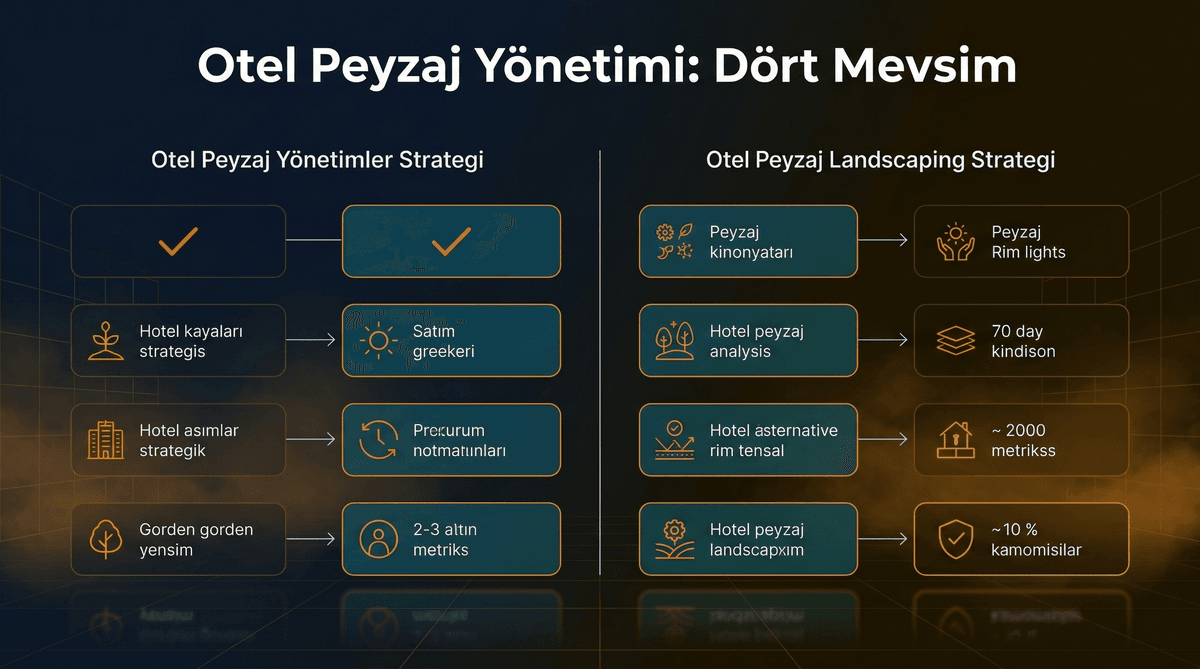
![Four-Season Hotel Landscape Management [Strategy Guide]](https://cdn.sanity.io/images/1la98t0z/production/d0607346e2ea7459ac3f118df2b3ce89334b9eac-1200x669.png?w=1920&q=65&auto=format&fit=max)
Key Takeaways
- First Impressions Matter: Well-maintained hotel landscapes significantly boost guest perception and online ratings; exterior photos account for 35% of profile views, and positive garden reviews can increase overall scores by 0.3-0.5 points.
- Four-Season Planning is Essential: A year-round landscape strategy is crucial for both aesthetics and economics, adapting to regional climatic zones in destinations like Turkey.
- Smart Irrigation Drives Efficiency: Implementing smart irrigation systems can reduce water consumption by 30-40% (e.g., 12,000 cubic meters annually in one case study), leading to substantial cost savings and environmental benefits.
- Strategic Budgeting & Plant Selection: Landscape maintenance constitutes 3-6% of the total operations budget; optimizing costs through native, drought-resistant plant choices (Xeriscape) is key.
- Gardens as Revenue Generators: Well-designed outdoor spaces, such as aromatic gardens, dedicated photo spots, or event venues, can generate significant additional revenue (e.g., 500,000-2,000,000 TL annually for events) and enhance the guest experience.
First Impressions Begin in the Garden
When a guest approaches a hotel, the first thing they see is not the building, but the garden and landscaping. A well-maintained garden forms the guest's perception of quality before they even step inside the hotel. According to TripAdvisor analyses, exterior photos of the hotel constitute 35% of total profile views, and positive garden reviews increase the overall rating by an average of 0.3-0.5 points.
Turkey's diverse climatic zones (Mediterranean, Black Sea, Central Anatolia, Aegean) directly impact hotels' landscape strategies. A plant palette successful in Antalya may not survive in Cappadocia. Therefore, creating a four-season sustainable landscape plan is critically important from both an aesthetic and economic perspective.
Embed this image on your site
<a href="https://otelciro.com/en/news/four-season-hotel-landscape-management-strategy-guide">
  <img src="https://cdn.sanity.io/images/1la98t0z/production/d0607346e2ea7459ac3f118df2b3ce89334b9eac-1200x669.png" alt="Hotel Garden and Landscape Management Infographic" width="800" />
</a>
<p>Source: <a href="https://otelciro.com">OtelCiro</a> — AI Hotel Revenue Management</p>
Related reading: Hotel Operations Automation: Digital Transformation in Business Processes
Four-Season Landscape Planning Strategy
Spring (March-May): Renewal and Preparation Period
Spring is the most critical time to prepare the hotel's landscape for the new season. Actions to be taken during this period:
Soil analysis and improvement: After the winter months, the soil structure should be tested, and necessary nutrient supplements applied. pH value, organic matter content, and mineral content should be checked.
Pruning and shaping: Spring pruning is carried out for plants such as roses, oleanders, bay laurels, and ornamental shrubs. Proper pruning techniques ensure the plant grows more vigorously and healthily throughout the summer.
Seasonal flower planting: Seasonal flowers like petunias, geraniums, bougainvillea, and lavender are planted during this period. Color planning should align with the hotel's corporate identity.
Irrigation system maintenance: Automatic irrigation systems, turned off for winter, are reactivated, checked for leaks, and reprogrammed.
Summer (June-August): Maintenance and Performance Period
Summer months are both the busiest guest period and the time when plants require the most care:
- Irrigation optimization: In the Mediterranean climate, daily water demand in summer can be 5-8 liters per square meter. Smart irrigation systems prevent unnecessary watering with soil moisture sensors and reduce water consumption by 30-40%.
- Lawn care: Weekly mowing, bi-weekly fertilization, and weed control are required.
- Pest control: Warm months are when insect and pest populations increase. An Integrated Pest Management (IPM) approach should be preferred.
- Evening lighting: Garden lighting enhances the guest experience in the evening hours. LED landscape lighting reduces energy costs by 60-70%.
Autumn (September-November): Transition and Planning Period
Autumn is the transition period from summer plants to winter plants:
Bulb and tuber planting: Spring-flowering bulbs such as tulips, daffodils, and hyacinths are planted in October-November. This planning forms the foundation of the spring garden.
Deciduous tree care: Leaf collection, autumn pruning, and trunk protection are carried out. Collected leaves are utilized as compost.
Winterization of irrigation system: In areas at risk of freezing, irrigation lines need to be drained and insulated.
Winter (December-February): Protection and Investment Period
Winter months see the least active maintenance but are ideal for planning and infrastructure investments:
- Evergreen plants: Pines, cypresses, olive trees, and bay laurels, which remain green all year, form the skeleton of the winter garden.
- Hardscape maintenance: Maintenance and repair of walkways, seating areas, and decorative stone arrangements are performed.
- Landscape project revision: The landscape plan for the coming year is prepared during this period.
Related reading: Waste Management and Recycling: Hotel Sustainability Guide
Smart Irrigation: The Gold Standard of Water Conservation
In a world with increasingly scarce water resources, optimizing hotel garden irrigation is indispensable for environmental responsibility and cost control.
Smart irrigation systems consist of the following components:
- Soil moisture sensors: Real-time moisture measurement ensures watering only when necessary.
- Weather integration: Irrigation schedules are automatically adjusted based on rain forecasts.
- Zonal control: Separate irrigation zones are created for different plant groups.
- Drip irrigation: Consumes 40-60% less water compared to traditional sprinkler systems.
A case study from a Belek resort hotel reported an annual water consumption reduction of 12,000 cubic meters and 280,000 TL in cost savings after switching to a smart irrigation system.
Landscape Budgeting and Cost Control
Hotel landscape maintenance costs constitute 3-6% of the total operations budget. Cost items include:
| Item | Percentage |
|---|---|
| Labor | %45-55 |
| Water and Energy | %15-20 |
| Plants and Materials | %15-20 |
| Equipment Maintenance | %5-10 |
| Chemicals and Fertilizers | %5-8 |
The most effective way to optimize costs is to select plants appropriate for the region. Native and drought-resistant species dramatically reduce both water consumption and maintenance needs. The Xeriscape (drought-tolerant landscaping) approach is an ideal strategy, especially for hotels in the Mediterranean and Aegean regions.
Garden Design Enhancing Guest Experience
A hotel garden is not just an aesthetic element but also a potential revenue source. Properly designed outdoor spaces can:
- Garden weddings and events: Potential for 500,000-2,000,000 TL in additional annual revenue.
- Aromatic garden: Plants like lavender, rosemary, and mint provide both aesthetics and ingredients for the hotel restaurant.
- Photo opportunities: Strategic floral arrangements that boost Instagram shares create organic marketing value.
- Meditation and yoga areas: Tranquil garden corners catering to the wellness tourism segment.
Professional landscape management enhances the hotel's brand value while keeping operational costs under control. A four-season sustainable garden strategy supports both guest satisfaction and profitability.
![Europe's Hotel Construction Boom: 2026 Oversupply Risks [Market Analysis]](https://cdn.sanity.io/images/1la98t0z/production/6dfe59137f56aa14bfcba86d9db3cf05ff89f406-2752x1536.jpg?w=1920&q=50&auto=format&fit=max)