![Designing High-Impact Hotel Internship Programs [2026 Strategy Guide]](https://cdn.sanity.io/images/1la98t0z/production/edac27ca0df3af17a54568467e31a78a08780f33-1200x669.png?w=1920&q=65&auto=format&fit=max)
Key Takeaways
- Close the Talent Gap: Only 28% of the 45,000 annual tourism graduates in Turkey currently stay in the industry; structured programs can reverse this trend.
- Boost Conversion Rates: Structured internship programs achieve a 45-55% full-time conversion rate, compared to just 8-12% for unstructured ones.
- Implement Rotational Learning: A 12-week plan covering Front Office, Housekeeping, F&B, and Back Office ensures a holistic understanding of hotel operations.
- Prioritize Mentorship: Interns with dedicated mentors report an 85% satisfaction rate, significantly improving long-term retention and employer branding.
- Maximize ROI: Hiring former interns reduces recruitment costs by 60-70% and cuts employee ramp-up time by 50%.
Solving the Hospitality Talent Crisis: Internship Programs
The Turkish hospitality industry is facing a severe talent crisis. While approximately 45,000 students graduate from tourism faculties every year, only 28% of these graduates actually pursue a career in the sector. The remainder shift to different industries due to negative internship experiences, low salary perceptions, or concerns regarding career development. This situation is a primary driver behind the difficulty hotels face in finding qualified personnel.
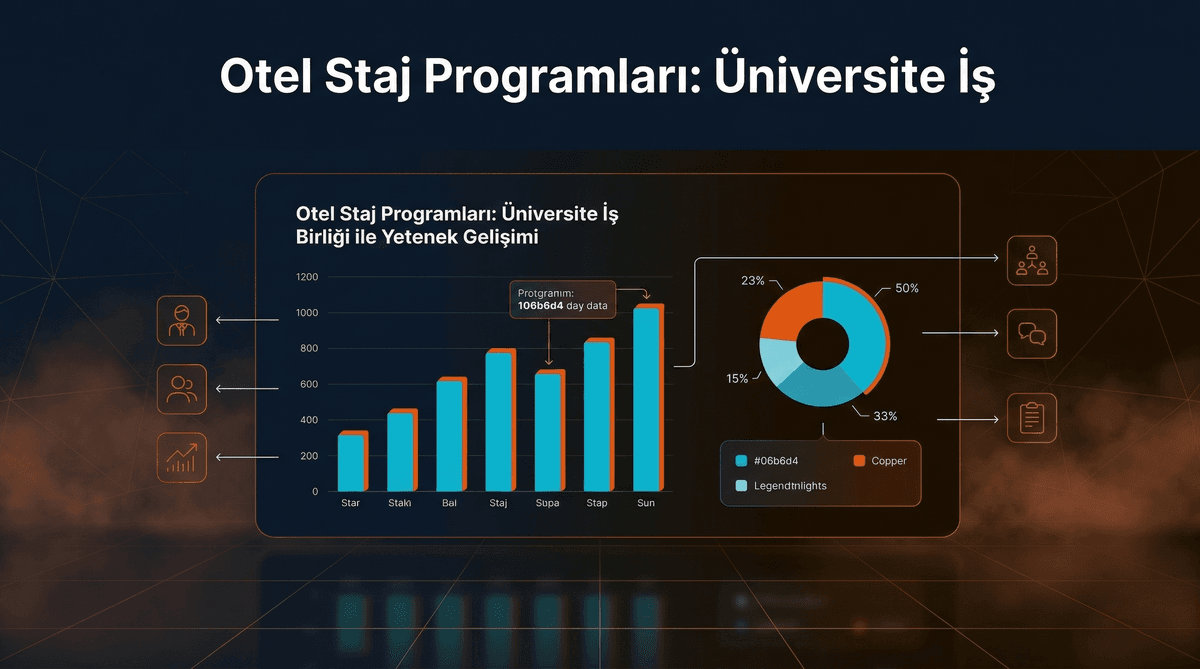
A structured internship program is the most effective way to break this cycle. Hotels with well-designed internship programs see a conversion rate of 45-55% for turning interns into full-time employees, whereas unstructured programs see this rate stagnate at 8-12%.
Embed this image on your site
<a href="https://otelciro.com/en/news/designing-high-impact-hotel-internship-programs-2026-strategy-guide">
  <img src="https://cdn.sanity.io/images/1la98t0z/production/edac27ca0df3af17a54568467e31a78a08780f33-1200x669.png" alt="Hotel Internship Program Design" width="800" />
</a>
<p>Source: <a href="https://otelciro.com">OtelCiro</a> — AI Hotel Revenue Management</p>
Related reading: Cross-Training: Developing Multi-Skilled Hotel Staff
Principles of Internship Program Design
A successful hotel internship program is built on four pillars: structured learning, rotation, mentorship, and evaluation. These principles ensure that the intern gains technical skills while developing a sense of belonging to the industry.
Structured Learning Plan
The program must pre-determine which department the intern will work in during specific weeks, the skills they will acquire, and the projects they will join. Instead of a "go do this" approach, weekly goals and learning outcomes should be defined.
An example 12-week internship plan:
- Weeks 1-2: Orientation, hotel introduction, department tours, occupational safety training.
- Weeks 3-5: Front Office operations (check-in/check-out, reservations, guest relations).
- Weeks 6-7: Housekeeping (room inspection, inventory management, quality standards).
- Weeks 8-9: Food & Beverage (restaurant service, banquet organization, cost control).
- Weeks 10-11: Back Office (revenue management, digital marketing, sales coordination).
- Week 12: Project presentation, final evaluation, and career planning interview.
Department Rotation
Limiting interns to a single department prevents them from grasping the holistic nature of hotel management. Programs that implement rotation across at least 3-4 departments broaden the intern's perspective and help them discover which area they wish to specialize in.
With OtelCiro’s operations management module, it is possible to plan intern rotations, track task assignments, and record performance data digitally.
University Collaboration Models
The success of an internship program is directly linked to the quality of the collaboration established with universities. Different models offer viable options for hotels of varying scales.
Strategic Partnership Model
Long-term cooperation agreements are signed with specific universities. In this model:
- Courses or modules tailored to your hotel's needs are added to the university curriculum.
- Hotel executives serve as guest lecturers.
- University faculty members conduct research projects at the hotel.
- Intern selection is conducted after a preliminary screening by the university.
In Turkey, tourism departments at Akdeniz, Boğaziçi, Bilkent, and Dokuz Eylül universities have programs open to such strategic partnerships.
Career Days and Promotional Events
Participating in university career days increases the visibility of your internship program. However, passive participation is insufficient. Effective career day strategies include:
- Having current or former interns share their experiences (peer influence attracts 3x more applications).
- Organizing interactive workshops (e.g., "A one-night revenue management simulation").
- Organizing on-site hotel tours.
- Sharing internship experience content on social media and university platforms.
Digital Collaboration Platforms
In 2026, 60% of university-hotel collaborations are managed via digital platforms. Online internship application systems, digital mentorship platforms, and remote project collaborations eliminate geographical boundaries, providing access to a wider talent pool.
Establishing a Mentorship System
Mentorship is an indispensable component of a structured internship program. While 72% of interns without an assigned mentor evaluate their experience negatively, 85% of interns who receive regular mentorship find their experience positive.
Mentor Selection and Training
A mentor should be assigned to every intern. The mentor can be an experienced employee from the department where the intern is working or can be selected from a different department. Key considerations for mentor selection:
- At least 2 years of industry experience.
- Strong communication and teaching skills.
- Voluntarism (mandatory mentorship is ineffective).
- A habit of providing regular feedback.
Mentors should undergo a brief training program covering active listening, constructive feedback techniques, generational awareness, and legal responsibilities.
Mentorship Meeting Structure
- Weekly one-on-one meetings: 30 minutes to share weekly experiences, questions, and challenges.
- Bi-weekly goal assessment: Reviewing learning objectives.
- Monthly career chats: In-depth discussions about industry career paths, growth opportunities, and the intern's areas of interest.
Related reading: Leadership Development: Hotel Managers Training Program
Intern Evaluation and Conversion Process
The ultimate goal of an internship program is to convert talented interns into permanent employees. This conversion process should be supported by a planned evaluation system from the very beginning.
Multi-Dimensional Evaluation
Intern evaluation should not be limited to a single dimension. An effective system covers:
- Technical Skills: Competency in department operations (PMS usage, guest greeting, room standard checks, etc.).
- Soft Skills: Communication, teamwork, problem-solving, time management.
- Guest Orientation: Service attitude, empathy, proactive approach.
- Learning Agility: Openness to new information, inquisitiveness, desire for growth.
- Cultural Fit: Alignment with the hotel’s values and work culture.
Evaluations should be conducted by both the mentor and department managers, and the intern's self-evaluation should be included in the process.
The Job Offer Process
It is recommended to make job offers to successful interns at least 2 weeks before the internship ends. During this process:
- Identify the department where the intern is strongest and offer a position accordingly.
- Present a career development plan (goals for the first 6 months, 1 year, and 3 years).
- Position salary and benefits above the sector average.
- Determine a start date compatible with the remainder of their university program.
Measurable Returns of Internship Programs
The benefits a well-designed internship program provides to a hotel are measurable and concrete:
- Reduced Recruitment Costs: Converting an intern to an employee is 60-70% cheaper than external hiring.
- Shorter Adaptation Period: Former interns reach full productivity 50% faster than new hires.
- Lower Turnover Rates: The first-year turnover rate for employees hired through internships is 15%, compared to 45% for those hired directly.
- Increased Brand Awareness: Positive internship experiences at universities strengthen the hotel's employer brand and improve the quality of future applications.
- Innovation and Fresh Perspectives: Young interns bring new ideas to the hotel's service concept through their digital skills and different perspectives.
With OtelCiro’s operations management solutions, you can manage every stage of your internship program digitally, track intern performance, and calculate the program’s ROI. Investing in young talent is the most valuable investment in the future of the hospitality industry.
![Europe's Hotel Construction Boom: 2026 Oversupply Risks [Market Analysis]](https://cdn.sanity.io/images/1la98t0z/production/6dfe59137f56aa14bfcba86d9db3cf05ff89f406-2752x1536.jpg?w=1920&q=50&auto=format&fit=max)