![CUG Pricing: Maximize Hotel Revenue [2026 Guide]](https://cdn.sanity.io/images/1la98t0z/production/eaf74cd6b6d3a338c824584acd4e4a76b088da29-2752x1536.jpg?w=1920&q=65&auto=format&fit=max)
Key Takeaways
- Strategic Advantage: Closed User Group (CUG) pricing offers exclusive, non-public discounted rates to specific segments, allowing hotels to bypass standard rate parity agreements with OTAs.
- Boosted Performance: Participating in CUG programs significantly enhances OTA visibility (8-15% higher search rankings) and conversion rates (35-45% higher), while also reducing cancellation rates by 12%.
- Mitigating Risks: Uncontrolled CUG discounts can lead to Average Daily Rate (ADR) erosion and segment cannibalization. Careful management, including net revenue and displacement analysis, is crucial.
- Direct Channel Empowerment: Developing proprietary direct channel CUG programs is vital for eliminating commission costs, gaining full customer data ownership, and fostering long-term guest loyalty.
- Dynamic Optimization: Continuous monitoring of key metrics like CUG Sales Share, ADR Erosion, and Conversion Premium is essential for dynamic strategy adjustments and preventing revenue loss.
What is Closed User Group Pricing?
Closed User Group (CUG) pricing is a strategy that offers exclusive discounted rates to a limited group of users who meet specific criteria. These prices are not publicly available; they are only offered to guests who are members of a particular program, use a specific application, or originate from a specific channel. CUG rates are exempt from rate parity agreements — meaning they do not violate rate parity obligations with OTAs.
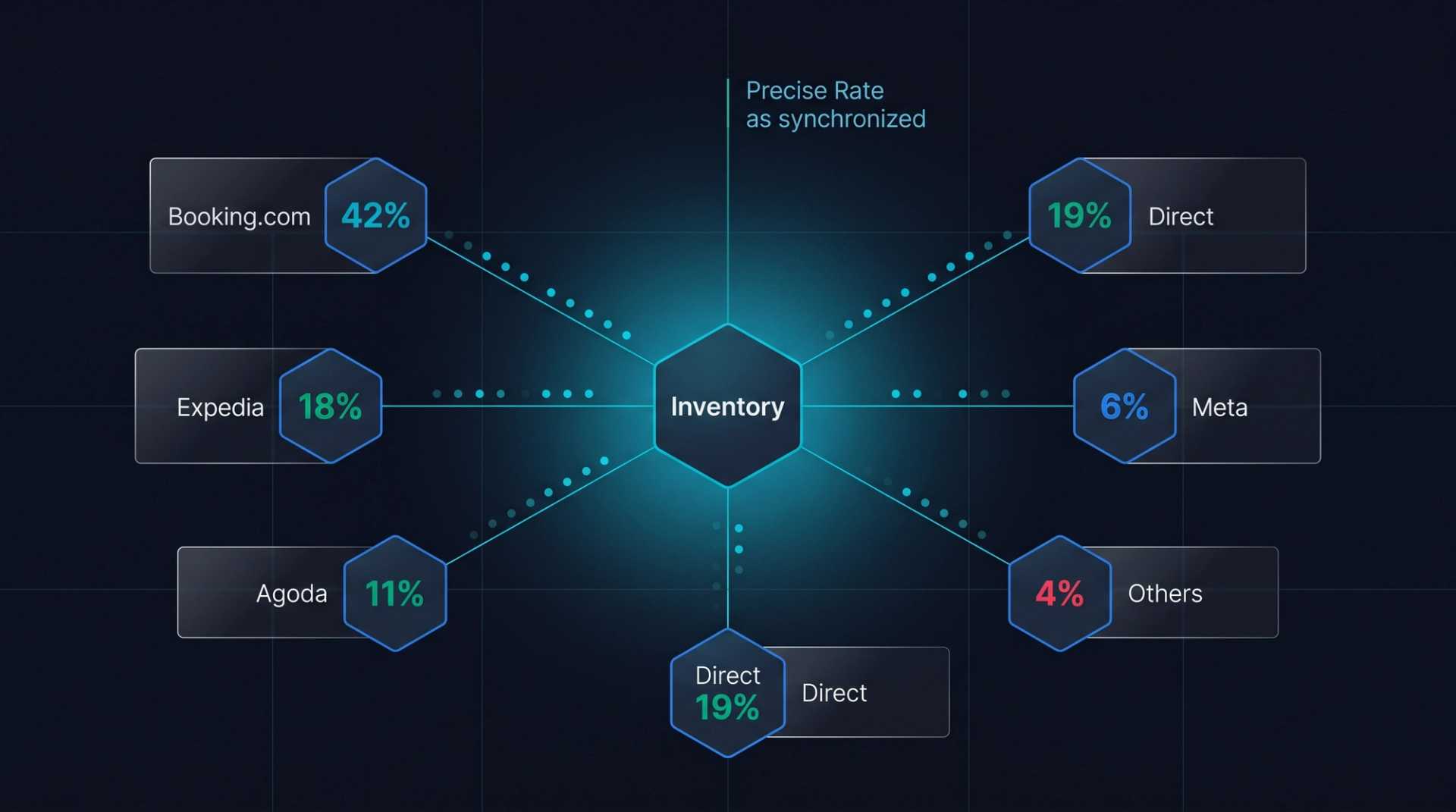
In 2026, CUG pricing has become one of the most critical components of a hotel's distribution strategy. Booking.com's Genius program, Expedia's Member Deals feature, Hotels.com's Rewards program, and Google Hotels' special rates for logged-in users are some of the best-known examples of the CUG model. 62% of hotels in Turkey participate in at least one CUG program, but only 23% of them manage these programs actively and consciously within a strategic framework.
Related reading: Hotel Price Elasticity Analysis
Types of CUG Programs
CUG pricing is implemented through different mechanisms by various platforms and channels.
OTA Loyalty Programs: Booking.com's Genius program is the most common CUG model. It offers a minimum of 10% discount to Genius Level 1 users, 15% to Level 2, and 20% to Level 3. According to 2026 data, 54% of bookings on Booking.com come from Genius members. Hotels that do not participate in these programs experience a significant loss of visibility in search results.
Expedia's Member Deals program offers 10-20% discounts to users logged into its app. Hotels.com Rewards builds loyalty by offering one free night for every 10 nights stayed.
Mobile App Rates: Special rates offered to users coming through mobile apps are the digital version of CUG. Booking.com Mobile Rate offers an additional 10-15% discount to app users. These rates are not visible on the desktop website and are protected under CUG.
Corporate CUG Programs: Special rates offered to users with a specific corporate code under company agreements. Negotiated rates made via GDS for corporate bookings fall into this category.
Direct Channel CUG: Exclusive rates offered to members of the hotel's own loyalty program, email list subscribers, or mobile app users. This model is one of the most effective ways to increase direct channel traffic and loyalty.
Advantages and Risks of CUG Strategy
When managed correctly, CUG pricing offers strong advantages; when mismanaged, it can lead to severe revenue erosion.
Advantages:
- Rate parity protection: CUG rates are excluded from general rate parity agreements. This is a legal and agreement-compliant way to offer different prices across different channels.
- Increased visibility: Participating in OTA CUG programs provides an 8-15% boost in search rankings.
- Higher conversion: Users who see CUG rates have a conversion rate 35-45% higher compared to those seeing standard rates.
- Lower cancellation rate: Reservations made via CUG have a 12% lower cancellation rate than standard reservations.
Risks:
- ADR erosion: Uncontrolled CUG discounts can significantly lower the Average Daily Rate (ADR). The share of CUG discounts in total sales should not exceed 40%.
- Segment cannibalization: Guests willing to pay full price might shift to CUG rates. This cannibalization risk is particularly high with OTA mobile rates.
- Loss of control: The scope and conditions of OTA CUG programs can be unilaterally changed by the platform. Booking.com's requirement for Genius Level 3 created an unexpected cost increase for many hotels.
CUG Price Optimization: A Mathematical Approach
When determining the CUG discount rate, decisions should be made based on calculations, not "gut feeling." Here is the basic calculation formula:
Net Revenue Analysis: Net revenue after a CUG discount should be higher than standard rate revenue. To calculate this:
- Expected occupancy with standard rate: BAR x Expected Occupancy = RevPAR (Standard)
- Expected occupancy with CUG rate: (BAR - CUG Discount) x (Expected Occupancy + Additional Occupancy) = RevPAR (CUG)
Example: BAR = 200€, Expected Occupancy = 65%
- Standard RevPAR: 200 x 0.65 = 130€
- CUG with (15% discount, +12 percentage points occupancy): 170 x 0.77 = 130.9€
In this example, the CUG strategy provides a marginal increase. However, if the occupancy increase is more than 15 percentage points, the net gain becomes more significant.
Displacement Analysis: The risk of a CUG guest "displacing" a guest who would have paid the full price must be calculated. During periods of high demand, the risk of displacement increases, and CUG discounts may need to be restricted or suspended.
OtelCiro's sales ecosystem monitors the real-time performance of CUG programs, offering automatic activation/deactivation suggestions. Dynamically managing CUG discounts based on demand intensity minimizes revenue loss.
Direct Channel CUG: Build Your Own Loyalty Program
As an alternative to OTA CUG programs, establishing a hotel's own CUG structure is strategically critical. Advantages of direct channel CUG:
- Zero commission costs
- Full customer data ownership
- Complete control over prices and conditions
- Long-term guest loyalty
Elements required for a successful direct channel CUG:
- Simple registration process: Membership in a maximum of 2 steps. Email + name is sufficient. Complex forms kill conversion.
- Instant value: An immediate 10-15% discount should be visible after membership. The message "right now" is more effective than "on your next stay."
- Visual differentiation: Displaying the CUG rate next to the standard rate, struck through, on the website increases perceived value.
- Tiered structure: Offering increasing benefits with tiers like Bronze, Silver, Gold encourages repeat stays.
CUG Performance Tracking
To monitor the health of your CUG strategy, metrics that should be regularly tracked:
| Metric | Healthy Range | Warning Threshold |
|---|---|---|
| CUG Sales Share | %20-35 | >%45 |
| ADR Erosion | <5% | >8% |
| Cannibalization Rate | <10% | >15% |
| Additional Occupancy Contribution | >8 points | <4 points |
| CUG Conversion Premium | >25% | <15% |
Approaching warning thresholds in these metrics signals that the CUG strategy needs recalibration. Particularly before high season, reviewing CUG conditions is the most effective way to prevent revenue loss.
![Europe's Hotel Construction Boom: 2026 Oversupply Risks [Market Analysis]](https://cdn.sanity.io/images/1la98t0z/production/6dfe59137f56aa14bfcba86d9db3cf05ff89f406-2752x1536.jpg?w=1920&q=50&auto=format&fit=max)