![Container Hotels 2026: Modular Design & Rapid Deployment [Guide]](https://cdn.sanity.io/images/1la98t0z/production/5e177db74048a9cf7a1def56584f3ae4bfe26b6f-1200x669.png?w=1920&q=65&auto=format&fit=max)
Key Takeaways
- Container hotels offer significant advantages over traditional construction, including 50-65% cost savings and rapid deployment (3-6 months vs. 18-36 months for a 30-room property).
- The global modular construction market reached $157 billion in 2025, with the container hotel segment growing at a dynamic 16.8% annually.
- Effective thermal insulation, using methods like spray polyurethane foam or green roofs, ensures guest comfort and can lead to 20-30% lower energy consumption compared to traditional hotel rooms.
- Turkey offers a highly suitable market for container hotels, with strong potential in coastal areas, festival grounds, rural tourism, and urban pop-up concepts, leveraging their portability and flexibility.
- Digital management tools like PMS integration, IoT sensors, and self-service check-in minimize operational costs (staff costs reduced by 35-50%) and enhance sustainability through recycling and reduced environmental impact.
Container Hotels: The Modular Accommodation Solution of the Future
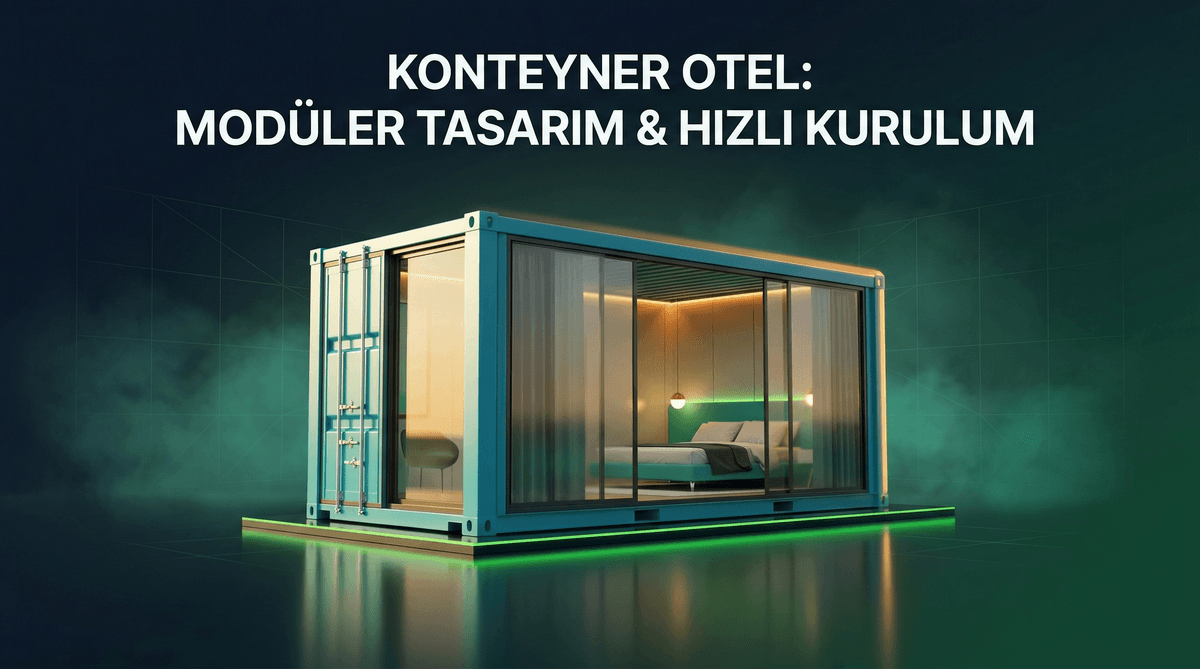
In the hospitality sector, traditional construction methods struggle with high costs, long durations, and a lack of flexibility. The container hotel concept is rapidly emerging as a revolutionary approach that addresses all three of these challenges. This model, which involves transforming shipping containers into accommodation units, has caught the attention of entrepreneurs due to its low investment cost, fast setup time, and portability advantages.
The global modular construction market reached $157 billion in 2025, with the container hotel segment standing out as the most dynamic subcategory, boasting an annual 16.8% growth rate. In Europe, the number of container hotels opened between 2020-2025 increased by 240%.
Embed this image on your site
<a href="https://otelciro.com/en/news/container-hotels-2026-modular-design-rapid-deployment-guide">
  <img src="https://cdn.sanity.io/images/1la98t0z/production/5e177db74048a9cf7a1def56584f3ae4bfe26b6f-1200x669.png" alt="Container Hotel Modular Design" width="800" />
</a>
<p>Source: <a href="https://otelciro.com">OtelCiro</a> — AI Hotel Revenue Management</p>
In this article, we delve into the advantages of the container hotel concept, its design principles, cost analysis, and application potential in Turkey.
Related reading: 8 Mega Trends of 2026: Trends Shaping the Hospitality Industry
Advantages of Container Hotels
The primary advantages of the container hotel concept over traditional construction include:
Speed
While the construction of a traditional 30-room hotel can take 18-36 months, a container hotel of the same capacity can become operational in 3-6 months. Containers are manufactured in a factory environment in parallel, with only assembly and infrastructure connections performed on-site.
This speed advantage is critical in situations such as:
- Meeting deadlines for festivals and events
- Rapid entry into the tourism season
- Validating investments through demand testing
Cost
| Parameter | Traditional Hotel | Container Hotel | Savings |
|---|---|---|---|
| Per-unit construction cost | 250,000-500,000 TL | 80,000-200,000 TL | 50-68% |
| Total project duration | 18-36 months | 3-6 months | 75-85% |
| Labor cost | High | Low (factory production) | 40-60% |
| Land preparation cost | Deep foundation required | Light foundation sufficient | 60-70% |
An average of 50-65% savings is achieved in total investment costs. This is a significant advantage, especially for entrepreneurs with limited capital and investors looking to test pilot projects.
Flexibility and Portability
One of the most unique features of container hotels is their portability. A facility that is not performing well in one location can be dismantled and relocated to another. This flexibility is not possible with traditional real estate investments.
Moreover, capacity adjustment is easy. New container units can be added when demand increases and removed when it decreases. This makes it an ideal model for adapting to seasonal demand fluctuations.
Design Principles and Standards
The success of a container hotel depends on achieving a design quality that makes it "not look like a container." Modern container hotels compete with traditional hotel comfort both inside and out.
Container Types
20 ft container (6m x 2.4m): Suitable for compact single or double rooms. Approximately 14 m² of net usable area.
40 ft container (12m x 2.4m): Standard hotel room size. With 28 m² of net usable area, it can accommodate a bedroom, bathroom, and a mini lounge area.
Double container combination: By combining two containers side-by-side or stacked, 50-60 m² suite rooms can be created.
Insulation and Comfort
The biggest technical challenge for container structures is thermal insulation. The steel body overheats in summer and cools down in winter. To solve this problem:
- Spray polyurethane foam: Applied to the inner surface in 5-8 cm thickness. The most common and effective method.
- Mineral wool panels: A fire-resistant alternative.
- Green roof: Placing soil and vegetation on the roof provides natural insulation and aesthetics.
- Double-walled structure: Leaving an air gap between two container shells. A premium application.
With proper insulation, a container room can perform at 20-30% less energy consumption than a traditional hotel room.
Related reading: Hotel IoT and Smart Room Technologies
Container Hotel Applications in Turkey
Turkey offers an extremely suitable market for the container hotel concept. Its extensive coastline, diverse geography, and rapidly growing domestic tourism demand multiply the potential locations for container hotels.
Suitable Locations and Use Cases
Coastal regions: Glamping and beach hotel formats in Antalya, Muğla, and İzmir coasts. The seasonal operation model aligns with the portability advantage.
Festival areas: More than 200 music festivals are held annually in Turkey. Temporary accommodation needs can be met with container hotels.
Rural tourism: Nature-focused compact facilities in the Black Sea plateaus, Lake Region, and Central Anatolia.
City centers: Pop-up hotel concept on empty lots. Can be operated with temporary use permits on plots awaiting zoning approval.
Disaster areas: Temporary accommodation facilities that can be rapidly established after earthquakes or floods. A model combining social responsibility and commercial benefit.
Legal Framework
In Turkey, container structures are evaluated under the Building Law No. 3194. If classified as a permanent structure, a full building permit is required; if classified as a temporary structure, more flexible procedures apply.
Compliance with the Ministry of Culture and Tourism standards is mandatory to obtain a tourism certificate. It should be noted that container hotels are subject to the same criteria as traditional hotels regarding minimum room size, bathroom standards, and common area requirements.
Digital Management and Operations
Container hotels are typically small-to-medium-sized businesses and require digital tools for efficient operation.
PMS integration: With Smart PMS solutions, reservation management, room status tracking, and guest communication can be conducted from a single platform. Cloud-based and mobile-friendly systems are ideal for small-scale facilities.
IoT sensors: Remote monitoring with temperature, humidity, and energy consumption sensors in each container. Fault detection and maintenance planning are done proactively.
Self-service check-in: Staff needs are minimized with smart locks and digital key systems. The personnel cost of a container hotel is 35-50% of that of a traditional hotel.
Sustainability and Environmental Impact
Container hotels offer a dual value in terms of sustainability:
Recycling: Millions of shipping containers are scrapped every year. Converting these containers into accommodation facilities reduces steel waste and decreases the carbon footprint by 40%.
Minimum land impact: The light foundation system means minimal intervention with the soil. When the facility is dismantled, the land can be returned to almost its original state.
Energy independence: Off-grid operation is possible with solar panels and rainwater harvesting systems.
The container hotel concept represents one of the most practical and accessible models shaping the future of the hospitality industry. Its low investment cost, rapid setup, portability, and sustainability advantages make this concept an attractive opportunity for both experienced hoteliers and entrepreneurs entering the sector for the first time. Turkey's diverse geography and growing tourism market provide an ideal ground for container hotels.
![Europe's Hotel Construction Boom: 2026 Oversupply Risks [Market Analysis]](https://cdn.sanity.io/images/1la98t0z/production/6dfe59137f56aa14bfcba86d9db3cf05ff89f406-2752x1536.jpg?w=1920&q=50&auto=format&fit=max)