![Boosting Family Stays: Hotel Kids' Menus & Dining [2026 Guide]](https://cdn.sanity.io/images/1la98t0z/production/4fa758f9be1d056cac222cfe8cad04ba7c644202-1200x669.png?w=1920&q=65&auto=format&fit=max)
Key Takeaways
- Family dining influences hotel choice by 42%, with 67% of families actively seeking child-friendly menus and dining options.
- Modern kids' menus in 2026 prioritize balanced nutrition (at least 60% healthy options), age-appropriate portions, allergen management, and interactive design that boosts satisfaction by 45%.
- Beyond the menu, cultivate a family-friendly restaurant environment with dedicated sections, diverse seating options, integrated play areas, and essential parental comforts like changing rooms and Wi-Fi.
- Leverage special occasions and culinary workshops (e.g., birthday packages, family cooking classes) to create memorable experiences, drive social media sharing (85%), and foster repeat visits.
- Strategic pricing (kids' menus 40-50% of adult prices), portion control, menu engineering, and waste management are crucial for profitability, aiming for 25-35% of total F&B revenue from the family segment.
Family Segment: The Most Valuable Yet Most Overlooked Guest Group
Families represent one of the highest-spending guest segments in the hotel industry. However, when it comes to the food and beverage experience, most hotels dismiss the family segment by offering a standard children's menu with the "burger, pizza, pasta" trio.
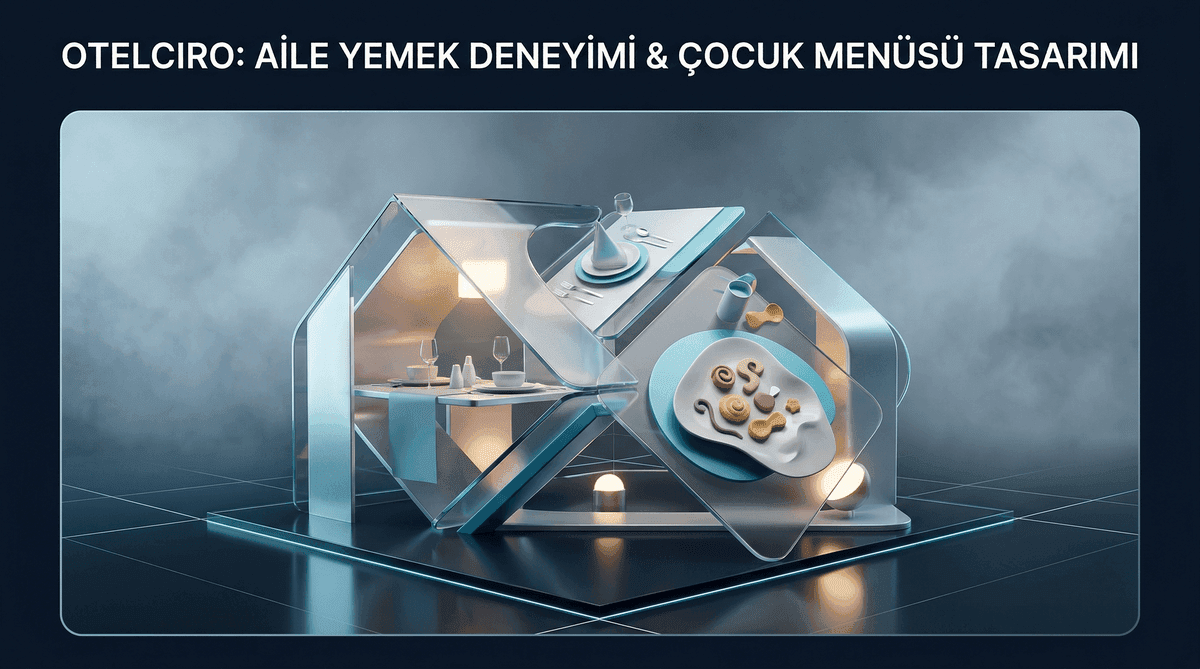
Research indicates that the dining experience in family travels influences hotel selection by 42%. Furthermore, 67% of families with children actively research child-friendly menus and dining options when choosing a hotel.
Embed this image on your site
<a href="https://otelciro.com/en/news/boosting-family-stays-hotel-kids-menus-dining-2026-guide">
  <img src="https://cdn.sanity.io/images/1la98t0z/production/4fa758f9be1d056cac222cfe8cad04ba7c644202-1200x669.png" alt="Otel Çocuk Menüsü ve Aile Yemek Deneyimi İnfografiği" width="800" />
</a>
<p>Source: <a href="https://otelciro.com">OtelCiro</a> — AI Hotel Revenue Management</p>
In this article, we detail how you can redesign your hotel's children's menu and family dining experience, combine healthy options with fun presentations, and measure the return on this investment.
Related Reading: Food Hall Concept: Modern Gastronomy Experience
Modern Children's Menu Design Principles
The traditional concept of a "children's menu" is now outdated. In 2026, parents expect healthy, diverse, and visually appealing meals for their children.
Nutritional balance rules: Every child's plate should have a balance of protein, carbohydrates, vegetables, and fruit. While fried products may not be entirely removed from the menu, baked or grilled alternatives should be prioritized. The proportion of healthy options on the menu should be at least 60%.
Portions and Presentation by Age Group:
- 0-2 years (infants): Purees, soft foods, allergen-free options. 80% of parents expect baby food to be available at the hotel.
- 3-6 years: Small portions, fun presentation (animal-shaped, colorful plates), dipping sauces.
- 7-12 years: Half-portion adult meals, 'build-your-own plate' option.
- 13+ years (teens): Reduced portions from the adult menu, trendy meals (poke bowl, taco).
Allergen management: The rate of food allergies in children has increased by 50% in the last 10 years. Gluten intolerance, milk allergy, peanut allergy, and egg allergy are the most common. Allergen information should be clearly stated on the menu, and the kitchen team must be trained on cross-contamination.
Interactive menu design: Add elements that increase children's interaction with the menu: colorable menu paper, interactive content accessed via QR code, or 'build-your-own pizza' selection menus. Interactive menus increase child satisfaction by 45%.
Family-Friendly Restaurant Experience Design
A children's menu alone is not enough. A comprehensive approach covering the entire family dining experience is required.
Physical layout:
- Family section: Designating a corner of the restaurant for families provides comfort for families and tranquility for guests without children.
- Children's seating options: Booster seats, high chairs, and child-sized furniture should be suitable for all age groups.
- Play area integration: A small play corner within the restaurant's sightline allows parents to dine comfortably.
- Hygiene station: Easily accessible hand washing and cleaning points.
Service speed strategy: Waiting time is critical for families. Children get bored sitting at the table for long periods. Children's meals should be served within 10 minutes. Activity sets (crayons, puzzles, small games) should be provided at the table to keep children engaged until their food arrives.
Parental comfort: A diaper changing room, bottle warming service, child care booster seats, and free Wi-Fi are essential components of the parental experience. The presence of these services increases TripAdvisor family segment scores by 0.6 points.
Family Experience at the Breakfast Buffet
Breakfast is the busiest and often most stressful mealtime for families. A well-designed family breakfast experience positively impacts the rest of the day.
Children's breakfast station: Arrange a section of the buffet with child-sized counters and accessible containers. Children preparing their own plates is both a fun activity and creates nutritional awareness.
Healthy breakfast options:
- Fresh fruit bar: Seasonal fruits, 'make your own smoothie' station.
- Oat and granola bar: With various topping options.
- Protein corner: Boiled eggs, various cheeses, turkey ham.
- Mini Turkish breakfast version: Small portions of honey-clotted cream, olives, tomato-cucumber.
Flexible timing: Family breakfast times can be unpredictable. Extending standard 07:00-10:00 hours to 06:30-11:00 significantly increases family satisfaction. Offering a brunch option for families who eat late breakfast is an additional revenue opportunity.
Related Reading: HotelRevenue Operations Management
Special Occasion Celebrations and Experience Packages
Birthdays, anniversaries, and school holiday celebrations are common during family travels. Making these special occasions memorable is a powerful loyalty tool.
Birthday package: A package including cake, balloon decorations, a special chef's hat, and a birthday menu. The cost is approximately 500-800 TL, but the rate of photo sharing on social media is 85%, and its impact on repeat visit decisions is 30%.
Family cooking workshop: Weekly or weekend 'families cook together' workshops are both a fun activity and an additional revenue source. Pizza making, cookie decorating, and Turkish manti workshops are the most popular options. These workshops, which can be sold for 200-350 TL per person, have a 90% satisfaction rate.
Secret chef adventure: Dressing children in special chef aprons and hats and organizing a kitchen tour. A simple yet very effective experience. Such personalized touches directly impact online review scores.
Seasonal events: Poolside barbecue nights in summer, hot chocolate and marshmallow stations in winter, traditional cooking workshops during holiday periods. Seasonal events account for 35% of repeat visit motivation.
Food Cost Management and Profitability
Measuring the return on investment for children's menus and controlling food costs are critical for operational sustainability.
Children's menu pricing strategy: Children's menu prices should be 40-50% of the adult menu prices. While 'kids under 12 eat free' campaigns may seem like a short-term revenue loss, attracting the family segment can increase total revenue by 15-20%.
Portion control: Standardization of children's portions is key to reducing food waste. Age-appropriate portion sizes should be determined, and the kitchen team must ensure adherence to these standards.
Menu engineering: Each item on the children's menu should undergo food cost and popularity analysis. Low-cost but highly popular items (pasta, rice, seasonal fruits) should be highlighted on the menu.
Waste management: Waste at children's tables is 30% higher than at adult tables. Smaller initial portions and an "additional portion free upon request" approach are effective ways to reduce waste.
Success Metrics and Continuous Improvement
To measure the impact of your family dining experience investment, it's essential to track the right metrics.
Key KPIs to track:
- Family segment food & beverage revenue share (target: 25-35% of total F&B revenue).
- Children's menu order rate and popular item analysis.
- Family segment satisfaction score (F&B specific).
- Frequency of 'child-friendly' and 'family' keywords in online reviews.
- Children's menu food cost percentage (target: 25-30%).
- Family segment repeat visit rate.
Feedback collection: Gather simple feedback from children using a special 'emoji survey' (happy face, normal face, sad face). For parents, ask 2-3 questions about the food & beverage experience in the check-out survey.
Seasonal menu updates: Update the children's menu at least 4 times a year (seasonally). Add new items, remove low-demand ones, and increase the proportion of healthy options.
Children's menu and family dining experience design directly determine your hotel's competitive edge in the family segment. By offering a healthy, fun, and personalized dining experience, you can attract, satisfy, and convert families into loyal guests.
![Europe's Hotel Construction Boom: 2026 Oversupply Risks [Market Analysis]](https://cdn.sanity.io/images/1la98t0z/production/6dfe59137f56aa14bfcba86d9db3cf05ff89f406-2752x1536.jpg?w=1920&q=50&auto=format&fit=max)