Key Takeaways
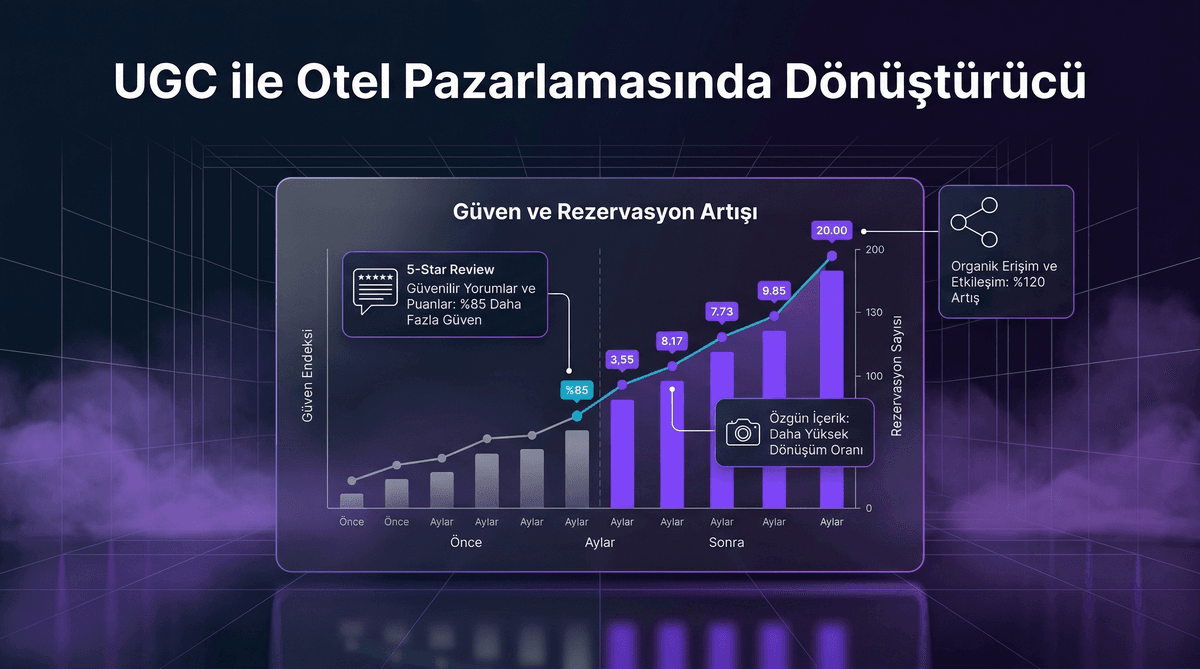
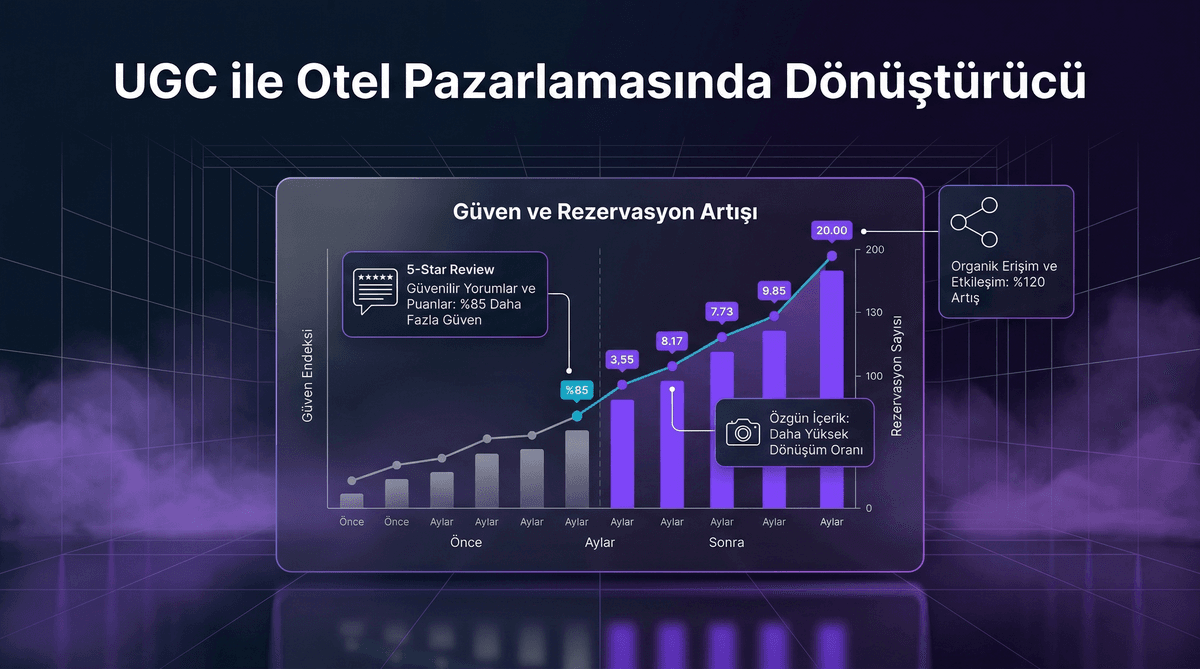
- UGC Builds Trust & Engagement: 92% of consumers trust user-generated content over brand content, and UGC posts generate 4.5x more social media engagement.
- Boosts Conversions: Hotel website pages utilizing UGC see a 29% higher conversion rate compared to those that don't.
- Strategically Encourage Content: Create "Instagrammable moments," implement branded hashtags, use WiFi splash pages, and offer check-out incentives or contests to drive UGC creation.
- Effective Collection & Curation: Leverage social listening tools, obtain explicit permission from content creators, and filter for quality to ensure optimal marketing use.
- Amplify Across Channels: Integrate UGC into your website, social media, email marketing, ad campaigns, and OTA profiles to enhance authenticity, engagement, and ROI.
What is UGC and Why Is It So Powerful?
User-Generated Content (UGC) encompasses photos, videos, reviews, and shares created by actual users, not the brand itself. In the hospitality sector, UGC includes photos guests take at the hotel, social media posts, video tours, and reviews on various feedback platforms.
The marketing power of UGC is undeniable, backed by figures. 92% of consumers trust user-generated content over brand content. Hotel website pages that use UGC have a conversion rate 29% higher than those that do not. On social media, UGC shares generate 4.5 times more engagement compared to professional content.
Embed this image on your site
<a href="https://otelciro.com/en/news/boost-hotel-marketing-with-ugc-a-2026-strategy-guide">
  <img src="https://cdn.sanity.io/images/1la98t0z/production/22774c10ae384d0c0f62399954934a2fe00dae50-1200x669.png" alt="User-Generated Content UGC Hotel Infographic" width="800" />
</a>
<p>Source: <a href="https://otelciro.com">OtelCiro</a> — AI Hotel Revenue Management</p>
The psychological reason for this is simple: people trust the experiences of others who are similar to them. A professional hotel photo says, "this room is beautiful"; a guest's share says, "I truly had a wonderful time in this room." The latter message is far more convincing.
In this article, we delve into how to build a systematic UGC strategy for your hotel, methods to encourage guests to create content, and best practices for effectively using UGC across marketing channels.
Related reading: Influencer Partnership ROI: Measuring Hotel Campaigns
Encouraging Guests to Create UGC
UGC is content naturally produced by guests, but strategic incentives are needed to increase its volume. Successful hotels integrate UGC triggers at every touchpoint of the guest experience.
Create Instagrammable moments: Design areas within your hotel where guests will naturally want to take photos. This could be a stunning wall mural, a unique decorative element, a neon sign, or an iconic viewpoint – these are called "Instagrammable moments." Research shows that hotels with dedicated photo spots see a 340% increase in guest shares.
Branded hashtag: Create a memorable, hotel-specific hashtag and place it everywhere: room key cards, restaurant menus, poolside signs, WiFi splash page, and check-in emails. Simple, easy-to-type hashtags like "#HotelNameMoments" or "#NameExperience" yield the best results.
WiFi splash page: Implement a system that allows guests to log in to WiFi using their social media accounts. On the splash page, display a message like, "Share your experience with #HotelHashtag and get 10% off your next stay." This method boosts UGC production by 67%.
Check-out incentive: In an email sent during or after check-out, offer those who share content a discount on a future stay, a free upgrade, or spa credit. Tangible incentives turn passive guests into active content creators.
Contests and campaigns: Organize monthly "Best Photo" contests. The winner could receive a free weekend stay package. Such contests can generate hundreds of high-quality UGC pieces in a single campaign.
UGC Collection and Curation
It is crucial to systematically collect, filter, and prepare guest-generated content for use.
Social listening tools: Social listening tools like Mention, Brandwatch, or TINT automatically collect all content shared with your hotel's name, hashtag, or location. Without these tools, a large portion of guest shares would go unnoticed.
Permission management: Obtaining written permission from the content creator before using UGC in marketing materials is a legal requirement. Set up an automated messaging system to send a message to guests who share quality UGC, asking, "We loved your photo, can we share it on our channels?" The permission rate is typically over 85% as guests are pleased to be recognized.
Quality filter: Not all UGC is equal. Filter out blurry photos, negative content, or shares inconsistent with your brand. Curated UGC produces 2.3 times more effective marketing results than raw UGC.
Content categorization: Categorize the collected UGC: room visuals, dining experiences, pool and spa, views, events. This categorization allows for quick retrieval of the right content for different marketing channels.
Related reading: Hotel TikTok Marketing: Viral Content Strategy
Using UGC Across Marketing Channels
Collected UGC can be utilized as powerful content across numerous marketing channels.
Website: Create a live UGC gallery on your homepage and room pages. Integrate a widget that automatically pulls guest Instagram posts. Hotel websites with UGC galleries see an average session duration increase of 45% and page views per session rise by 32%.
Social media: Share 2-3 UGC posts per week on your hotel's social media accounts. Tag the original content creator in the post and include a thank you message. This approach fosters a sense of community and encourages other guests to share as well.
Email marketing: Use UGC visuals in newsletters and campaign emails. Emails containing UGC have 26% higher open rates and 37% higher click-through rates, performing more strongly compared to professional visuals.
Ad campaigns: Using UGC visuals in Meta (Facebook/Instagram) and Google ads dramatically improves ad performance. UGC-based ads have a 73% higher click-through rate than ads using stock photos, with cost-per-click decreasing by up to 50%.
OTA profiles: Add the best UGC to your hotel profiles on Booking.com, Expedia, and other OTA platforms (in accordance with platform rules). Guest photos, in addition to professional photos, make the profile more authentic and trustworthy.
By tracking UGC-driven traffic and conversions in detail with a sales and marketing ecosystem, you can identify the most effective types and channels for UGC.
Measuring UGC Performance
To measure the success of a UGC strategy, specific KPIs should be tracked.
Volume metrics:
- Number of UGC pieces generated monthly (target: 3-5 times the number of rooms)
- Number of branded hashtag uses
- Number of social media mentions
Quality metrics:
- Rate of usable (curated) UGC (target: 40%+)
- Average engagement per UGC post
- Sentiment analysis (positive/negative/neutral distribution)
Business metrics:
- Increase in conversion rate on UGC-containing pages
- ROI on UGC-based advertisements
- Customer acquisition cost in UGC-incentivized campaigns
Hotels implementing a systematic UGC strategy reduce annual content creation costs by 60% while simultaneously increasing content authenticity and conversion rates. Your guests are already photographing and sharing your hotel – what you need to do is strategically direct this natural behavior and turn it into business results.
![Europe's Hotel Construction Boom: 2026 Oversupply Risks [Market Analysis]](https://cdn.sanity.io/images/1la98t0z/production/6dfe59137f56aa14bfcba86d9db3cf05ff89f406-2752x1536.jpg?w=1920&q=50&auto=format&fit=max)