![Boost Hotel Front Office Skills with VR Training [2025 Guide]](https://cdn.sanity.io/images/1la98t0z/production/95c195772d9303e66fcfcafac43c8a9ee04124ea-1200x669.png?w=1920&q=65&auto=format&fit=max)
Key Takeaways
- Traditional front office training methods are inadequate for modern hotel demands, leading to low knowledge retention and higher error rates.
- VR simulation dramatically improves staff performance, boosting knowledge retention to 75-80%, reducing errors by 40%, and increasing upselling success by 60%.
- VR offers safe, realistic scenarios for managing difficult guests, handling check-in crises (e.g., overbooking, PMS crashes), and effectively implementing upselling/cross-selling techniques.
- Modern VR training systems are accessible and cost-effective, utilizing standalone headsets and AI-powered software with detailed performance analytics.
- A phased implementation roadmap ensures successful adoption, continuous staff development, and measurable ROI for hotels investing in VR training.
A Paradigm Shift in Front Office Training
The front office is the face of a hotel. Every critical guest touchpoint, from check-in to check-out, complaint management to upselling, passes through this department. However, traditional training methods—classroom presentations, manual reading, and "observing an experienced colleague"—are far from meeting the complex demands of modern hospitality.
Embed this image on your site
<a href="https://otelciro.com/en/news/boost-hotel-front-office-skills-with-vr-training-2025-guide">
  <img src="https://cdn.sanity.io/images/1la98t0z/production/95c195772d9303e66fcfcafac43c8a9ee04124ea-1200x669.png" alt="Front Office VR Simulation Training Infographic" width="800" />
</a>
<p>Source: <a href="https://otelciro.com">OtelCiro</a> — AI Hotel Revenue Management</p>
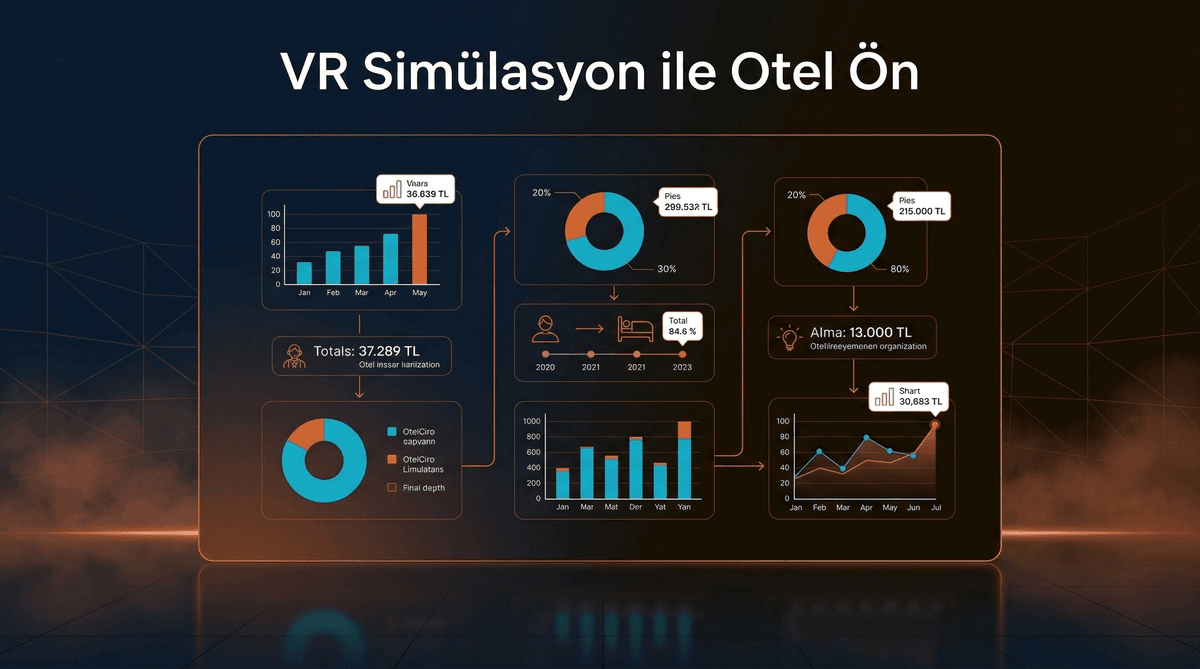
According to a 2025 study by the Cornell University School of Hotel Administration, while the knowledge retention rate for front office staff receiving traditional training is 20-30%, this rate increases to 75-80% for staff trained with VR simulation. Moreover, VR-trained staff make 40% fewer errors in real guest interactions and increase their upselling success rate by 60%.
Virtual reality technology moves front office training out of the classroom and transforms it into a realistic, interactive, and measurable experience.
Related reading: Hotel Staff Retention Strategies: AI-Powered Solutions
VR Simulation Training Scenarios
VR's biggest advantage is offering the opportunity to experience situations that are rarely encountered in real life but are critical when they occur, all within a safe environment.
Scenario 1: Difficult Guest Management
One of the most challenging situations for hotel staff is dealing with angry or dissatisfied guests. VR simulation offers guest profiles with varying difficulty levels:
- Level 1: A calm guest complaining that the room did not meet expectations
- Level 2: A shouting and insulting guest in the lobby environment
- Level 3: A guest threatening to share on social media, demanding compensation
- Level 4: An aggressive behavior scenario posing a security risk
In each scenario, AI analyzes the staff's verbal responses, tone of voice, and body language, providing instant feedback. The scenario successfully concludes when correct de-escalation techniques are applied; incorrect approaches escalate the situation, giving staff the opportunity to try alternative strategies.
Scenario 2: Check-in Crisis Management
Situations like overbooking, system failures, or unready rooms are among the front office's most challenging moments. VR simulations cover the following scenarios:
- Overbooking situation: No room available for a guest with a reservation, coordinating an alternative hotel
- PMS system crash: Manual check-in procedures and paper-based records
- Room not ready: Managing an early arriving guest, offering a temporary solution
- Credit card decline: Professionally managing a sensitive situation
These scenarios cover situations where 70% of staff panic and make wrong decisions in real life. After VR training, this rate decreases to 15%.
Scenario 3: Upselling and Cross-selling
The front office staff's contribution to revenue growth depends on effective upselling techniques. VR simulation provides:
- Room upgrade presentation: Offering the right room upgrade at the right time based on guest profile
- Package sales: Presenting spa, restaurant, and tour packages within a natural conversation flow
- Early check-in / late check-out: Offering paid early check-in or late check-out
- Special occasions: Offering personalized services for special events like honeymoons or birthdays
The success rate of staff who receive VR upselling training is 60% higher than those who do not. This translates to an average of 8-15 USD additional revenue per room.
Related reading: Hotel Upselling and Cross-selling Techniques
Technical Infrastructure and Implementation
Setting up a VR training system has become much more accessible and cost-effective than a few years ago.
Hardware Requirements
- VR headset: Meta Quest 3 or similar standalone VR headsets — no cables or computer required
- Training area: A 2x2 meter clear space (can also be used while seated)
- Wi-Fi: Stable internet connection (for scenario downloads and results synchronization)
In terms of cost, a VR training set (headset + software license) is approximately 15,000-25,000 TL annually. This is lower than the cost of a traditional 2-day external trainer and can be reused infinitely.
Software and Content
Modern VR training platforms offer the following features:
- AI-powered guest avatars: Realistic speech with natural language processing
- Multi-language scenarios: Turkish, English, German, Russian guest profiles
- Branching scenarios: Story flow that changes based on staff decisions
- Performance analytics: Detailed feedback report after each attempt
OtelCiro Integration
When the VR training platform is integrated with OtelCiro's smart PMS system, real hotel data can be reflected in the training scenarios. For example, the hotel's actual room types, prices, and current campaigns can be transferred to the VR environment, making the training completely realistic.
Measurement and Evaluation
One of the biggest advantages of VR training, unlike traditional training, is that every performance can be measured with detailed data.
Performance Metrics
- Scenario completion time: How long it took to reach a solution
- Correct decision rate: Percentage of correct responses at critical moments
- Communication quality: Tone of voice, word choice, and empathy level (AI analysis)
- Stress management: Level of calmness in difficult moments (heart rate measurement optional)
- Upselling success: Acceptance rate of sales offers
Progress Tracking
AI analyzes each employee's VR training history to create a personalized development plan:
- Which scenario types they are strong or weak in
- Development curve over time
- Comparison with similarly profiled staff
- Suggested additional training scenarios
This data allows managers to evaluate staff development based on objective criteria.
Implementation Roadmap
A phased approach is recommended to successfully implement a VR training program:
Phase 1: Pilot Application (1-2 Months)
- Procurement of 2-3 VR headsets
- Starting with 5 basic scenarios (check-in, complaint, upselling, overbooking, VIP)
- Pilot application with 10-15 front office staff
- Gathering feedback and refining scenarios
Phase 2: Expansion (3-4 Months)
- Increasing the number of scenarios to 15-20
- Including all front office staff in the training
- Expanding to F&B and concierge departments
- Integrating performance data into the HR system
Phase 3: Continuous Training (5+ Months)
- Adding new scenarios monthly
- Special scenarios derived from real guest complaints
- Inter-departmental competitions and reward system
- Integrating VR training data into performance evaluations
VR simulation training measurably increases front office performance while reducing training costs. Integrate your technology investments with OtelCiro's ecosystem solutions to achieve maximum efficiency.
Related reading: Multilingual Staff Management: Communication and Coordination
![Europe's Hotel Construction Boom: 2026 Oversupply Risks [Market Analysis]](https://cdn.sanity.io/images/1la98t0z/production/6dfe59137f56aa14bfcba86d9db3cf05ff89f406-2752x1536.jpg?w=1920&q=50&auto=format&fit=max)