![Boost Hotel Bookings: Programmatic Display Ads [2026 Guide]](https://cdn.sanity.io/images/1la98t0z/production/a81cda6422e0cf1e69723a38e6c464fe1dc1291d-1200x669.png?w=1920&q=65&auto=format&fit=max)
Key Takeaways
- Programmatic advertising is the new standard in hotel marketing, with global spending projected to reach $58 billion by the end of 2026.
- Effective programmatic strategies for hotels include retargeting (70% higher conversion rates), lookalike audiences (45% higher engagement), and contextual targeting.
- Dynamic creatives (53% higher click-through rates), native ads, and video ads significantly enhance engagement and brand awareness for hotels.
- Switching from last-click to data-driven or position-based attribution models can reveal that programmatic channels provide 2.3 times higher ROI.
- Hotels embracing first-party data strategies in the privacy era achieve 35% lower customer acquisition costs and are better prepared for cookie restrictions.
Programmatic Advertising: The New Standard for Hotel Marketing
Programmatic advertising is a technology that automates and optimizes the ad buying process with artificial intelligence. Unlike the traditional "I want to place a banner on this site" approach, the programmatic system shows the right message to the right user at the right time in milliseconds. Global programmatic ad spending in the hospitality sector reached $47 billion in 2025, and this figure is expected to climb to $58 billion by the end of 2026.
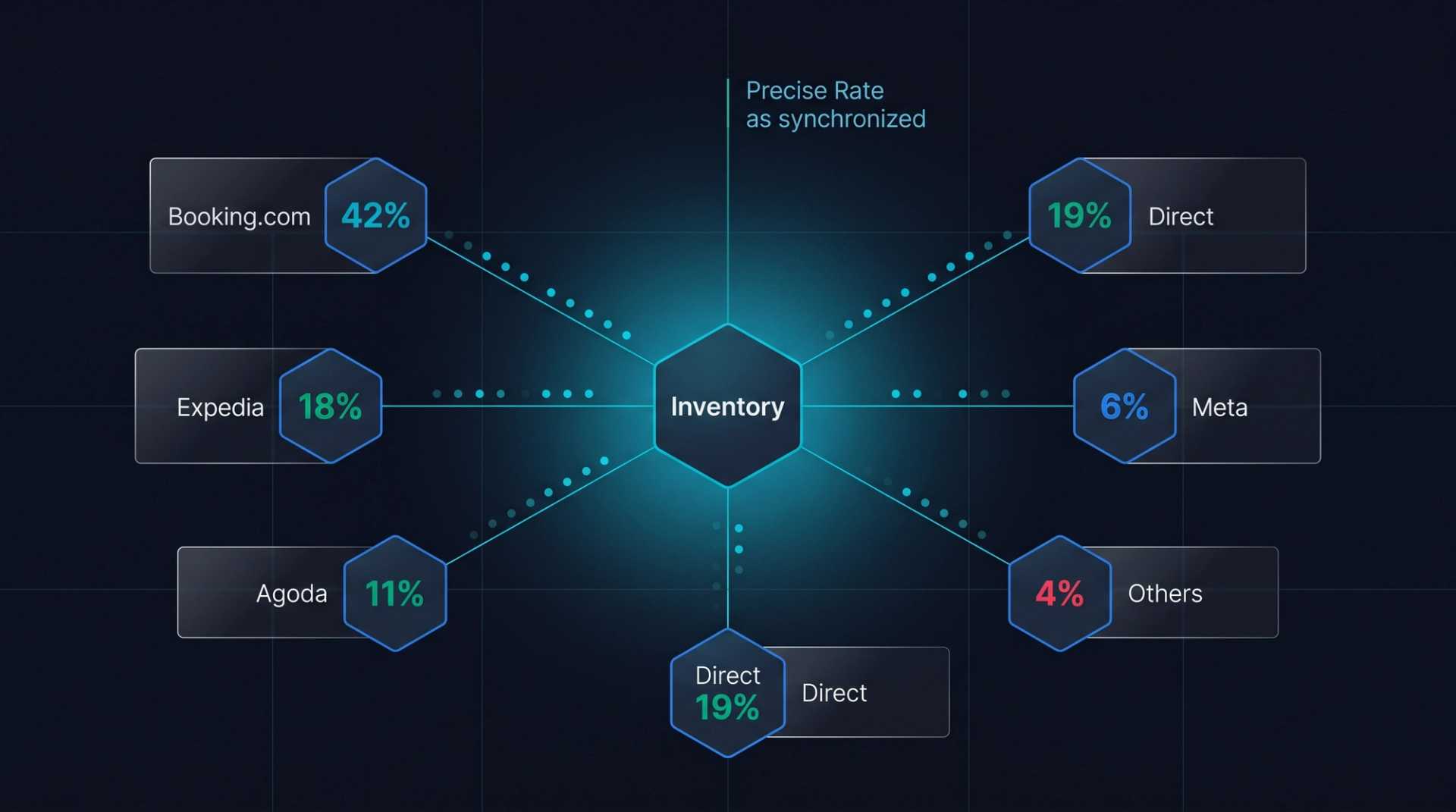
Specifically in Turkey, programmatic display ads constitute an average of 22% of hotel digital marketing budgets. However, the proportion of hotels effectively utilizing this channel remains low. With the right strategy, programmatic advertising is a powerful way to increase direct bookings, serving as an alternative to OTA commissions.
From the moment a traveler begins their hotel search to the point of making a reservation, they visit an average of 45 different websites. Programmatic advertising ensures your brand is visible at every touchpoint of this journey.
Related reading: Booking vs Expedia: Channel Strategy Comparison
How Programmatic Advertising Works
The programmatic ecosystem consists of several interconnected core components. Understanding these components helps hoteliers make informed investment decisions.
DSP (Demand-Side Platform): This is the platform that buys ad space on your behalf as an advertiser. Google DV360, The Trade Desk, and Criteo are among the most common DSPs. For hoteliers, Criteo is particularly effective due to its travel industry-specific algorithms.
SSP (Supply-Side Platform): This is the platform through which websites make their ad spaces available for sale. Thousands of travel, lifestyle, and news sites offer their ad inventory via SSPs.
DMP (Data Management Platform): This platform collects, segments, and utilizes user data for targeting. Your first-party data (website visitors, email lists) merges here with third-party data (travel intent, income level).
All of this occurs within 100 milliseconds the moment a user opens a web page. An auction for the ad space is held, the most suitable advertiser wins, and the ad is displayed while the user is still waiting for the page to load.
Most Effective Programmatic Strategies for Hoteliers
Success in programmatic advertising comes from the right combination of strategies. The strategies that provide the highest ROI for hoteliers include:
Retargeting: Reach users who visited your website but left without making a reservation. Retargeting campaigns provide a 70% higher conversion rate compared to standard display ads. Offering special deals to users who visited the price check page but didn't complete a booking is particularly effective.
Lookalike Audiences: Reach new users who resemble the profile of your existing guests. Lookalike audiences created from your CRM data provide 45% higher engagement compared to general targeting.
Contextual Targeting: Display ads on travel-related websites. In an era where cookies are progressively losing importance, contextual targeting is a privacy-friendly and effective alternative.
Weather Targeting: Showing ads for sunny destinations to users in cold and rainy regions has been proven to increase click-through rates by 38%.
By integrating your hotel sales and distribution channels with your programmatic ad strategy, you can present a consistent message across every channel.
Creative Strategy and Ad Formats
In programmatic advertising, creative quality is as important as targeting. The most effective ad formats and creative strategies for hoteliers are as follows:
Dynamic Creatives: Ads that automatically customize based on the user's search history, location, and demographic profile. For example, you can reach a user searching for a suite in Istanbul with a suite image and price, and someone looking for a family vacation in Antalya with a family package offer. Dynamic creatives provide a 53% higher click-through rate compared to static visuals.
Native Ad Format: Natural-looking ads that blend seamlessly with the publisher's content. They can overcome banner blindness, achieving engagement rates up to 8.8%.
Video Ads: 15-30 second hotel promotional videos can be displayed across thousands of websites through programmatic channels. Video ads increase brand awareness by 28%.
Rich Media: Rich media ads, which include interactive elements, deepen user engagement by offering virtual tours and 360-degree room experiences.
Related reading: Hotel Channel Management and OTA Distribution Strategies
Measurement and Attribution Model
One of the most critical aspects of programmatic advertising is performance measurement and selecting the correct attribution model. The last-click attribution model significantly undervalues programmatic advertising because a guest's booking journey typically begins with a display ad, continues with a search ad, and concludes with a direct visit.
Recommended attribution models:
- Data-driven attribution: Google's machine learning fairly distributes credit to each touchpoint.
- Position-based: Assigns 40% credit to the first click and last click, and 20% to intermediate touchpoints.
- Time decay: Gives more credit to touchpoints closer in time to the conversion.
67% of hotels using programmatic advertising in Turkey still employ last-click attribution, which does not reflect the true value of their programmatic budget. Hotels that switch to a correct attribution model discover that the programmatic channel provides 2.3 times higher ROI.
Programmatic Advertising in the Era of Privacy
The restriction of third-party cookies is the most significant development shaping the future of programmatic advertising. However, this situation presents an opportunity rather than a threat for hotels that establish a first-party data strategy.
Preparations you should make include: establishing a first-party data collection infrastructure, segmenting your email and loyalty program data, strengthening your contextual targeting capabilities, and planning a transition to solutions compatible with Google Privacy Sandbox.
Hotels with a first-party data strategy achieve 35% lower customer acquisition costs compared to those without. This difference will grow as cookie restrictions increase. Programmatic advertising isn't dying; it's evolving into a smarter, more privacy-focused, and more effective form.
![Europe's Hotel Construction Boom: 2026 Oversupply Risks [Market Analysis]](https://cdn.sanity.io/images/1la98t0z/production/6dfe59137f56aa14bfcba86d9db3cf05ff89f406-2752x1536.jpg?w=1920&q=50&auto=format&fit=max)