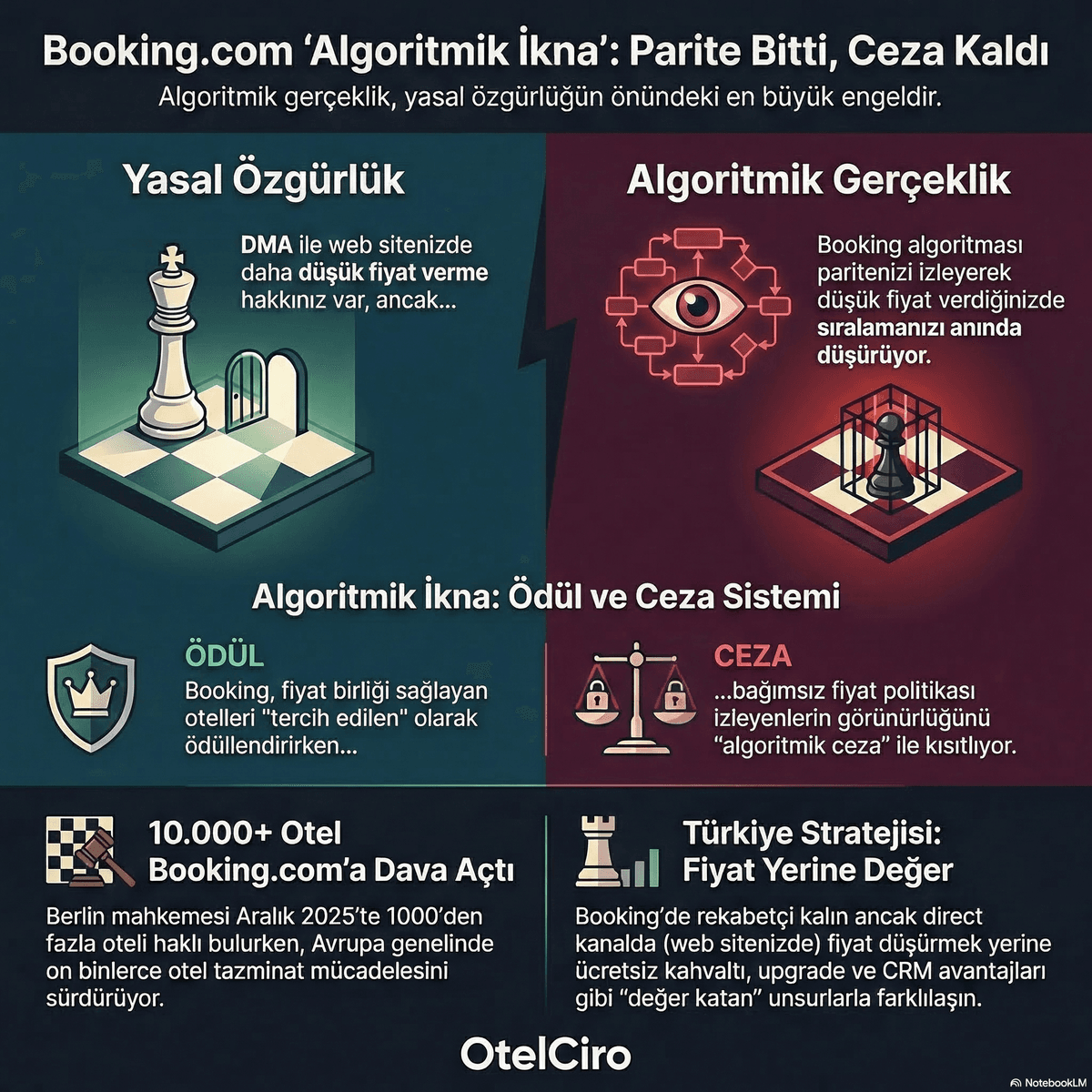
Booking.com's Algorithm: Not Just Price — 200+ Signals
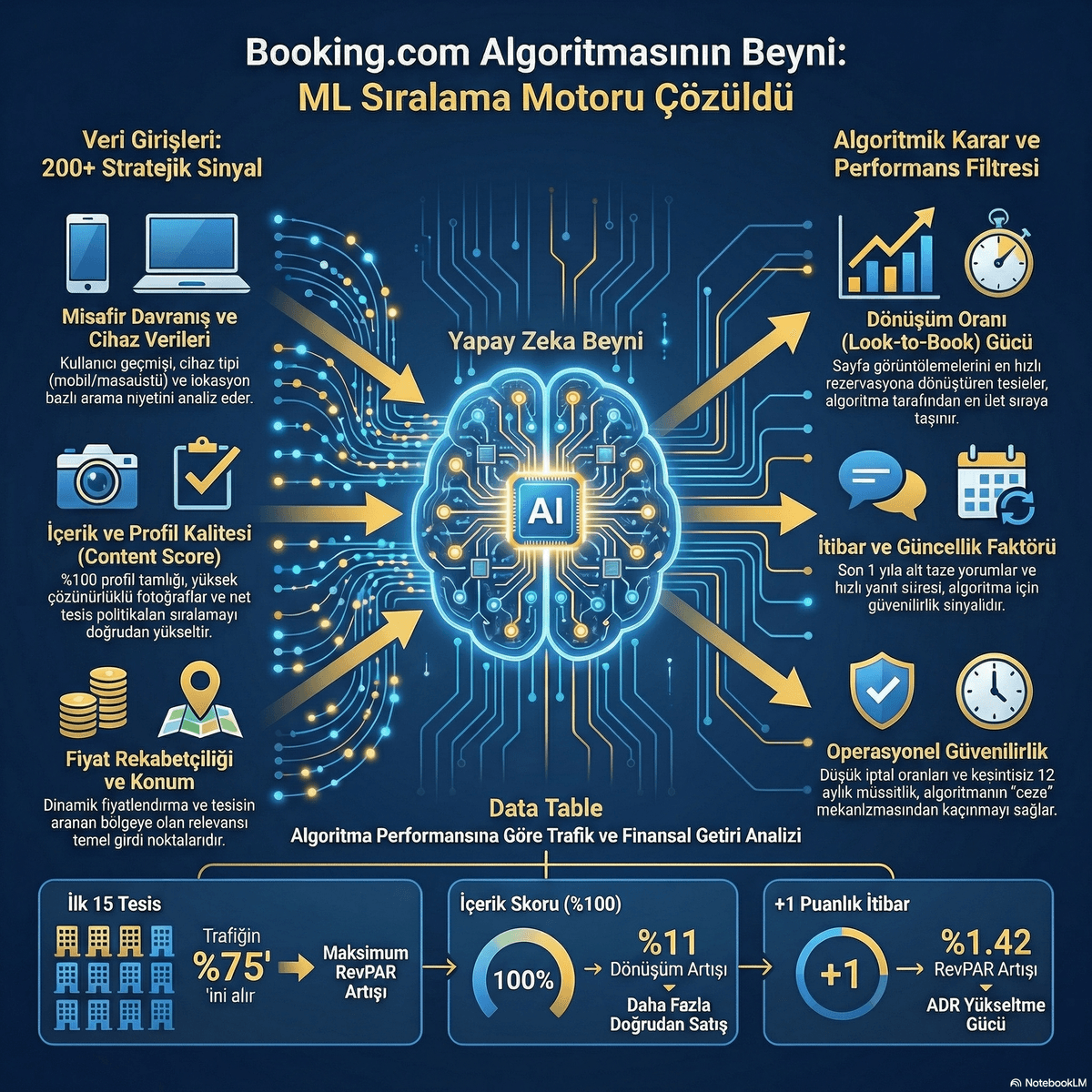
Many hoteliers assume Booking.com rankings are based solely on price. The reality is far more complex. Booking.com's machine learning (ML) ranking engine processes over 200 strategic signals simultaneously, generating a unique ranking for every single search.
This means two different searches for the same city on the same dates can produce entirely different ranking results. The algorithm personalizes results based on the searcher's device, location, past behavior, and preferences.
Related reading: Booking.com Algorithmic Persuasion and the API Digital Shelf: A Two-Front War
Inputs: The 6 Signal Categories Feeding the Algorithm
1. Device and User Data
- Mobile or desktop?
- User's IP location and language
- Past search and booking history
- Genius membership level
- Prior cancellation history
The algorithm can show different results to mobile users versus desktop users. Mobile users typically decide faster and exhibit higher price sensitivity.
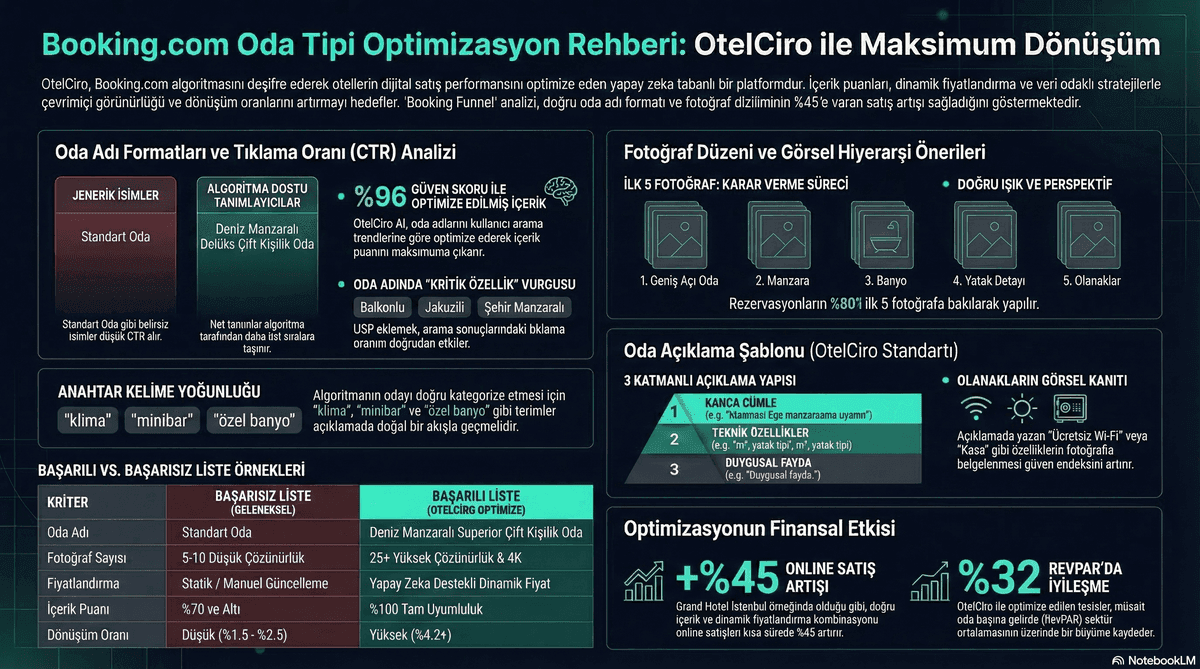
2. Content Quality
- Photo count and quality
- Description completeness
- Amenity and facility information
- Room type variety
- Policy transparency (cancellation, check-in times, etc.)
Booking.com Content Score is the quantitative measure of this category. A 100% Content Score increases conversion rate by 11%. That alone can translate into several ranking positions.
3. Price Competitiveness
- Price comparison with comp-set
- Price-value ratio (relative to star category)
- Consistency with prices on other platforms
- Promotions and discount offers
- Whether Genius discounts are offered
Price competitiveness does not necessarily mean being the cheapest. The algorithm evaluates whether your hotel is within a reasonable price range for its category and location.
4. Location Relevance
- Proximity to the user's searched area
- Distance to points of interest
- Transportation connections
- Regional popularity
When a user searches "Sultanahmet hotel," a property in Sultanahmet will rank above one in a different district — a clear reflection of the algorithm's location weighting.
5. Reputation and Guest Satisfaction
- Average review score
- Number of reviews
- Review response rate and speed
- Category-specific scores (cleanliness, location, staff)
- Recent review trends
The formula +1 reputation point = 1.42% RevPAR increase validates the weight the algorithm gives to reputation signals. For a deeper analysis, review our article on reputation management ROI.
6. Operational Reliability
- Cancellation rate
- No-show rate
- Guest complaint rate
- Booking.com message response time
- Overbooking history
- Invoice disputes
This category is one that many hoteliers overlook, yet the algorithm weighs it heavily. A high cancellation rate or frequent guest complaints can flag your hotel as "unreliable."
Embed this image on your site
<a href="https://otelciro.com/en/news/booking-algoritma-beyni">
  <img src="https://cdn.sanity.io/images/1la98t0z/production/4e1321089f9b1bc72258dde2b96e9760249756e6-1200x669.png" alt="Booking.com room type optimization" width="800" />
</a>
<p>Source: <a href="https://otelciro.com">OtelCiro</a> — AI Hotel Revenue Management</p>
Outputs: What the Algorithm Decides
The ML engine processes all these signals and produces two primary outputs:
1. Conversion Rate Prediction (Look-to-Book)
The algorithm answers the question "if this user sees this hotel, what is the probability of a booking?" for every search. Hotels with high predicted conversion probability rise to the top.
2. ADR Lifting Power
The algorithm also measures how much your hotel can increase its price. Hotels with strong reputation and compelling content that can command higher prices are rewarded — because Booking.com also earns more commission.
Related reading: Booking.com Classifies Your Hotel into 4 Tiers — Which One Are You In?
The Top 15 Rule and Traffic Distribution
In Booking.com search results, the first 15 hotels capture 75% of total traffic. This distribution follows an exponential decline for each position:
- Position 1: ~12% of traffic
- Position 5: ~7% of traffic
- Position 10: ~4% of traffic
- Position 15: ~2% of traffic
- Position 20: ~1% of traffic
These numbers show that dropping just 5 positions can cut your traffic in half.
Embed this image on your site
<a href="https://otelciro.com/en/news/booking-algoritma-beyni">
  <img src="https://cdn.sanity.io/images/1la98t0z/production/9e1392b05b1b69f2ed494b62433b779e2c809048-1200x670.png" alt="Booking.com Genius Level 3 strategy guide" width="800" />
</a>
<p>Source: <a href="https://otelciro.com">OtelCiro</a> — AI Hotel Revenue Management</p>
Strategic Framework for Winning the Algorithm
Short-Term Actions (1-2 weeks)
- Review all photos and replace low-quality ones
- Complete missing amenity and policy information
- Respond to unanswered reviews
- Add a flexible cancellation option
Medium-Term Actions (1-3 months)
- Push Content Score to 100%
- Join the Genius program
- Implement a dynamic pricing system
- Automate your guest review collection process
Long-Term Actions (3-12 months)
- Systematically raise your reputation score
- Optimize every stage of the conversion funnel
- Reduce OTA dependency through channel diversification
- Develop a protection strategy against Booking.com's hidden penalties
Related reading: Booking.com 2025 vs. 2026: 6 Rules Changed — Hotels Sticking to Old Strategies Are Losing
Machine Learning and Continuous Adaptation
Booking.com's ML model is not static — it continuously learns and adapts. This means:
- Tactics that worked in the past may become ineffective
- Your competitors' behavior affects your ranking
- Seasonal and trend changes recalibrate the algorithm
- Platform updates can shift signal weights
For this reason, OTA optimization is not a one-time project — it is a continuous process. Weekly metric tracking and monthly strategy reviews are mandatory.
Frequently Asked Questions
How frequently does the Booking.com algorithm update?
The algorithm updates continuously. Major updates typically happen quarterly, but minor weight adjustments can occur weekly or even daily. This is why you need to monitor your performance metrics continuously.
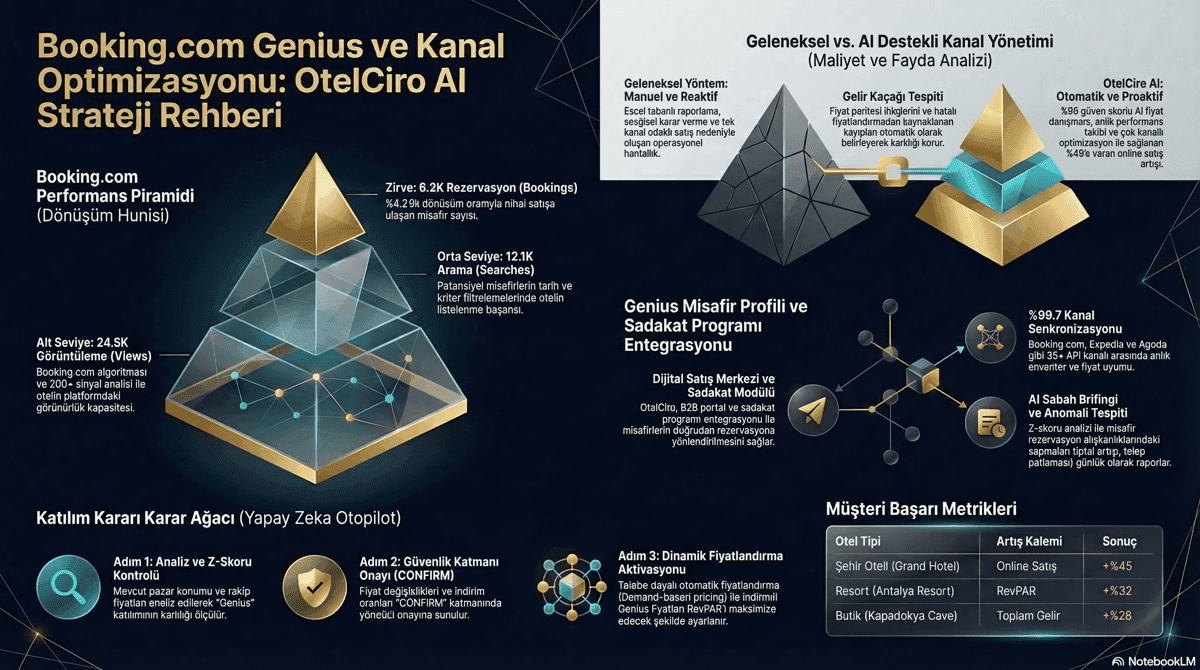
Does joining the Genius program affect ranking?
Yes. The Genius program enables you to offer exclusive discounts to Booking.com's loyal customers. Program participants gain additional visibility advantages in the algorithm. However, this benefit must be balanced against margin impact and evaluated carefully.
How much does a single bad review affect ranking?
A single review has minimal impact for hotels with a large review base. However, for small hotels with few reviews, one negative review can significantly affect the average score and consequently the ranking. Reaching 50+ reviews is important for algorithmic stability.
OtelCiro continuously analyzes Booking.com's 200+ algorithmic signals to help you optimize your ranking performance. Discover OtelCiro for ML-powered channel management.
![7 Advanced OTA Sales Tactics That Work [2026]](https://cdn.sanity.io/images/1la98t0z/production/0d8634b7f4d9033b08b65800012ec64261df48bc-1200x1200.png?w=1920&q=50&auto=format&fit=max)
![Booking.com Genius [2026]: Join, Leave or Optimize?](https://cdn.sanity.io/images/1la98t0z/production/fabaf8b8918404681f00de3f00e368aac91c9744-1200x1200.png?w=1920&q=50&auto=format&fit=max)