Key Takeaways
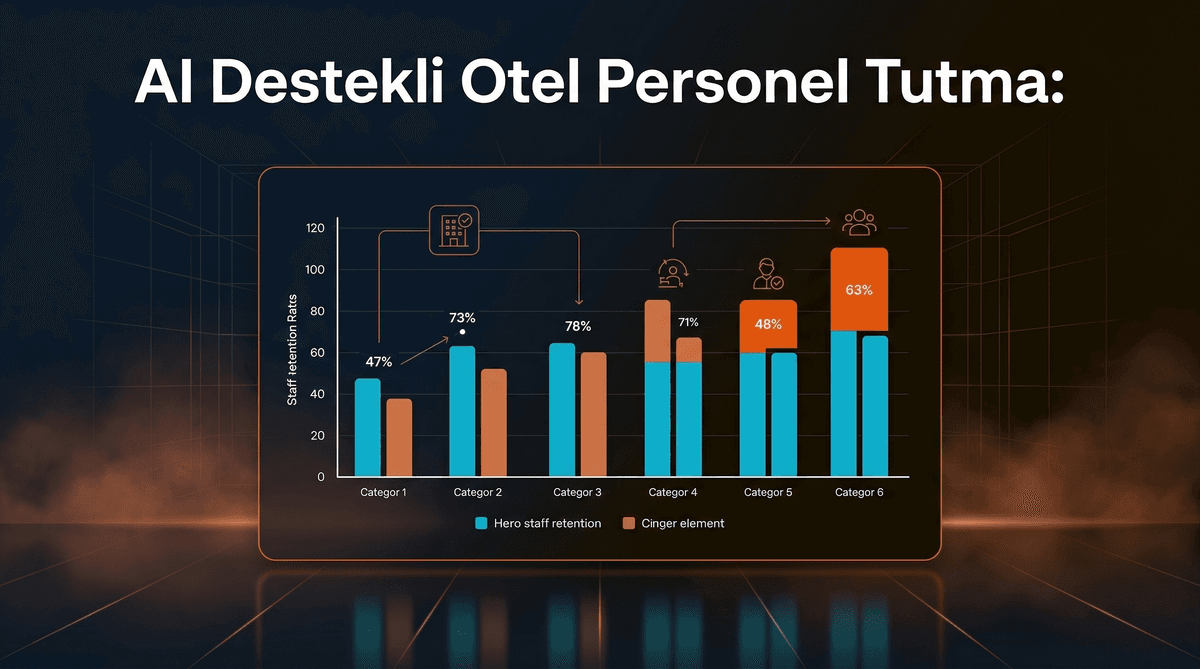
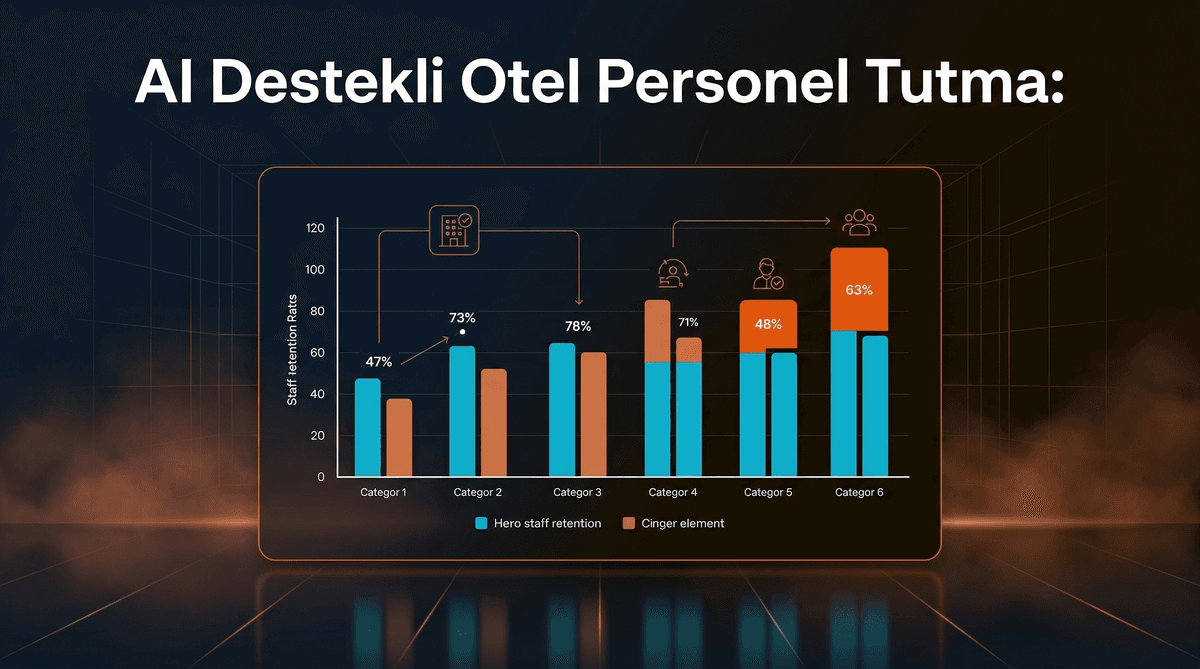
- The hospitality sector faces a significant staff turnover crisis, with Turkish hotels experiencing annual rates of 65-80% as of 2025.
- The cost of employee turnover is substantial, ranging from 50-200% of an employee's annual salary, equating to millions in hidden losses for a typical hotel.
- AI-powered systems can predict employee departure risks 3-6 months in advance by analyzing behavioral patterns and provide personalized retention strategies.
- These systems leverage pulse surveys, sentiment analysis, and comparative performance to provide real-time satisfaction insights, allowing for proactive intervention.
- Implementing AI-driven strategies can lead to significant cost savings, with an average ROI payback period of just 3-4 months for a 100-room hotel.
Hospitality's Biggest Crisis: Staff Turnover
The accommodation sector is one of the industries with the highest staff turnover rates globally. According to 2025 data, the annual employee turnover rate in hotels in Turkey ranges from 65-80%. This means that a hotel loses and has to rehire almost three-quarters of its staff every year.
Embed this image on your site
<a href="https://otelciro.com/en/news/ai-for-hotel-staff-retention-2026-strategy-guide">
  <img src="https://cdn.sanity.io/images/1la98t0z/production/b84b621452d1b558ba91ca7aa3d6922f1fd7f3c1-1200x669.png" alt="Hotel Staff Retention Strategies Infographic" width="800" />
</a>
<p>Source: <a href="https://otelciro.com">OtelCiro</a> — AI Hotel Revenue Management</p>
The cost of each departing employee is not limited to new hiring. When recruitment processes, training periods, productivity losses, and disruptions to guest experience are combined, the cost of a single employee's departure ranges from 50-200% of their annual salary. For a 100-room hotel, this represents a hidden loss of TL 500,000-1,500,000 per year.
AI-powered staff retention systems can fundamentally change this picture. With AI, it is now possible to forecast employee satisfaction, establish early warning mechanisms, and create personalized retention strategies.
Related reading: OtelCiro Ecosystem: All-in-One Hotel Management Platform
Root Causes of Staff Turnover and AI Analysis
Understanding why employees leave using traditional methods is often limited to exit interviews—meaning the problem has already occurred. AI-powered systems, however, can detect departure signals 3-6 months in advance.
Critical Indicators Monitored by AI
Artificial intelligence analyzes subtle changes in employee behavior to calculate the risk of departure:
- Absenteeism patterns: Frequency and timing of sick leave
- Shift preference changes: Tendency to request less popular shifts
- Overtime refusal: An employee who was previously willing to work extra hours now declines
- Performance fluctuations: Sudden or gradual decrease in stable performance
- Training participation: Decrease in participation rates in development programs
OtelCiro's AI engine combines these indicators to create a "departure risk score" for each employee. When the score rises above 70%, an automatic alert is sent to the manager, and personalized retention recommendations are provided.
Sectoral Comparison
| Department | Average Turnover Rate | Target After AI |
|---|---|---|
| Front desk | 55% | 30% |
| Housekeeping | 78% | 45% |
| F&B | 72% | 40% |
| Technical service | 40% | 20% |
| Sales and marketing | 35% | 18% |
Satisfaction Forecasting: Intervening Before Problems Escalate
The AI-powered satisfaction forecasting system goes beyond traditional annual satisfaction surveys. It continuously collects and analyzes data to monitor employee satisfaction in real time.
Pulse Surveys
Weekly short surveys with 2-3 questions continuously track employees' moods. AI analyzes trends in these responses to create department-based and individual satisfaction curves. For example, a declining satisfaction score in the housekeeping department over the last 3 weeks could signal an impending mass departure.
Sentiment Analysis
Sentiment analysis algorithms, which analyze the tone of messages on internal employee communication platforms, measure satisfaction and motivation levels from written expressions. This analysis can reflect employees' emotional states with 85% accuracy.
Comparative Performance Evaluation
AI detects abnormal deviations by comparing employees with similar profiles. If the performance of one of two individuals working in the same department, with the same tenure, and similar responsibilities decreases, this is considered a signal requiring individual intervention.
Related reading: Hotel Staff Performance Evaluation: Fair and Effective System
Personalized Retention Strategies
One of AI's strongest assets is its ability to suggest differentiated retention strategies for each employee. What motivates one employee may be completely irrelevant to another.
Motivation Profile Analysis
AI segments employees based on their sources of motivation:
- Career-oriented: Promotion opportunities, new responsibilities, and leadership programs
- Compensation-focused: Performance bonuses, incentive systems, and benefits
- Work-life balance seekers: Flexible shifts, remote work options, and leave flexibility
- Recognition needs: Award programs, achievement certificates, and team acknowledgment
- Development-oriented: Training budget, certification programs, and mentorship
For each segment, AI recommends the most effective retention tools. Research shows that personalized retention strategies are 40% more effective than generalized approaches.
Critical Role Protection
Not all positions are equal. The cost of losing an experienced revenue manager is much higher than losing a new bellboy. AI identifies employees in critical roles and designs special retention programs for these positions. For employees in the critical role category, salary market comparisons, career path planning, and special benefit packages are automatically updated.
Early Warning System and Intervention Protocol
When AI-powered early warning system detects a risk, it initiates an automatic intervention protocol. This protocol is applied in stages according to the risk level:
Low Risk (30-50%)
- Notification note to department manager
- Addition of extra questions in the next pulse survey
- Review of the employee's recent training and development activities
Medium Risk (50-70%)
- Automatic notification to the HR department
- Recommendation to schedule a one-on-one meeting
- Generation of a market salary comparison report
- Scenarios for alternative roles or department changes
High Risk (70%+)
- Urgent alert to the general manager
- Proposal for a retention package (salary adjustment, additional benefits, position improvement)
- Activation of a succession plan
- Mandatory one-on-one meeting with the employee within 48 hours
Thanks to this staged system, 60% of high-risk employees can be retained before they leave.
ROI Calculation: Return on AI Investment
Calculating the return on investment for an AI-powered staff retention system is a critical step for decision-makers.
Cost Savings Scenario (100-Room Hotel)
- Current annual turnover rate: 70% (49 out of 70 employees leave)
- Average cost per departure: TL 30,000/person
- Total annual loss: TL 1,470,000
- Target turnover rate with AI: 40% (28 employees leave)
- Loss after AI: TL 840,000
- Annual savings: TL 630,000
- AI system cost: TL 8,000-15,000 monthly
With this calculation, the return on AI investment is achieved in an average of 3-4 months. Moreover, this calculation only reflects direct cost savings—indirect benefits such as improved guest experience, increased operational efficiency, and preservation of institutional knowledge are not included.
With OtelCiro's AI-powered operations management, you can base your staff retention strategies on data, reduce employee turnover, and lower your operational costs.
Related reading: Career Path in the Accommodation Sector: Development Map
![Europe's Hotel Construction Boom: 2026 Oversupply Risks [Market Analysis]](https://cdn.sanity.io/images/1la98t0z/production/6dfe59137f56aa14bfcba86d9db3cf05ff89f406-2752x1536.jpg?w=1920&q=50&auto=format&fit=max)