![2026 Aegean Coast Hotels: Seasonal Dynamics & Growth [Strategy]](https://cdn.sanity.io/images/1la98t0z/production/763102c4de1e265457edcfeec2f0fbac10c2412c-1200x669.png?w=1920&q=65&auto=format&fit=max)
Key Takeaways
- Aegean coast hotels generated $7.3 billion in 2026, with an ADR 65% above the Turkish average, driven by boutique and lifestyle properties.
- Extreme seasonality dictates that 62% of annual revenue is earned during the 3-month high season (June 15 - September 15).
- Shoulder season (April-June 15, September 15-November) offers the largest growth potential, with effective strategies boosting total annual revenue by 20-35%.
- Winter months represent a significant income loss, requiring innovative strategies like thermal/SPA tourism, gastronomy, remote work programs, and sports camps.
- AI-powered revenue management tools are critical for the fragmented Aegean market, showing a 28% higher RevPAR for users among boutique hotels.
Aegean Coast: The Heart of Premium Turkish Tourism
The Aegean coast – Bodrum, Çeşme, Alaçatı, Fethiye, Datça, and Göcek – represents the highest-value segment of Turkish tourism. In 2026, the total revenue for Aegean coastal hotel management reached $7.3 billion. While this figure constitutes 15% of Turkey's total hotel revenue, in terms of revenue per room, the Aegean performs 65% above the Turkish average.
A distinctive feature of the Aegean is the dominance of boutique and lifestyle hotel management. 42% of hotels in the region have capacities under 50 rooms – this rate is only 8% in Antalya. This structural difference necessitates a completely different revenue management approach.
Embed this image on your site
<a href="https://otelciro.com/en/news/2026-aegean-coast-hotels-seasonal-dynamics-growth-strategy">
  <img src="https://cdn.sanity.io/images/1la98t0z/production/763102c4de1e265457edcfeec2f0fbac10c2412c-1200x669.png" alt="Aegean Coastal Hotel Management Infographic" width="800" />
</a>
<p>Source: <a href="https://otelciro.com">OtelCiro</a> — AI Hotel Revenue Management</p>
Related reading: Cappadocia Boutique Hotel Market: Dynamics and Opportunities
Seasonality: The Aegean's Greatest Advantage and Disadvantage
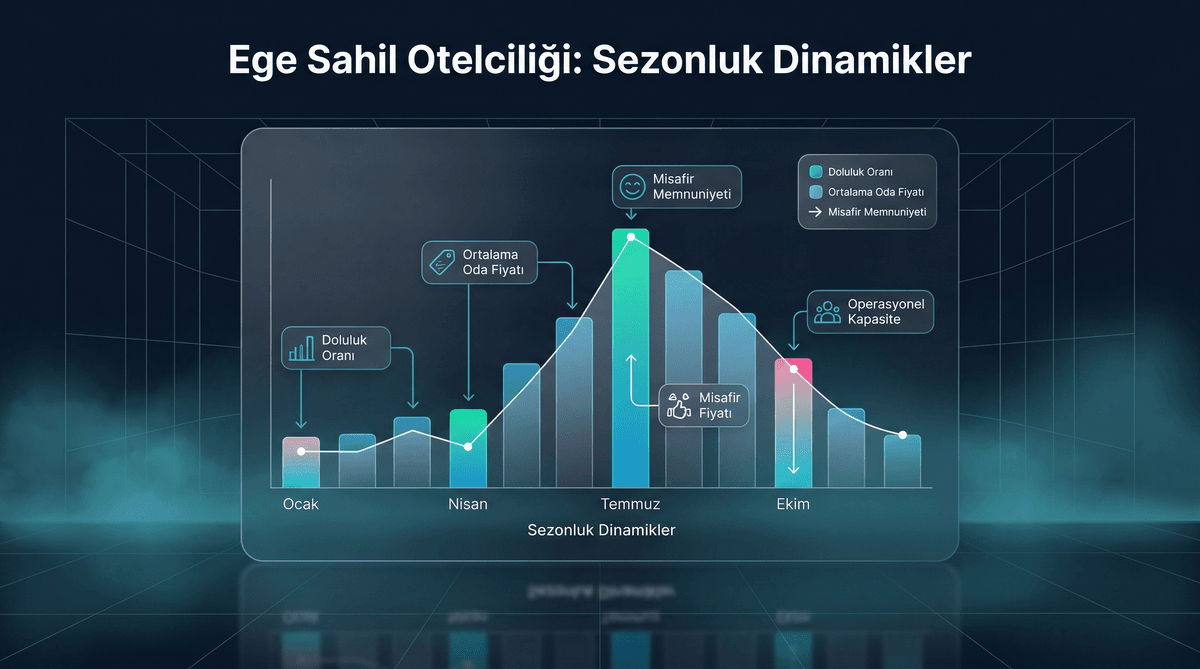
Seasonality in Aegean coastal hotel management exhibits Turkey's sharpest seasonal differences. This situation creates both great opportunities and serious challenges.
Season Analysis
High Season (June 15 - September 15): 62% of annual revenue is generated during this 3-month period. Occupancy rates are between 92-98%. ADR is at its peak – Bodrum's luxury segment sees ADRs ranging from $450-800. Room availability becomes a significant issue.
Shoulder Season (April-June 15, September 15-November): 28% of total revenue is earned during this period. Occupancy rates vary between 55-75%. This is the period with the highest price flexibility – offering substantial revenue opportunities with the right pricing strategy.
Low Season (December-March): Only 10% of annual revenue falls into this period. Occupancy rates are between 15-30%. Many properties are completely closed. For open properties, ADR drops to 30-40% of the high season.
These data reveal a striking truth: Aegean hoteliers must generate the vast majority of their annual income within 3-4 months. This situation makes AI-powered dynamic pricing systems a vitally important tool.
Shoulder Season Strategy: The Biggest Opportunity
The shoulder season holds the greatest revenue growth potential for Aegean hoteliers. Hotels that implement the right strategies during this period can increase their total annual revenue by 20-35%.
Effective shoulder season strategies:
- Event-based packages: Special packages aligning with festivals, gastronomy events, and sports organizations.
- Long-stay discounts: 15-25% discounts for stays of 7+ nights to extend the average length of stay.
- Digital nomad packages: Co-working space + accommodation + breakfast – priced between $2,500-4,000 monthly.
- Wellness and detox programs: 5-7 day package programs guaranteeing a minimum length of stay.
Sub-Region Comparison
Each region of the Aegean coast has its unique dynamics:
Bodrum
Turkey's highest ADR destination. 2026 data:
- Average ADR (annual): $225
- High season ADR: $480
- Occupancy (annual): 62%
- RevPAR: $140
- Total room count: 12,400
Bodrum's strength lies in its global brand recognition and dominance in the luxury segment. Ultra-luxury brands like Mandarin Oriental, Edition, and Aman are active in Bodrum. However, low season occupancy (18%) is a serious problem – almost entirely empty for 4 months of the year.
Çeşme-Alaçatı
Turkey's fastest-growing premium destination:
- Average ADR (annual): $185
- High season ADR: $350
- Occupancy (annual): 58%
- RevPAR: $107
- Total room count: 4,800
Alaçatı's windsurfing and gastronomy identity provide a differentiation advantage. 68% of hotels in the region are boutique properties with under 30 rooms. This small scale means personalized service but also a lack of economies of scale.
Fethiye-Göcek
Hub for yachting and nature-focused tourism:
- Average ADR (annual): $135
- High season ADR: $260
- Occupancy (annual): 65%
- RevPAR: $88
- Total room count: 6,200
Göcek is home to Turkey's most exclusive marinas, and hotels catering to yachting tourism benefit from a longer season compared to other destinations.
Datça
A niche but rapidly growing market:
- Average ADR (annual): $115
- High season ADR: $220
- Occupancy (annual): 52%
- RevPAR: $60
- Total room count: 1,800
Datça's difficulty of access (airport distance) is both a disadvantage and an advantage. While providing natural protection against over-tourism, transportation costs limit demand.
Related reading: Aegean Coastal Hotel Management and Seasonal Revenue Management
Winter Period Revitalization Strategies
The Aegean's biggest revenue loss comes from idle capacity during the winter. A hotel that remains closed for 4-5 months a year loses 25-35% of its potential revenue. Innovative approaches seeking solutions to this problem include:
Thermal and SPA tourism: The Aegean coast boasts numerous thermal springs. Çeşme's geothermal resources are ideal for wellness tourism during winter. Hotels with thermal facilities can achieve 45-55% occupancy rates in winter.
Gastronomy tourism: Olive oil harvest (November-January), tangerine picking, and vineyards are active in winter months. Hotels packaging these experiences create differentiation.
Remote Work Programs: Attracting digital nomads with a "winter sanctuary" concept from November to March. Monthly package prices range from $1,800-3,200.
Sports Camps: The Aegean's mild winter climate is ideal for cycling, running, and swimming camps. Packages targeting professional and amateur athletes.
Technology and Revenue Management
The Aegean's fragmented hotel structure (many small boutique properties) creates specific challenges for technology adaptation. The revenue management needs of a 30-room boutique hotel differ from those of a 300-room resort.
Critical technology requirements for small hotels:
- Dynamic pricing: AI-powered automatic price adjustments to manage seasonal fluctuations.
- Channel management: Managing OTAs, direct website, and social media channels from a single panel.
- Guest profile analysis: Recognizing repeat guests and personalized pricing.
- Competitor analysis: Real-time monitoring of competitors' prices in the same region.
According to 2026 data, Aegean boutique hotels utilizing AI-powered revenue management tools achieve 28% higher RevPAR compared to those that do not. This difference highlights how critical technology investment is, even for small hotels.
In conclusion, Aegean coastal hotel management is one of Turkey's highest-value yet most challenging markets. Hotels that can manage seasonality, leverage the shoulder season, and create alternative revenue streams for the winter months will capitalize on the exceptional returns this market offers.
![Europe's Hotel Construction Boom: 2026 Oversupply Risks [Market Analysis]](https://cdn.sanity.io/images/1la98t0z/production/6dfe59137f56aa14bfcba86d9db3cf05ff89f406-2752x1536.jpg?w=1920&q=50&auto=format&fit=max)