![SEO to GEO: Hotel Marketing Shift You Need [2026]](https://cdn.sanity.io/images/1la98t0z/production/0395e248fea126346826c2617fd59332c8487d0e-1200x1200.png?w=1920&q=65&auto=format&fit=max)
Is SEO Dead? No, But It Has Evolved
Traditional SEO (Search Engine Optimization) was the cornerstone of digital marketing for years. Keyword research, backlink building, and technical optimization to rank higher in search engines sat at the center of every hotel's digital strategy.
In 2026, the rules of the game have changed. Zero-click searches have increased by 69%. This means users are searching Google and getting answers without clicking through to any website. AI-powered summary answers, featured snippets, and AI assistants are keeping users on the search results page.
Related reading: What Google AI Mode Means for Hotels
What Is GEO? (Generative Engine Optimization)
GEO is the art of getting your content cited as a source by AI engines. The question is no longer "Where do I rank on Google?" The new question is: "Does ChatGPT, Gemini, or Perplexity cite me in their answers?"
| Criterion | Traditional SEO | GEO (Generative Engine Optimization) |
|---|---|---|
| Goal | Search result ranking | Citation in AI responses |
| Metric | Click-through rate (CTR) | Citation rate |
| Content format | Blog posts, pages | Atomic content, structured data |
| Technical foundation | Page speed, mobile-friendliness | Schema markup, SSR HTML |
| Link strategy | Backlink building | Authority-based referencing |
| Measurement | SERP position | Visibility in AI assistant outputs |
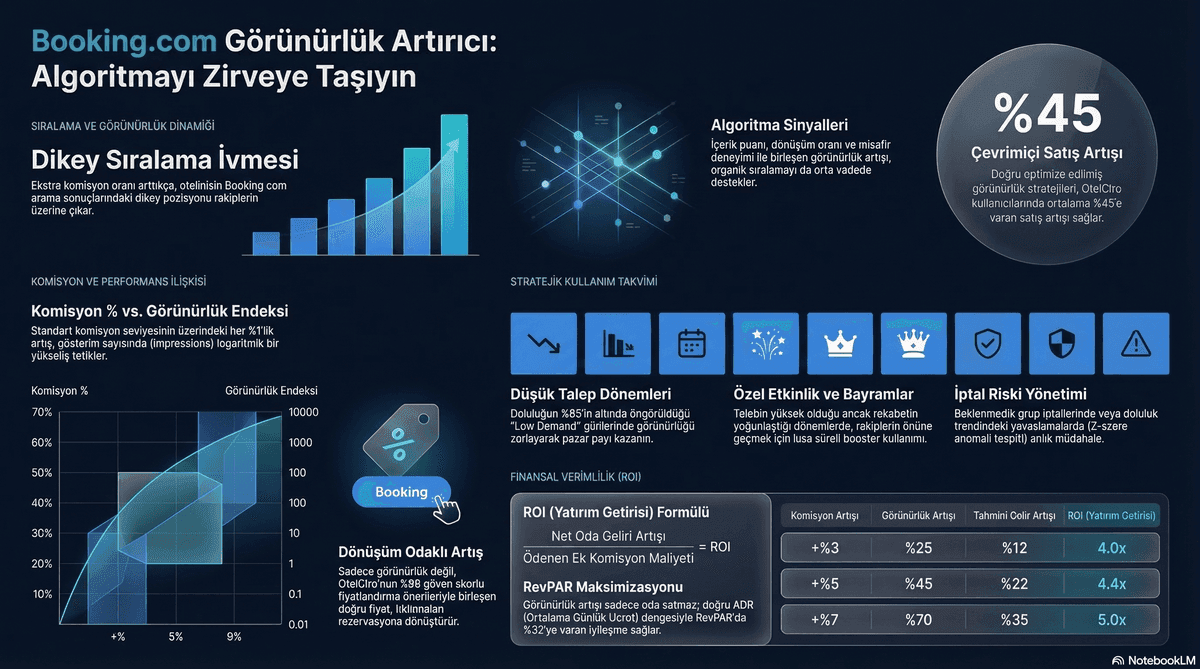
Embed this image on your site
<a href="https://otelciro.com/en/news/seo-geo-donusumu">
  <img src="https://cdn.sanity.io/images/1la98t0z/production/e6228ea193af826282c14dcb670db1911d1756ce-1200x669.png" alt="Booking.com Visibility Booster usage guide" width="800" />
</a>
<p>Source: <a href="https://otelciro.com">OtelCiro</a> — AI Hotel Revenue Management</p>
The Conversion Power of AI Traffic: A 5x Difference
The most remarkable data point is AI-sourced traffic's conversion performance:
- AI-sourced traffic conversion rate: 14.2%
- Traditional organic traffic conversion rate: 2.8%
- Difference: 5x
Why such a gap? Traffic from AI assistants carries high intent by nature. A user who tells ChatGPT "Recommend a boutique hotel with a Bosphorus view in Besiktas, Istanbul" is very close to making a purchase decision. ChatGPT's commission-free booking potential will further accelerate this trend.
Related reading: 2026 Travel Trends: The AI Assistant Era Begins
GEO Strategy for Hoteliers: Five Steps
1. Produce Atomic Content
Atomic content consists of independent content pieces that provide a clear, complete answer to a single question. AI engines prefer focused, specific content over long, unfocused blog posts.
Example atomic content topics:
- "How do I get from Besiktas to Sultanahmet?"
- "What is the price range for Bosphorus-view hotels in Istanbul?"
- "Which hotels in Taksim accept pets?"
2. Implement Structured Data
Schema.org markup makes it easier for AI engines to understand your content. Critical schema types for hotel websites:
Hotel— Core hotel informationLodgingReservation— Reservation detailsReviewandAggregateRating— Guest reviewsFAQPage— Frequently asked questionsLocalBusiness— Local business information
3. Strengthen Your SSR HTML Infrastructure
AI crawlers process JavaScript in a limited way. Use Server-Side Rendering (SSR) to ensure your content is served as HTML. This is a critical technical foundation for both traditional SEO and GEO.
4. Build Authority Signals
AI engines select their citation sources based on credibility and authority. Authority signals for hoteliers include:
- Coverage in industry publications
- Consistent review responses
- A verified Google Business profile
- Up-to-date, consistent NAP information (Name, Address, Phone)
- References to industry research and data
5. Integrate AEO (Answer Engine Optimization)
AEO, a subset of GEO, focuses on producing content in a direct question-and-answer format. Building a comprehensive FAQ section on your website increases the likelihood of being cited by AI engines.
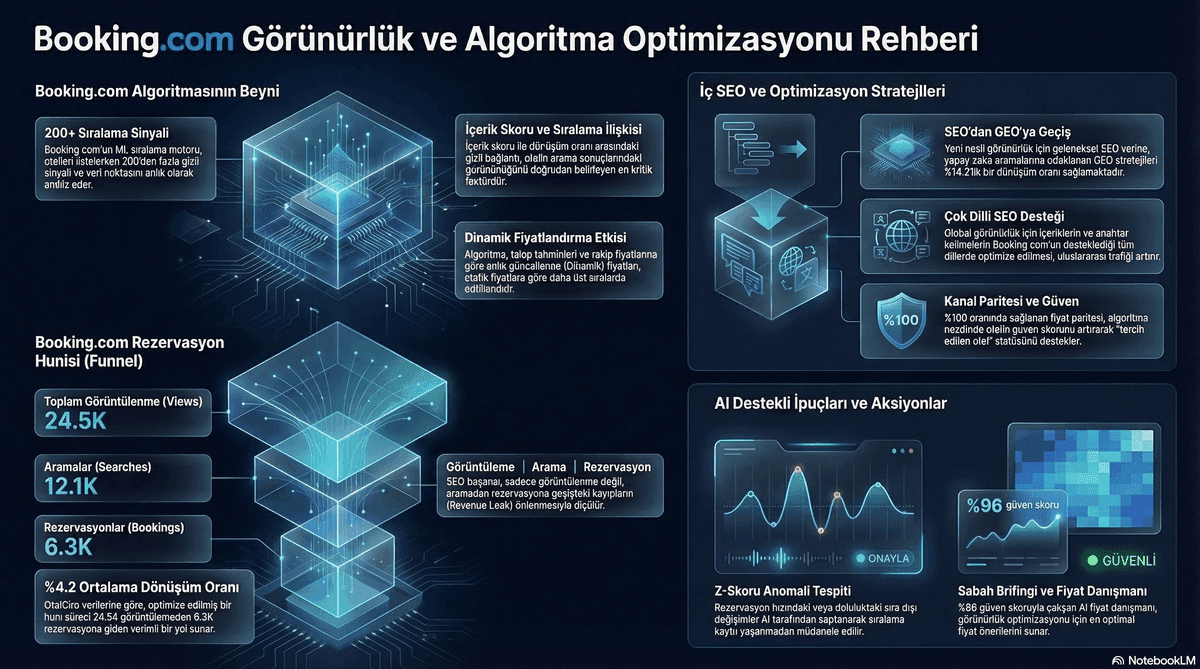
Embed this image on your site
<a href="https://otelciro.com/en/news/seo-geo-donusumu">
  <img src="https://cdn.sanity.io/images/1la98t0z/production/26fc615584e443d78cd01c6470f2cb253b54fdba-1200x669.png" alt="Booking.com SEO and hotel name optimization" width="800" />
</a>
<p>Source: <a href="https://otelciro.com">OtelCiro</a> — AI Hotel Revenue Management</p>
Technical Checklist for Hotel Websites
To strengthen your Google Hotels visibility strategy from a GEO perspective, complete these technical steps:
- Schema.org Hotel markup implemented
- FAQPage structured data present on all key pages
- SSR or Static Site Generation (SSG) active
- Core Web Vitals scores in the green zone
- Hreflang tags correctly configured (for multilingual sites)
- Sitemap current and accurate
- robots.txt open to AI crawlers
Related reading: 2026: The MCP Revolution — AI Integration for Hotels
Running SEO and GEO in Parallel
SEO and GEO are not mutually exclusive strategies. In the 2026 hospitality vision, running both in parallel is a necessity. SEO still drives 60-70% of total organic traffic, but GEO-sourced traffic is growing rapidly and converting at far higher rates.
Recommended resource allocation:
- SEO: 50% of total digital marketing budget
- GEO/AEO: 30%
- Social media and content: 20%
Frequently Asked Questions
How do I measure GEO results?
Regularly query your hotel name and relevant keywords on ChatGPT, Gemini, and Perplexity. Track citation frequency. Additionally, you can monitor AI Overviews traffic in Google Search Console.
Has my existing SEO investment gone to waste?
No. A strong SEO foundation (fast site, correct structured data, authority signals) also serves as the base layer for GEO. Sites that are strong in SEO carry an advantage in GEO. Your existing SEO investment provides solid ground for the GEO transition.
Can small hotels compete with major chains in GEO?
Yes. AI engines evaluate content quality and relevance over brand size when selecting sources. On niche, specific topics (e.g., "cat-friendly boutique hotel in Cihangir"), small hotels can actually receive stronger citations than large chains.
OtelCiro analyzes your digital visibility from both SEO and GEO perspectives, keeping you competitive in the AI era. Strengthen your digital transformation strategy by exploring OtelCiro.
![Google AI Mode: What It Means for Hotels [2026]](https://cdn.sanity.io/images/1la98t0z/production/666250eecd830edc55662e17ca53fbb411edc1ad-1200x670.png?w=1920&q=50&auto=format&fit=max)