Key Takeaways
- Hotel franchise agreements entail total fees typically ranging from 8-15% of revenue, offset by significant brand benefits.
- Core franchise fees include initial, royalty (4-7% of room revenue), marketing (2-4%), reservation (3-5%), and technology (monthly per room).
- Hidden costs such as mandatory Property Improvement Plans (PIPs) every 5-7 years ($5,000-15,000 per room) and brand-mandated vendor purchases can significantly add to expenses.
- Branded hotels often achieve 15-25% higher occupancy and 10-20% higher ADR compared to independent hotels, alongside operational support and risk mitigation.
- A data-driven financial analysis, considering both explicit and implicit costs against potential revenue gains, is crucial for determining if a franchise agreement is financially viable for a specific property.
Brand Value or Cost Burden?
Hotel franchise agreements offer independent hotels the opportunity to operate under a global brand umbrella. However, the price for this privilege can turn into a total fee burden ranging between 8-15% of revenue. In Turkey, the number of international chain hotels increased by 45% between 2020-2025, with much of this growth realized through the franchise model.
Franchise fee analysis is one of the most critical financial assessments a hotel investor or property owner must undertake. In this guide, we detail the franchise fee structure, uncover hidden costs, and analyze the financial balance between operating as a branded hotel versus remaining independent.
Related reading: Hotel Management Agreement Negotiation
Franchise Fee Structure
Core Fee Items
Standard fee items typically found in a hotel franchise agreement include:
1. Initial Fee
- One-time payment
- Ranges between $3,000-$8,000 per room
- Total for a 100-room hotel: $300,000-$800,000
- Covers brand license, opening support, and training
2. Royalty Fee (Franchise Fee)
- 4-7% of room revenue (monthly payment)
- Covers brand usage rights, reservation system access, and standard support
- The largest ongoing cost item
3. Marketing Fund Contribution (Marketing/Loyalty Fee)
- 2-4% of room revenue (monthly payment)
- Finances global advertising, loyalty programs, and digital marketing campaigns
- Local marketing budget constitutes an additional cost separate from this
4. Reservation System Fee (Reservation Fee)
- 3-5% commission for each reservation from brand channels
- Or a fixed fee of 1-2% of room revenue
5. Technology Fee
- $5-15 per room per month
- Covers the use of PMS, CRS, and other technology platforms
Total Fee Impact
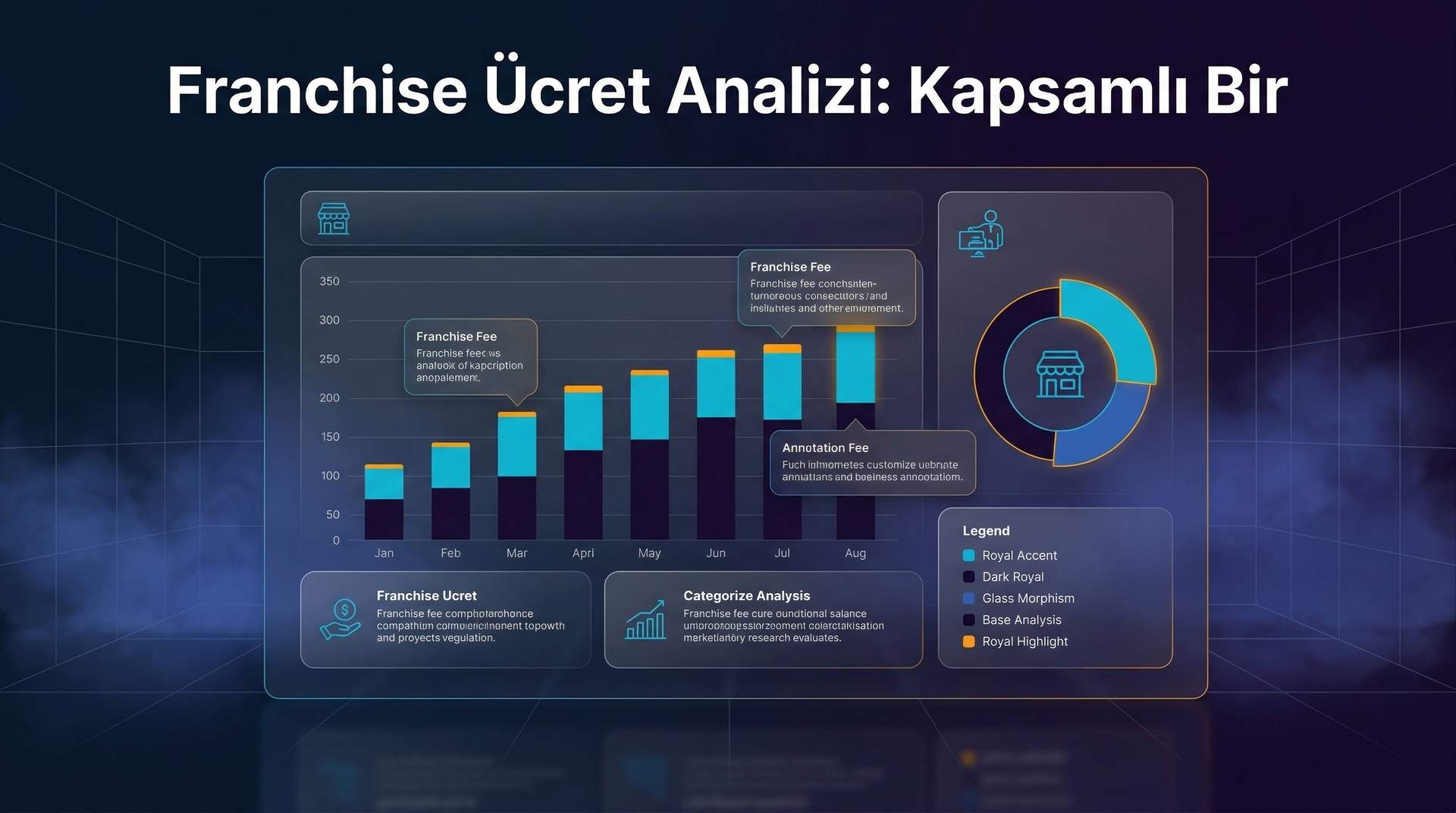
For a 100-room hotel with an annual room revenue of 40 million TL, the estimated annual total of franchise fees is:
| Fee Item | Rate | Annual Amount |
|---|---|---|
| Royalty | 5% | 2,000,000 TL |
| Marketing fund | 3% | 1,200,000 TL |
| Reservation fee | 1.5% | 600,000 TL |
| Technology fee | Per room per month | 360,000 TL |
| Total | ~10.4% | 4,160,000 TL |
When the amortized share of the initial fee is added to this amount, the total franchise cost reaches 11-12% of room revenue.
Hidden Costs and Additional Obligations
Franchise agreements contain costs that are part of the contract text but may be difficult to spot at first glance:
Standard Compliance Costs
- Brand standard audits: Annual QA (Quality Assurance) visits and remediation requirements
- Mandatory renovation: Implementation of the brand's specified PIP (Property Improvement Plan) every 5-7 years
- Room amenity standards: Obligation to purchase from brand-approved suppliers (which can be 15-30% more expensive than market alternatives)
- Staff training: Mandatory training programs determined by the brand
Mandatory System and Software Purchases
The use of PMS, POS, CRM, and other systems specified by the franchiser is mandatory. It is not uncommon for these systems to be 20-40% more expensive than alternatives.
PIP (Property Improvement Plan) Costs
Renovations regularly required to comply with brand standards:
- Typically on a 5-7 year cycle
- $5,000-$15,000 per room cost
- For a 100-room hotel: $500,000-$1,500,000
- If not completed on time, the franchise agreement may be terminated
Related reading: Hotel Renovation Loan and Financing Options
Brand Benefits: What Do You Gain?
The value obtained in exchange for franchise fees needs to be objectively analyzed:
Revenue Contribution
- Brand recognition: An international brand name can provide 15-25% higher occupancy, especially in the foreign tourist segment
- Loyalty program: Loyalty program members of large chains can account for 40-60% of total room nights
- Central reservation system: Low-commission reservations coming through the brand's website and call center
- ADR premium: Branded hotels are observed to achieve 10-20% higher ADR than independent hotels in the same market
Operational Contribution
- Proven operational standards and processes
- Centralized purchasing advantages (bulk buying discounts)
- Training programs and human resources support
- Technology infrastructure and innovation transfer
Risk Mitigation
- Corporate reputation and credibility
- Crisis management expertise
- Legal support and consultancy
- Market intelligence and trend analysis
Franchise vs. Independent: Financial Comparison
| Parameter | Franchised Hotel | Independent Hotel |
|---|---|---|
| Occupancy Rate | 72-82% | 58-68% |
| ADR | 10-20% premium | Base level |
| Distribution Cost | 18-25% (franchise + OTA) | 15-22% (OTA only) |
| GOP Margin | 32-38% | 35-42% |
| Brand Assurance | High | Low |
| Flexibility | Limited | Full |
| Exit Cost | High (penalty) | None |
This comparison shows that the brand's occupancy and ADR advantages may or may not offset franchise fees, depending on location and segment.
According to industry analyses:
- Downtown and business travel hotels: Franchise is generally financially advantageous
- Resort and leisure hotels: Remaining independent or opting for a soft brand may be more advantageous
- Boutique hotels: Independence generally yields higher profitability
Critical Points in Contract Negotiation
Points that should be negotiated before signing a franchise agreement:
- Performance guarantee: The brand's commitment to a specific occupancy or revenue target
- Royalty fee cap: Fees not exceeding a certain upper limit
- PIP flexibility: Margin for negotiation on renovation timing and scope
- Territorial protection: The same brand not opening a new hotel within a specific radius
- Exit conditions: Penalty clauses and transition period in case of contract termination
OtelCiro's reporting tools allow you to continuously compare franchise performance against independent alternatives to monitor your return on investment.
Conclusion: Data-Driven Decision
The franchise decision is not an emotional one, but a financial one. A detailed feasibility study should reveal whether the additional revenue provided by the brand exceeds the total franchise costs (explicit and hidden). The location, segment, and competitive environment of each hotel shape this equation differently.
Do you want to analyze the financial performance of your franchise agreement or make a brand decision based on data? Contact us for a free consultation.
![US Hotel Labor Costs Hit $131 Billion in 2026: AI Automation Strategies That Cut Costs Fast [2026 Guide]](https://cdn.sanity.io/images/1la98t0z/production/6765e31b08a1c04cce66f9bf9482693dbefdcce5-2752x1536.jpg?w=1920&q=50&auto=format&fit=max)