![Hotel Cyber Insurance: Digital Risk Protection [2026 Strategy Guide]](https://cdn.sanity.io/images/1la98t0z/production/5bac35860f6171db3be386344f009e210d07b186-1200x669.png?w=1920&q=65&auto=format&fit=max)
Key Takeaways
- Cyberattacks in the hospitality sector increased by 68% globally in 2025, making insurance a business continuity requirement.
- The average cost of a single data breach in the hotel segment is calculated at $4.8 million.
- Comprehensive policies must cover both first-party recovery costs and third-party legal liabilities.
- Security measures like PCI-DSS compliance and staff training can reduce insurance premiums by up to 25%.
- With ransomware demands reaching $2 million, insurance provides a critical financial safety net against operational paralysis.
The Digital Risk Map for Hotels: Why Cyber Insurance Has Become Mandatory
The hospitality industry is one of the most attractive targets for cyberattacks. Hotels process sensitive data such as credit card information, passport details, stay history, and contact information, placing them directly in the crosshairs of cybercriminals.
In 2025, cyberattacks targeting the global hospitality sector increased by 68%. During the same period in Turkey, 47 hotel chains experienced data breaches, compromising a total of 3.2 million guest records. The average cost of a data breach in the hotel segment is estimated at $4.8 million.
These figures clearly demonstrate that cyber insurance is no longer a luxury but a fundamental guarantee of business continuity. Despite this, only 12% of hotels in Turkey currently hold an active cyber insurance policy.
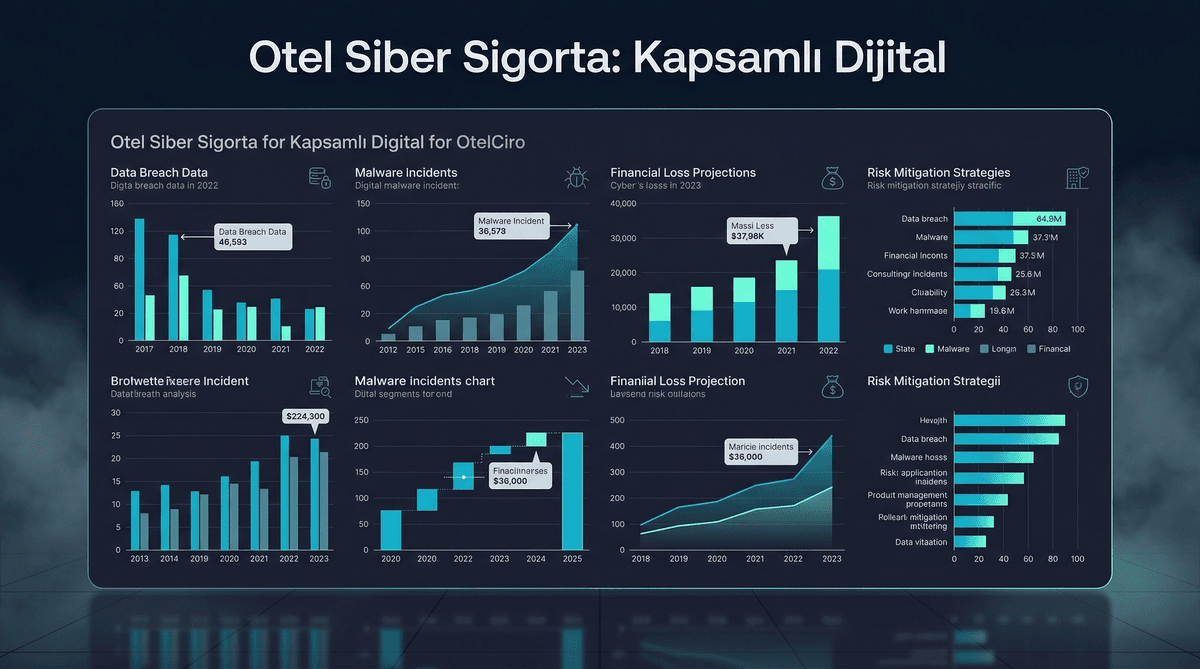
Embed this image on your site
<a href="https://otelciro.com/en/news/hotel-cyber-insurance-digital-risk-protection-2026-strategy-guide">
  <img src="https://cdn.sanity.io/images/1la98t0z/production/5bac35860f6171db3be386344f009e210d07b186-1200x669.png" alt="Hotel Cyber Insurance Infographic" width="800" />
</a>
<p>Source: <a href="https://otelciro.com">OtelCiro</a> — AI Hotel Revenue Management</p>
Related reading: Hotel Cybersecurity and Data Protection
Cyber Threats Facing Hotels
Cyber threats targeting the hospitality industry have become more diverse and sophisticated. In 2026, the most common threat vectors include:
Ransomware
Ransomware attacks can completely lock down hotel systems, bringing operations to a standstill. PMS, booking engines, POS, and room management systems are encrypted and rendered unusable. Average ransom demands range between 500,000 and 2,000,000 USD. Even if the ransom is not paid, the system recovery process takes an average of 21 days, during which daily revenue losses can range from 50,000 to 200,000 USD.
POS and PMS Attacks
Attacks targeting Point-of-Sale systems lead to the theft of credit card data. In 2025, 72% of POS attacks detected in the global hospitality sector targeted small and medium-sized hotels. Hotels without PCI-DSS compliance are particularly vulnerable to these attacks.
Social Engineering and Phishing
Phishing attacks targeting hotel staff are the most common entry point. Fake Booking.com and Expedia emails, spoofed OTA admin panel sites, and fraudulent supplier invoices are the most frequently used methods. Approximately 91% of cyberattacks begin with a phishing email.
IoT Device Vulnerabilities
Smart room systems, IPTV, digital door locks, and energy management systems create new entry points for cyberattackers. It has been reported that 67% of IoT devices possess known security vulnerabilities.
What Does a Cyber Insurance Policy Cover?
A comprehensive hotel cyber insurance policy should cover the following areas:
First-Party Coverage
- Business Interruption Losses: Revenue lost due to a cyberattack (calculated on a daily revenue basis).
- Data Recovery Costs: Restoration of encrypted or deleted data.
- Ransom Payments: Coverage for ransomware demands (varies by policy).
- Crisis Management Expenses: PR consultancy, customer notification, and call center costs.
- Digital Forensic Investigation: Technical examination to determine the scope and source of the attack.
Third-Party Coverage
- Data Breach Notification: Mandatory notification costs under KVKK and GDPR.
- Legal Defense Expenses: Lawsuits filed by guests and business partners.
- Regulatory Fines: Penalties for KVKK, PCI-DSS, and GDPR violations.
- Indemnity Payments: Payments made to parties harmed by the data breach.
- Credit Monitoring Services: Credit monitoring and identity protection services offered to affected guests.
Related reading: OtelCiro Security Infrastructure
Selection Criteria for Cyber Insurance Policies
Choosing the right policy is as important as the coverage itself. Hotel executives should focus on these critical criteria:
Coverage Limits
Limits should be determined based on the hotel's size and risk profile:
- Small Hotels (up to 50 rooms): Minimum 500,000 USD coverage limit.
- Mid-scale Hotels (50-200 rooms): Minimum 2,000,000 USD coverage limit.
- Large Hotels and Chains (200+ rooms): Minimum 5,000,000 USD coverage limit.
Deductibles
The higher the deductible, the lower the premium. However, the deductible must be at a level that the hotel can cover through its cash flow. A typical deductible range is between 10,000 and 100,000 USD.
Check Important Exclusions
Cyber insurance policies generally exclude the following:
- Known but unpatched security vulnerabilities.
- Insider threats (intentional employee actions).
- War and state-sponsored cyberattacks.
- Breaches that occurred but were not detected prior to the policy start date.
Policy Costs and ROI Analysis
The cost of cyber insurance varies significantly based on the hotel's risk profile:
Factors Affecting Premium Calculation
- Number of rooms and annual guest volume.
- Volume of credit card transactions processed.
- Existing security infrastructure and certifications.
- History of past cyber incidents.
- PCI-DSS compliance level.
- Staff training programs.
Average Premium Ranges in Turkey (2026)
- Small Hotels: 15,000-40,000 TL annually.
- Mid-scale Hotels: 50,000-150,000 TL annually.
- Large Hotels: 200,000-500,000 TL annually.
- Hotel Chains: 500,000-2,000,000 TL annually.
ROI Evaluation
To calculate the ROI of a cyber insurance policy, consider this comparison: while the average cost of a data breach is 4.8 million dollars, the annual insurance premium is only about 1-3% of this amount. A single cyber incident can lead to damages exceeding the total of 10 years of premiums. From this perspective, the return on investment for cyber insurance is exceptionally high.
5 Security Measures to Complement Cyber Insurance
Cyber insurance alone is not enough. To meet policy conditions and lower premiums, take the following measures:
1. PCI-DSS Compliance: Obtain PCI-DSS Level 1 or 2 certification for secure credit card data processing. This certification can reduce insurance premiums by 15-25%.
2. Staff Training: Organize regular cybersecurity awareness training. Test staff awareness with phishing simulations. Trained personnel reduce the risk of cyberattacks by 70%.
3. Backup Strategy: Implement the 3-2-1 backup rule: 3 copies, 2 different media types, with 1 stored in a physically separate location. Regular backups minimize the impact of ransomware.
4. Access Control: Implement multi-factor authentication (MFA) and the principle of least privilege. Limit access to the PMS and payment systems.
5. Incident Response Plan: Create a cyber incident response plan and conduct drills at least twice a year. A prepared team shortens incident response time by 65% and significantly reduces total damage.
OtelCiro’s secure infrastructure protects your hotel data with PCI-DSS compliant data processing and encrypted communication protocols. Its cloud-based architecture, automatic backup, and access control features help you meet the requirements of your cyber insurance policy.
Cyber insurance is an inevitable cost item in modern hospitality. It is not a question of "if" an attack will happen, but "when." Strengthen both your security infrastructure and your financial protection with a proactive approach to cyber insurance.
![US Hotel Labor Costs Hit $131 Billion in 2026: AI Automation Strategies That Cut Costs Fast [2026 Guide]](https://cdn.sanity.io/images/1la98t0z/production/6765e31b08a1c04cce66f9bf9482693dbefdcce5-2752x1536.jpg?w=1920&q=50&auto=format&fit=max)