![Hotel BNPL & Embedded Finance: Boost Bookings [2026 Guide]](https://cdn.sanity.io/images/1la98t0z/production/b16bad95e42c5ab71f744c569d84b34116dd8d89-1024x1024.png?w=1920&q=65&auto=format&fit=max)
Key Takeaways
- BNPL and embedded finance are transforming hotel payments, driven by Gen Z preferences and a global market reaching $138 billion by 2026.
- Hotels offering BNPL see significant performance improvements, including a 20-30% increase in booking conversion rates and a 15-25% rise in average order value (AOV).
- Embedded finance extends beyond BNPL, encompassing in-booking travel insurance, digital wallet integrations, and dynamic currency conversion, boosting total revenue per guest by 8-15%.
- The market features global leaders like Klarna, Affirm, and Uplift, alongside emerging local fintech solutions in countries like Turkey, each catering to different guest demographics and payment needs.
- Strategic integration, careful provider selection, and continuous performance monitoring are crucial for hotels to capitalize on these financial innovations and secure a competitive edge.
The BNPL Revolution: "Buy Now, Pay Later" in Travel
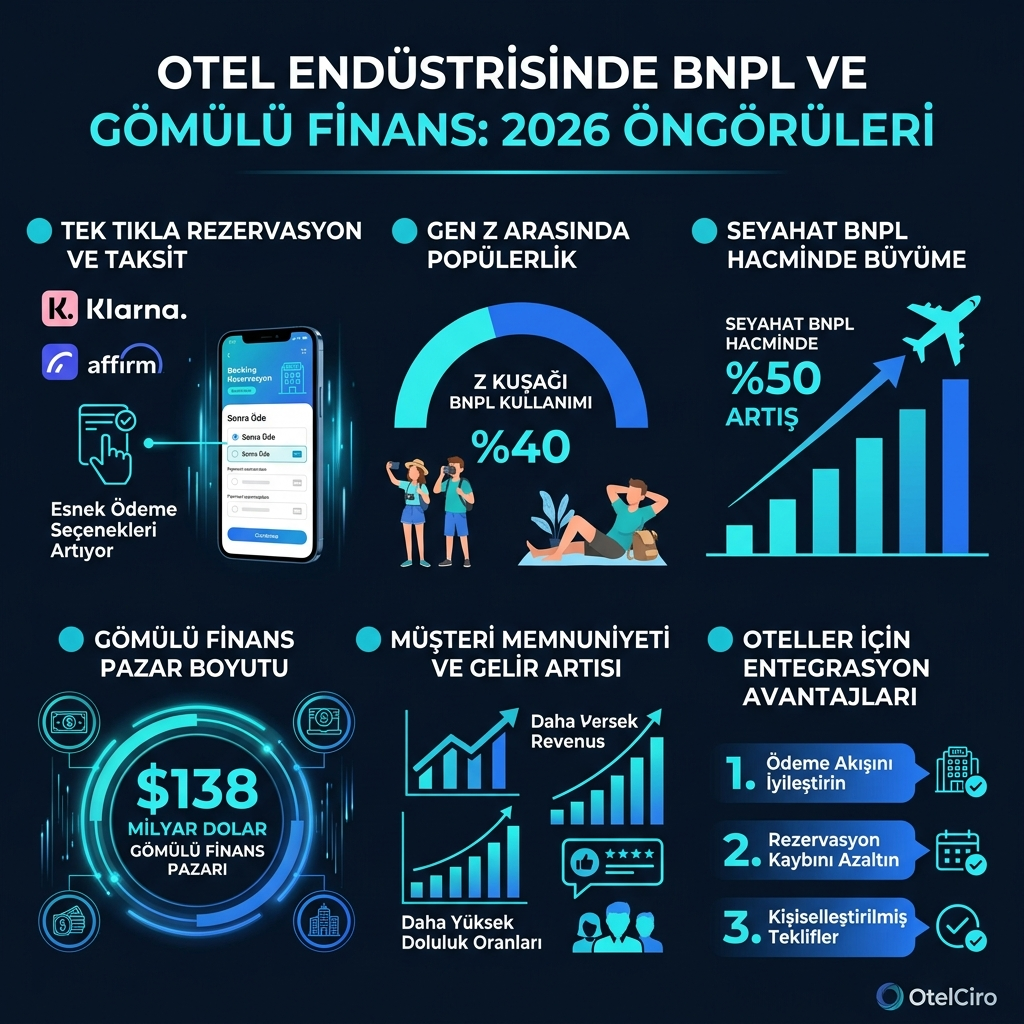
The "Buy Now, Pay Later" (BNPL) model is making its biggest impact in the travel and hospitality sector, following its success in retail. According to Juniper Research data, travel BNPL transaction volume grew over 50% annually in 2025, with this momentum strengthening further in 2026. The global embedded finance market, meanwhile, is estimated by Bain & Company to reach a value of $138 billion.
BNPL's rise in travel is no coincidence. Accommodation expenses are among the largest items in consumers' budgets and often require upfront payment before travel. BNPL spreads this payment burden over 3-12 months, making previously budget-constrained leisure and business trips possible.
According to Phocuswright's 2026 travel payment report, hotels offering BNPL options see booking conversion rates increase by 20-30%, and the average basket value rise by 15-25%. Guests, leveraging installment payment options, tend to choose higher room categories, purchase additional services, and extend their length of stay.
Generation Z and Millennials are the driving force behind this transformation. C+R Research data indicates that 40% of Gen Z consumers prefer using BNPL for travel expenses. This figure drops to 18% for consumers over 35, highlighting a dramatic intergenerational difference. The generation set to account for the majority of travel spending by 2030 views BNPL as a natural payment method, often over traditional credit cards.
Embed this image on your site
<a href="https://otelciro.com/en/news/hotel-bnpl-embedded-finance-boost-bookings-2026-guide">
  <img src="https://cdn.sanity.io/images/1la98t0z/production/b16bad95e42c5ab71f744c569d84b34116dd8d89-1024x1024.png" alt="Otel BNPL ve Gömülü Finans İnfografiği" width="800" />
</a>
<p>Source: <a href="https://otelciro.com">OtelCiro</a> — AI Hotel Revenue Management</p>
Related reading: Digital Payment Solutions and Collection Strategies
Embedded Finance: Financial Services Integrated Within the Hotel
Embedded finance refers to the integration of financial services—such as payments, lending, and insurance—into non-financial platforms. In a hotel context, this means guests can access financial products at every point, from the booking process to check-out.
Embedded finance applications in hotels include:
- BNPL at booking: With Klarna, Affirm, or Uplift solutions integrated into the booking engine, guests see 4-12 installment payment options directly on the reservation page. No separate credit application is needed; approval is completed in seconds.
- Embedded travel insurance: One-click sale of cancellation protection, health insurance, or luggage protection during the check-out process. This model generates additional revenue for hotels through revenue sharing with insurance companies.
- Digital wallet integration: Seamless payment experiences with Apple Pay, Google Pay, WeChat Pay, and Alipay integration. Conversion rates are 15-20% higher for guests using digital wallets.
- Dynamic Currency Conversion (DCC): Real-time currency exchange for international guests. DCC services provide 2-3% commission income from each transaction.
- Loyalty program financing: Using hotel loyalty points as financial products—points for payment, point transfers, or point-based credit.
According to McKinsey's embedded finance report, hotels implementing embedded finance solutions increase total revenue per guest by 8-15%. A large portion of this increase comes from insurance sales and the higher average basket value generated by BNPL.
Payment infrastructure providers like Stripe, Adyen, and PayU offer specialized embedded finance APIs for hotels. These APIs integrate seamlessly with PMS and booking engines and can be implemented without the hotel's own technical team.
Travel BNPL Providers: An Ecosystem Map from Klarna to Uplift
Different players in the travel BNPL market serve different segments. Hotel operators must understand this ecosystem to choose the solution best suited for their guest profile.
Klarna, a leader in the global BNPL market, has over 150 million users. In the travel segment, Klarna recorded 85% growth in 2025, offering interest-free payments up to 4 installments. Integration for hotels typically takes 2-4 weeks, with merchant commission rates ranging from 3-6%.
Affirm leads the US market and is particularly strong for high-value travel expenses. With payment plans extending up to 36 months, it appeals to the luxury hotel segment. Affirm reports an average basket value increase of 48% for its hotel partners.
Uplift is the only BNPL provider specialized in the travel industry. Partnering with United Airlines, Southwest Airlines, and Carnival Cruise, Uplift is rapidly expanding its hotel integrations. Uplift's travel-focused risk model pushes approval rates above 85%.
In the Turkish market, the situation is different. With a deeply rooted credit card installment culture, bank card installment options and digital BNPL solutions are rapidly spreading. Local fintech companies like Papara, Param, and iyzico offer installment solutions for hotels. Additionally, applications like Garanti BBVA's BonusFlaş and İş Bankası's Maximum Mobil create BNPL-like experiences through their card installment infrastructure.
BNPL provider selection checklist:
- Which BNPL platform does your target guest demographic use?
- What are the integration time and technical requirements?
- What is the merchant commission rate and payment timeline?
- Who bears the repayment and default risk?
- Is regulatory compliance (BDDK, SPK) ensured?
Impact on Conversion Rate: BNPL Performance Data
BNPL's impact on hotel booking performance is supported by comprehensive data analysis. According to a joint study by Phocuswright and Skift Research, hotels offering BNPL options observe the following performance improvements:
Conversion rate: For visitors who see the BNPL option, the rate of completed reservations from the payment page increases by 20-30%. This effect is particularly pronounced on mobile devices, with mobile BNPL conversion increases reaching up to 35%.
Average Order Value (AOV): Guests using BNPL spend 15-25% higher compared to those paying upfront. This increase stems from room upgrades, adding extra nights, and pre-selling spa/restaurant services.
Cart abandonment rate: While cart abandonment rates are 72-78% for hotels without a BNPL option on the payment page, this rate drops to 55-62% for hotels offering BNPL.
New customer acquisition: 38% of guests using BNPL are new customers staying at that hotel for the first time. BNPL attracts guests who might not have chosen the hotel previously due to price barriers.
Repeat visit rate: 28% of guests satisfied with the BNPL experience stay at the same hotel again within 12 months. This rate is 22% for guests who pay upfront.
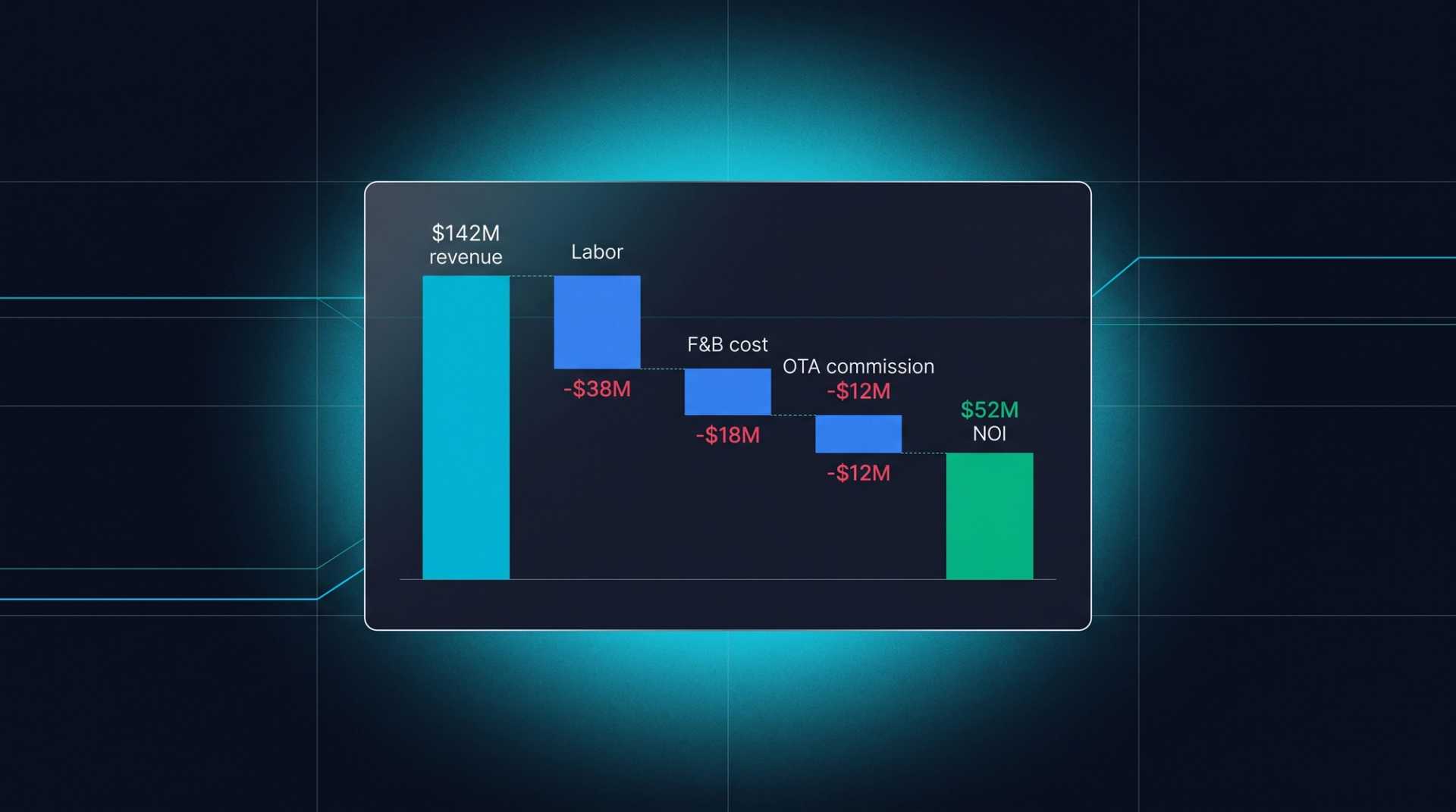
However, hotels must also consider certain issues. BNPL provider commissions (3-6%) can add to OTA commissions, creating additional costs. It is crucial to ensure that the revenue increase from BNPL covers this commission. In a net profit analysis, the value of lost bookings in a non-BNPL scenario should also be considered.
Related reading: Hotel Cost Center and Revenue Center Analysis
Implementation Guide: How to Integrate BNPL into Your Hotel
While BNPL integration is technically straightforward, it requires strategic planning. Proper implementation maximizes revenue growth while minimizing operational risk.
Step 1 — Needs analysis: Examine your existing payment data. Are your cart abandonment rate, average order value, and guest demographics suitable for BNPL? High ADR hotels and properties targeting a younger demographic benefit most from BNPL.
Step 2 — Provider selection: Choose a BNPL provider that matches your guest profile, geographical market, and technical infrastructure. For the Turkish domestic market, local fintech solutions may be preferred, while Klarna or Affirm might be better for international guests.
Step 3 — PMS and booking engine integration: Integrate the BNPL provider's API into your booking engine. Most modern PMS systems support plug-in based BNPL integration. Conduct comprehensive validation in a test environment during the integration process.
Step 4 — Payment flow design: Position the BNPL option prominently on the payment page. Use clear messages like "3 installments, interest-free." Show the installment amount monthly—the format "$600/month × 4 installments" yields a 30% higher conversion than just showing the total amount.
Step 5 — Accounting and reporting settings: Accounting for BNPL revenues differs from upfront payments. Configure revenue recognition, accruals, and cash flow reporting specifically for BNPL. Robust reporting systems like OtelCiro can automate this process.
Step 6 — Performance monitoring: Report monthly on BNPL usage rate, conversion impact, AOV change, and net profitability impact. Conduct A/B tests to optimize BNPL placement and messaging.
Conclusion: Embedded Finance as Hotels' New Revenue Layer
BNPL and embedded finance are creating a lasting transformation in the hospitality sector. In a world where 40% of Gen Z prefers BNPL and the embedded finance market reaches $138 billion, ignoring this trend means losing market share.
The opportunity window is open for Turkish hotels. Turkish consumers, accustomed to credit card installment culture, are rapidly adapting to digital BNPL solutions. Hotels that act early will gain a competitive edge through both increased conversion rates and new customer acquisition.
OtelCiro offers comprehensive tools to help hotels prepare for the embedded finance transformation. With its revenue reporting, cash flow management, and payment integration infrastructure, OtelCiro enables you to transparently measure the impact of BNPL revenues. Financial innovation is built on a strong data infrastructure.
Discover OtelCiro's payment and financial reporting solutions →
![US Hotel Labor Costs Hit $131 Billion in 2026: AI Automation Strategies That Cut Costs Fast [2026 Guide]](https://cdn.sanity.io/images/1la98t0z/production/6765e31b08a1c04cce66f9bf9482693dbefdcce5-2752x1536.jpg?w=1920&q=50&auto=format&fit=max)