What Is the DMA (Digital Markets Act)?
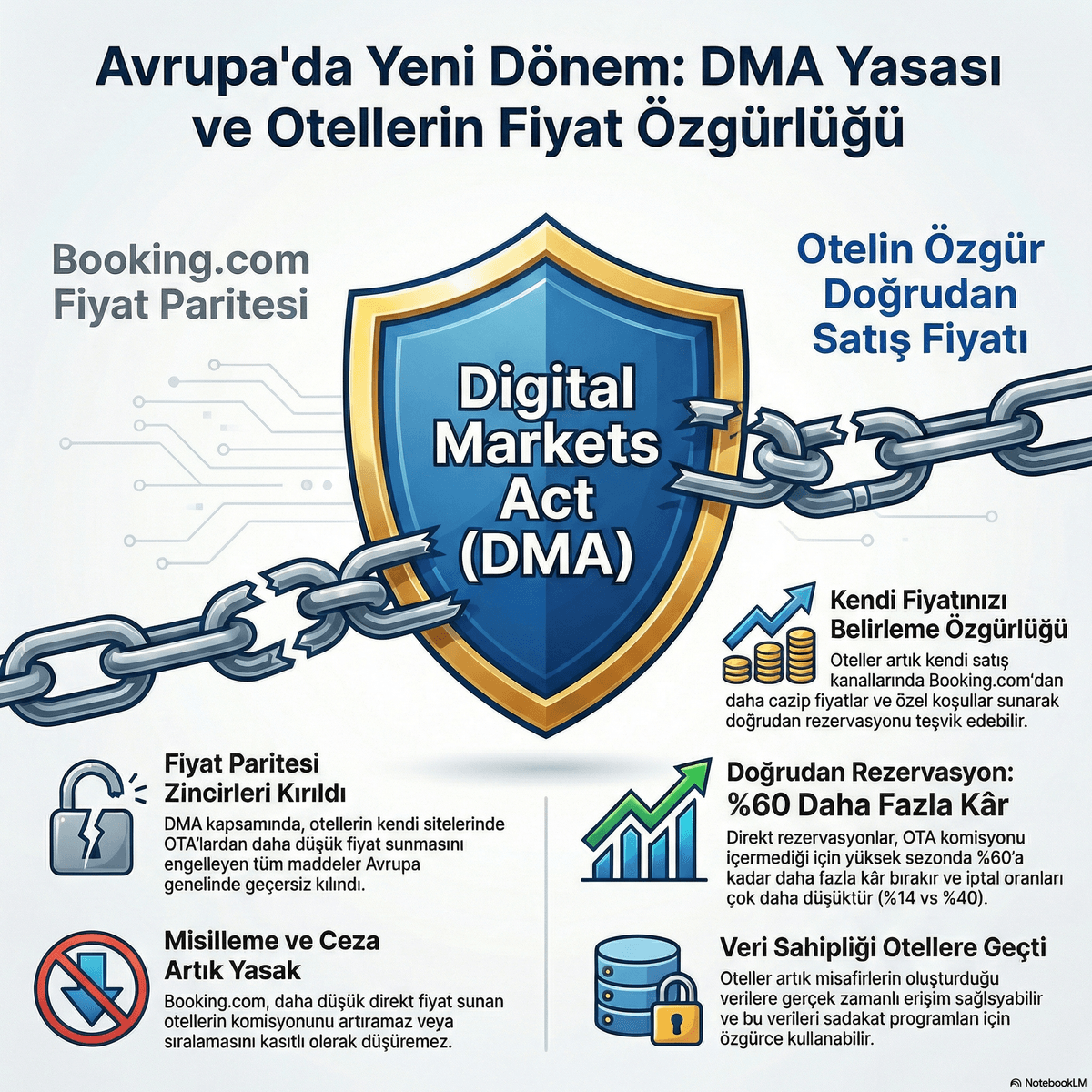
The European Union's Digital Markets Act (DMA), which entered into force in 2024, is a sweeping regulation designed to curb the market power of dominant digital platforms. For the hospitality industry, the DMA's most revolutionary impact is breaking the rate parity chains.
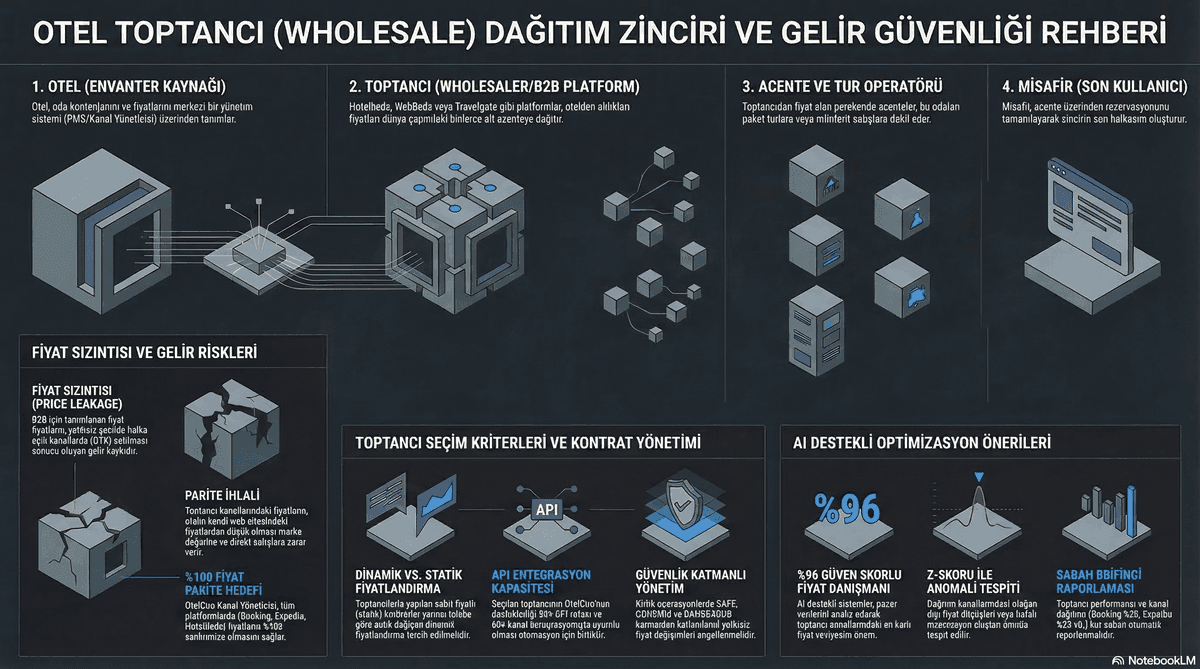
For years, Booking.com and other OTAs contractually prohibited hotels from offering lower prices on their own websites. These "narrow parity" or "wide parity" clauses effectively neutralized hotels' direct sales channels. With the DMA, such practices have become illegal.
Related reading: 2026 Hotel Survival Guide: Everything on One Page
Breaking the Rate Parity Chains
A before-and-after comparison:
| Criterion | Before DMA | After DMA |
|---|---|---|
| Hotel website price | Must match or exceed OTA price | Can be lower than OTA price |
| Metasearch price display | OTA parity mandatory | Free pricing |
| Loyalty program discounts | Limited or prohibited | Fully permitted |
| OTA retaliation risk | Ranking demotion threats | Retaliation prohibited |
| Data ownership | Stays with OTA | Hotel controls it |
The most critical change is that OTAs can no longer retaliate or penalize. Before the DMA, hotels that offered lower prices on their websites faced ranking demotion on Booking.com or revocation of "Preferred Partner" status. Such sanctions are now subject to heavy fines from the European Commission.
Embed this image on your site
<a href="https://otelciro.com/en/news/dma-fiyat-ozgurlugu">
  <img src="https://cdn.sanity.io/images/1la98t0z/production/8c7389f65356dc716308dffb69a534a1d6baa7dc-1200x669.png" alt="Hotel wholesale distribution channels" width="800" />
</a>
<p>Source: <a href="https://otelciro.com">OtelCiro</a> — AI Hotel Revenue Management</p>
60% More Profit Through Direct Bookings
Hotels freed from rate parity can now earn up to 60% more profit through their direct channels. Here is a concrete example:
Scenario: 200 EUR per night room
OTA channel:
- Sale price: 200 EUR
- OTA commission (18%): -36 EUR
- Net revenue: 164 EUR
Direct channel (post-DMA, with 10% discount):
- Sale price: 180 EUR (guest saves 10%)
- Processing cost (0-3%): -5.40 EUR
- Net revenue: 174.60 EUR
Result: The hotel earns 10.60 EUR more, the guest pays 20 EUR less. A genuine win-win.
The billboard effect adds another dimension: your OTA presence drives traffic to your website, and converting that traffic to direct sales is now far easier.
Related reading: Booking.com 2025: 5 Critical Strategic Shifts Every Hotelier Must Know
DMA Scope and Limitations
The DMA applies only within EU member states. However, its influence extends much further:
Markets Directly Affected
- All 27 EU member states
- All guests booking from within the EU
- All OTAs operating in the EU market
Designated "Gatekeepers"
- Booking.com (accommodation)
- Google (search and metasearch)
- Apple (App Store)
- Amazon (e-commerce)
- Meta (social media advertising)
Impact on Hotels in Turkey
Although Turkey is not an EU member, European guests fall under DMA scope. Turkish hotels must leverage the DMA's opportunities in their pricing strategies for the European market. Changes in Google's price display policies have a direct bearing on Turkish properties.
Embed this image on your site
<a href="https://otelciro.com/en/news/dma-fiyat-ozgurlugu">
  <img src="https://cdn.sanity.io/images/1la98t0z/production/9e1392b05b1b69f2ed494b62433b779e2c809048-1200x670.png" alt="Booking.com Genius Level 3 strategy guide" width="800" />
</a>
<p>Source: <a href="https://otelciro.com">OtelCiro</a> — AI Hotel Revenue Management</p>
Four Steps to Turn Price Freedom into Strategy
1. Create a Website Price Advantage
Offer rates 5-15% below OTA pricing on your website. Promote this clearly: a message like "Book direct and save 10%" directly boosts conversion.
2. Launch a Loyalty Program
Thanks to the DMA, you can now offer loyalty-exclusive rates without fear of OTA retaliation. Your program might include:
- Instant 5-10% discount for members
- Complimentary room upgrades
- Guaranteed late check-out
- Welcome drink or amenity package
3. Strengthen Metasearch Advertising
Display your direct rate on Google Hotels, Trivago, and TripAdvisor metasearch channels. Post-DMA, your price advantage will be clearly visible in metasearch results, driving up click-through rates.
4. Reclaim Data Ownership
Guest data from OTA bookings stays on the platform. Every guest who books through your direct channel gives you their email address, phone number, and preferences. Collect this data in your CRM and use it for remarketing campaigns.
The Strategic Value of Data Ownership
The DMA's least discussed but most valuable effect is restoring data ownership to hotels. For years, OTAs concealed guest data from hotels, channeling repeat business through their own platforms.
With direct-channel guest data, you can:
- Send personalized offer emails
- Create birthday and special-occasion campaigns
- Develop segment-based pricing strategies
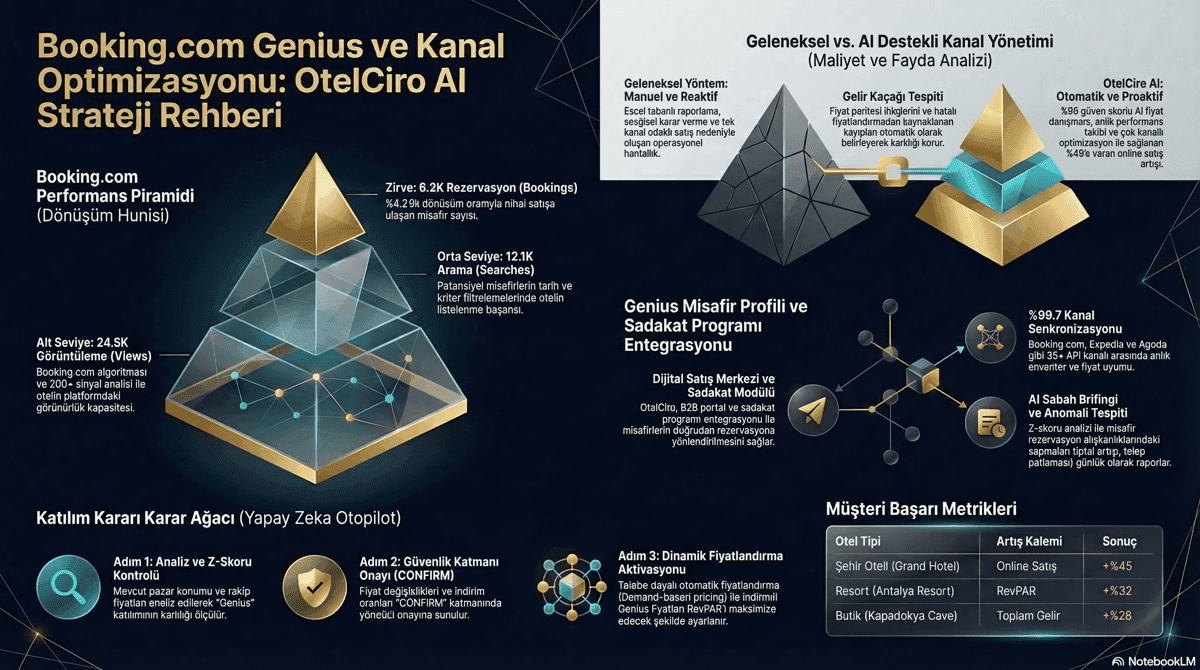
- Increase repeat-stay rates (from 8% to 25-35%)
While Booking.com's Connected Trip strategy aims to centralize guest data even further, the DMA is shifting the balance in favor of hotels.
Frequently Asked Questions
How much lower can my website price be under DMA?
The DMA does not set an upper limit on price differentiation. Strategically, a 5-15% gap is considered optimal. Excessively large differences may reduce conversion on your OTA profile and negatively impact your algorithm ranking.
Will OTAs try to circumvent the DMA?
Some platforms may attempt indirect methods to maintain rate parity. However, DMA violations carry fines of up to 10% of global annual turnover — amounting to billions of dollars. The European Commission is actively enforcing compliance.
How can hotels in Turkey benefit from the DMA?
You can offer lower prices on your website and on Google Hotels for guests booking from the EU. You can also highlight your price advantage in metasearch advertising targeting the European market. For non-EU markets, check local regulations.
OtelCiro helps you optimize your post-DMA pricing strategy to maximize direct channel revenue. Turn your pricing freedom into profit by exploring OtelCiro.