Key Takeaways
- Digital Payment Adoption Soars: Cash payments in Turkish hotels are projected to drop from 35% in 2020 to just 8% by 2026, driven by a surge in contactless (52%), mobile wallet (18%), and QR code (12%) payments.
- Significant Operational Gains: Hotels adopting digital payment solutions can shorten collection times by an average of 60% and reduce accounting record errors by 85%, boosting efficiency and cash flow.
- Diverse Digital Methods: Implement NFC-based contactless payments for speed and hygiene, QR code payments for in-room and self-service convenience, and mobile wallets integrated with loyalty programs for enhanced guest experience.
- Strategic Modernization is Essential: A systematic 5-step approach is crucial, focusing on current payment channel analysis, seamless PMS integration, multi-payment method support, robust security and compliance (PCI-DSS, SCA), and thorough staff training.
- Prepare for Future Trends: Hotels must prepare for emerging payment technologies like biometric authentication, invisible payments, open banking, and Central Bank Digital Currencies (CBDCs) to stay competitive.
Digital Transformation in Hotel Payments: A 2026 Panorama
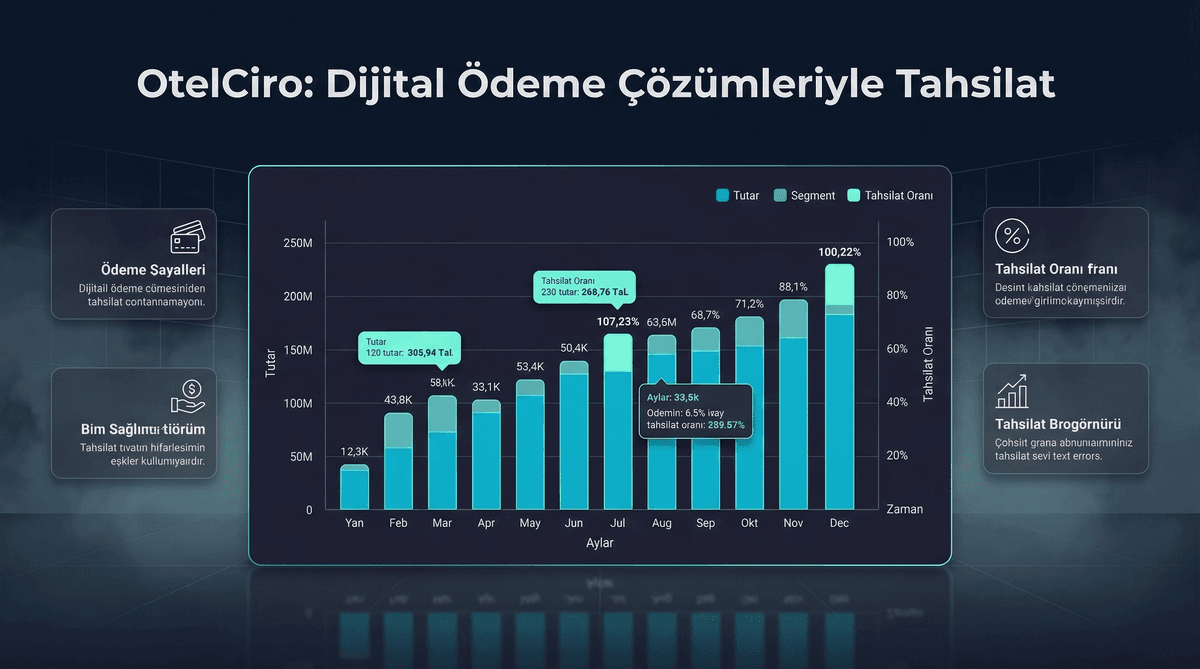
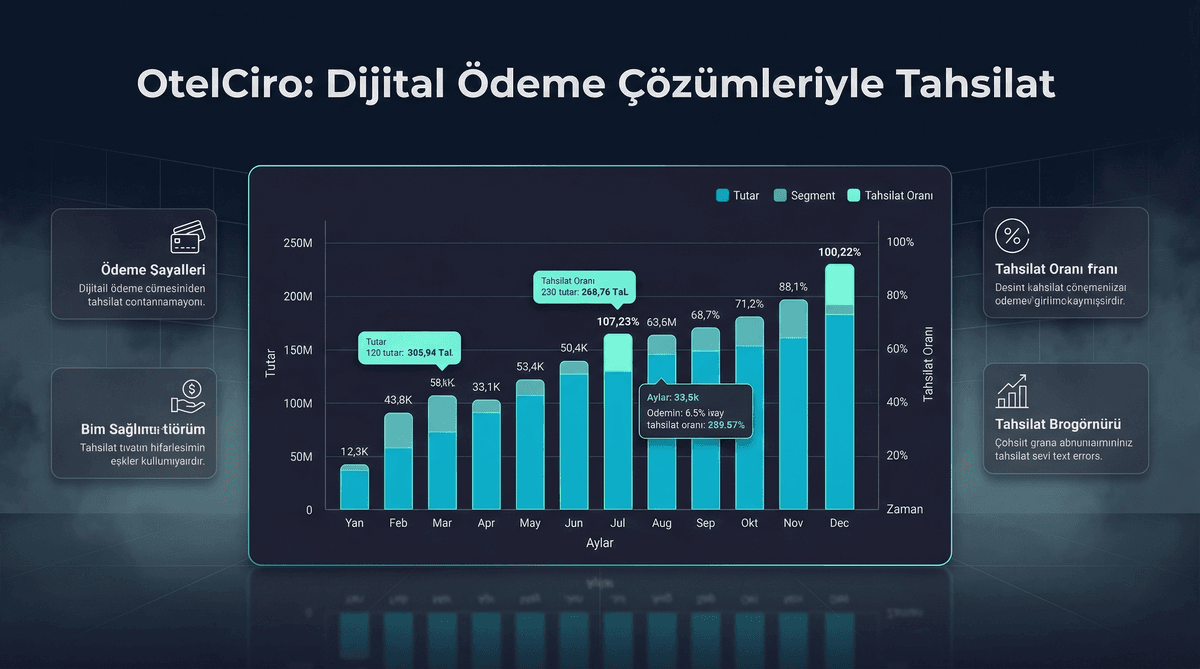
Payment habits in the hospitality sector are undergoing a radical transformation. In hotels in Turkey, the cash payment rate decreased from 35% in 2020 to 8% in 2026. Conversely, contactless payments have reached a 52% share, mobile wallets 18%, and QR code payments 12%.
This transformation is driven by guest expectations. According to research, 78% of guests prefer hotels offering digital payment options, while 34% negatively evaluate hotels that only accept cash or traditional POS.
Digital payment modernization offers critical advantages not only in guest satisfaction but also in operational efficiency, cash flow speed, and accounting automation. Hotels that digitize their payment processes shorten collection time by an average of 60% and reduce accounting record errors by 85%.
Embed this image on your site
<a href="https://otelciro.com/en/news/digital-hotel-payments-2026-modernization-guide">
  <img src="https://cdn.sanity.io/images/1la98t0z/production/8cb2e08cedd9204efa0744e7f8c3f51f78906217-1200x669.png" alt="Digital Payment Solutions Infographic" width="800" />
</a>
<p>Source: <a href="https://otelciro.com">OtelCiro</a> — AI Hotel Revenue Management</p>
Related reading: Hotel Accounting Software Selection: Cloud-Based Solutions
Contactless Payments and NFC Technology
Contactless payment is the fastest-adopted digital payment method in the hospitality sector. Based on NFC (Near Field Communication) technology, this system completes the transaction by bringing the card or phone close to the POS terminal.
Advantages of Contactless Payments in Hotel Operations
- Speed: Average transaction time is 2 seconds — one-third of traditional card swipe time
- Hygiene: Requires no physical contact — aligns with post-pandemic guest expectations
- Mobility: Payments can be taken poolside, at restaurants, or in spas with portable POS terminals
- Low error rate: Eliminates manual data entry errors
Contactless Payment Limit and Security
As of 2026, the contactless transaction limit in Turkey is 1,500 TL. For transactions above this limit, PIN or biometric verification is required. Since the average payment amount at hotel receptions often exceeds this limit, it is essential to be prepared for hybrid payment scenarios.
In terms of security, contactless payments use tokenization technology. Creating a single-use token instead of the actual card number significantly reduces the risk of data theft.
QR Code Payments: Omnichannel Collections
QR code payments offer a strong alternative, especially in self-service and in-room payment scenarios.
QR Code Usage Scenarios
In-room expenses: Instant payment for minibar, room service, and pay-per-view services via QR code. The guest scans the QR code with their phone, approves the payment, and the transaction is complete. This method reduces billing disputes by 72% during check-out.
Restaurant and bar: Ordering and payment via a QR code placed on the table. Eliminates waiting time for waiters. Hotels globally using QR payments in restaurants have increased table turnover rates by 25%.
Self check-out: Guests scan a QR code at the lobby kiosk to check out and pay their bill. Reduces reception desk congestion by 40%.
Spa and wellness: Appointment payments made via QR code eliminate dependence on the reception desk.
QR Code Payment Infrastructures in Turkey
In Turkey, QR payment infrastructures integrated with the FAST (Instant and Continuous Fund Transfer) system are rapidly expanding. Payments made with FAST are instantly credited to the account, and the commission rate is 60-80% lower than credit cards. This cost advantage directly contributes to hotel profitability.
Related reading: OtelCiro Smart PMS Integration
Mobile Wallets and In-App Payments
Apple Pay, Google Pay, Samsung Pay, and local mobile wallet solutions are gaining increasing importance in hotel payments.
Hotel Loyalty Program Integration
When mobile wallet technology is integrated with hotel loyalty programs, it offers a powerful guest experience:
- Adding loyalty cards to the mobile wallet
- Automatic point accumulation during payment
- Combining point redemption with payment
- Location-based notifications and offers
Hotels that successfully implemented this integration have increased loyalty program participation rates by 35%.
OTA Payment Workflows
Booking.com, Expedia, and other OTAs have developed their own payment infrastructures (virtual credit card — VCC). Hotels receive payments for OTA channel reservations via VCC. Key points to consider in this process include:
- Impact of VCC collection timing on cash flow (typically 3-7 days after check-out)
- Tracking and reconciliation of VCC commission rates
- Compatibility of different OTA VCC formats with the PMS
- Management of exchange rate differences and currency conversion costs
5 Strategic Steps for Payment Infrastructure Modernization
Modernizing a hotel's payment infrastructure requires a systematic approach:
1. Current State Analysis: Analyze your payment channels, transaction volume, and commission costs. Calculate the cost-revenue ratio for each channel. Hotels typically miss out on an average of 150,000-500,000 TL in savings on payment commissions annually.
2. PMS Integration Compatibility: Seamless integration of digital payment solutions with your PMS system is critical. It must support automatic reconciliation, instant reporting, and multi-currency. Payment solutions without PMS integration increase operational complexity.
3. Multi-Payment Method Support: Choose unified commerce solutions that support credit cards, contactless, QR codes, mobile wallets, and FAST all through a single payment terminal. Using separate terminals for each payment method increases costs and complicates the training process.
4. Security and Compliance: Meet PCI-DSS compliance, 3D Secure 2.0, and SCA (Strong Customer Authentication) requirements. Fulfill legal obligations regarding the processing and storage of payment data under KVKK.
5. Staff Training: Provide comprehensive training to all relevant staff on new payment systems. Untrained staff can diminish the benefits of digital payment systems by up to 50%. Plan regular refresher training.
Future Payment Trends: 2027 and Beyond
Rapid advancements in payment technologies continue. Hotels should be prepared for the following trends in the near future:
- Biometric payments: Facial recognition and fingerprint payments. Hilton and Marriott have initiated pilot programs.
- Invisible payments: Similar to Amazon Go, where guests pay without realizing it — automatic billing upon room departure.
- Open banking: Direct account-to-account payments via bank APIs — minimizes commission costs.
- CBDC (Central Bank Digital Currency): The Central Bank of the Republic of Turkey's digital TL project will open a new channel for hotel payments.
OtelCiro's Smart PMS solution unifies all digital payment channels on a single platform, automating your collection processes. With instant reconciliation, automated invoicing, and multi-currency support, it simplifies payment management.
The digital payment transformation is inevitable. Hotels that adapt early gain both cost advantages and differentiate themselves in the guest experience. Every day of delay is a missed opportunity for efficiency.
![US Hotel Labor Costs Hit $131 Billion in 2026: AI Automation Strategies That Cut Costs Fast [2026 Guide]](https://cdn.sanity.io/images/1la98t0z/production/6765e31b08a1c04cce66f9bf9482693dbefdcce5-2752x1536.jpg?w=1920&q=50&auto=format&fit=max)