
Key Takeaways
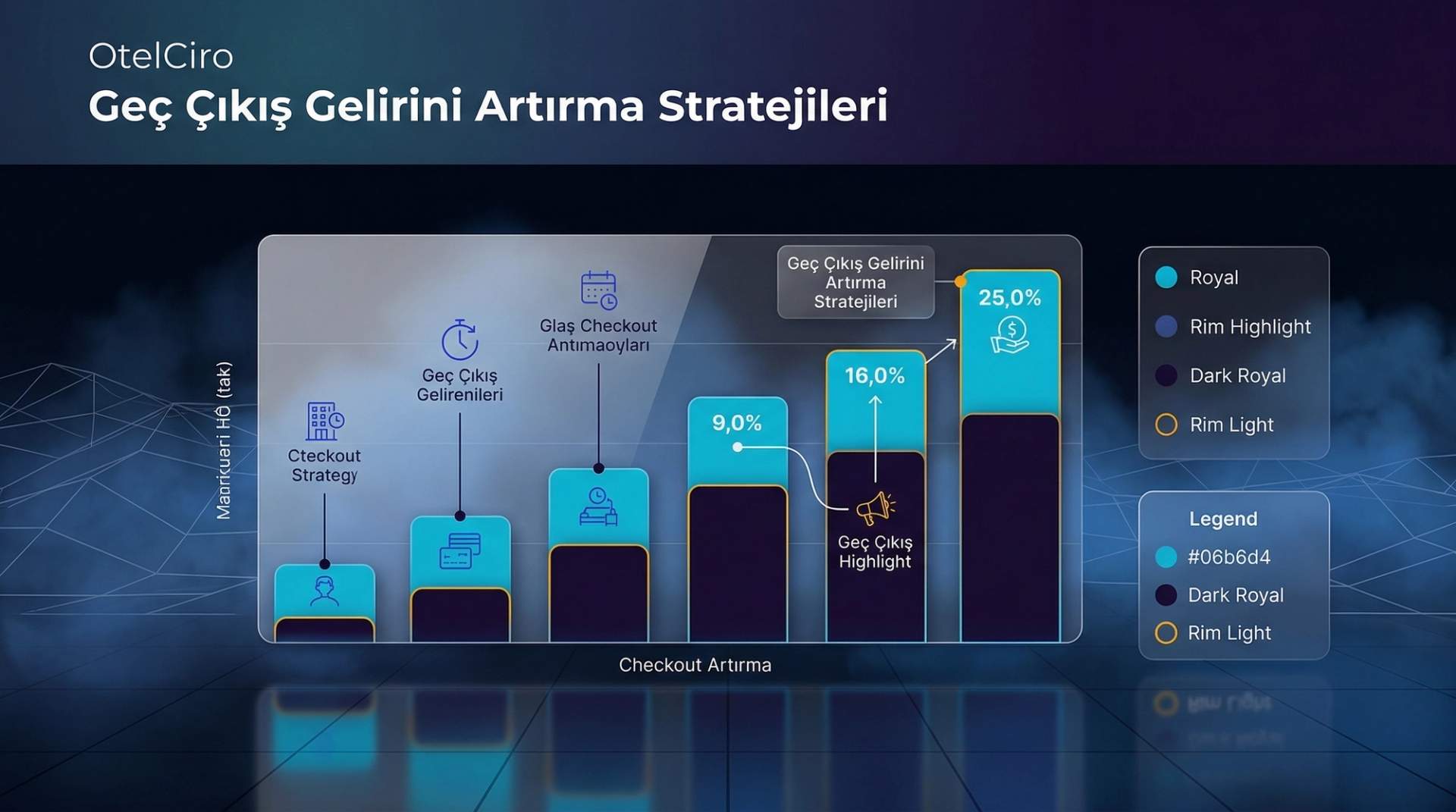
- Significant Revenue Loss: Offering free or fixed-price late check-outs results in substantial lost revenue, estimated between 680,000-1.2 million TL annually for a 200-room hotel.
- Dynamic Pricing is Key: Implement a dynamic late check-out pricing model that considers occupancy forecasts, room category multipliers, and loyalty program tiers to maximize revenue.
- Operational Integration: Seamlessly integrate late check-out pricing with housekeeping schedules and front desk operations to optimize efficiency and guest satisfaction.
- Proactive Sales Strategies: Employ pre-stay emails, online check-in options, trained front desk staff, and mobile notifications to proactively offer and convert late check-out requests.
- Tailored Approach & KPI Tracking: Adapt your late check-out strategy to different hotel types (city, resort, airport, boutique) and continuously track KPIs like penetration rate and average revenue per check-out for ongoing optimization.
Late Check-Out: Free Perk or Revenue Opportunity?
The vast majority of hotels in Turkey either offer late check-out for free or apply a standard, fixed price. Both approaches lead to significant revenue loss. Free late check-out is a direct waiver of potential income, while a fixed price ignores demand and occupancy dynamics.
Looking at the numbers, the situation becomes clear: In a 200-room hotel, an average of 28% of guests request late check-out. If all these requests are met for free, the annual missed revenue is calculated to be between 680,000-1.2 million TL. Moreover, free late check-out creates indirect costs by disrupting housekeeping operations.
Dynamic late check-out pricing transforms this demand into a controlled revenue channel. AI-powered systems evaluate the hotel's occupancy status, incoming reservations, and housekeeping capacity for each check-out day to determine the optimal late check-out price.
Dynamic Late Check-Out Pricing Model
Late check-out prices should be determined dynamically based on multiple variables:
Occupancy impact: The number of guests checking in on the same day directly affects the late check-out price. Prices decrease on low-occupancy days and increase on high-occupancy days.
| Same-Day Occupancy Forecast | Late Check-Out Price (until 2:00 PM) | Late Check-Out Price (until 6:00 PM) |
|---|---|---|
| %0-50 | Free or 200 TL | 400 TL |
| %51-75 | 450 TL | 800 TL |
| %76-90 | 750 TL | 1,200 TL |
| %91-100 | Not available | Not available |
Room category multiplier: For suites and higher-category rooms, the late check-out price should be 1.5-2 times that of a standard room. However, since suite guests often have a higher spending profile, the contribution of late check-out to their overall experience is greater.
Loyalty program impact: Offering limited complimentary late check-out to top-tier loyalty members increases the perceived value of the program. However, this should be "limited"—e.g., 4-6 times per year. For other late check-outs, a discounted rate applies.
OtelCiro's AI engine calculates all these variables in seconds, providing instant price recommendations to the front desk team.
Related reading: Day-Use Room Pricing: Day-Use Revenue Model
Operational Integration: Housekeeping and Front Desk
Late check-out pricing alone is not enough—it must be integrated with operational processes:
Housekeeping planning: Every late check-out delays the cleaning and preparation time for that room. It is critical for the Executive Housekeeper to know which rooms have late check-outs in real time to optimize the cleaning schedule. The AI system automatically updates the cleaning route, taking late check-out rooms into account.
Incoming guest expectations: If a room is planned to be assigned to a guest requesting early check-in, late check-out should not be accepted for that room. The system automatically cross-checks room assignments and late check-out requests.
Mini-bar and room service integration: Additional spending opportunities can be offered to guests with late check-out. A lunch room service offer, combined with late check-out, provides an average of 350-600 TL in additional F&B revenue.
An Istanbul business hotel achieved the following results after implementing this integration:
- Late check-out revenue: 120,000 TL monthly (previously zero)
- Housekeeping efficiency: 15% increase (due to reduced irregular late check-outs)
- Guest satisfaction: 4-point increase (thanks to a structured process)
Proactive Late Check-Out Sales
Only offering late check-out to guests who request it means missing half of the revenue opportunity. Increase conversion rates with a proactive sales strategy:
Pre-stay email: Offer the late check-out option in advance with an email sent 48 hours before the stay. These emails observe a 12-16% conversion rate. Emphasize the benefits of late check-out in the message content: "Don't rush your last day, extend your pool and spa enjoyment."
Online check-in integration: Guests should be able to add the late check-out option with a single click while performing online check-in. This channel provides the highest conversion rate (18-22%) because the guest is already in a digital environment and ready to make a purchase decision.
Front desk training: It is effective for front desk staff to offer late check-out in a natural manner during check-in, such as, "Would you like to avoid rushing on your check-out day? An extension until 2:00 PM is just 450 TL." However, it is important that this offer is not aggressive—it can have a negative impact if the guest feels pressured.
Mobile app notification: A notification sent at 8:00 AM on the morning of check-out day, "Don't rush today, extend your comfort with late check-out," captures last-minute conversions. The conversion rate for this channel is between 8-11%.
Strategy by Hotel Type
Late check-out strategy should differ based on the hotel type:
City / Business hotels: Business travelers often check out early for morning meetings. However, late check-out demand is 45% higher on Fridays—guests want an extension before the weekend. Package Friday late check-out with Saturday brunch.
Resort hotels: Vacation guests are most likely to request late check-out on their last day. The late check-out utilization rate in resort hotels is 35-42%, almost double that of city hotels. Offer a "Last Day Package" that includes late check-out + lunch + beach/pool access.
Airport hotels: Late check-out demand is shaped by flight times. Offer full-day room use (hybrid day-use + late check-out) to guests with evening flights.
Boutique hotels: Emphasize a personalized experience. A concept like "Start your day with a special breakfast from our chef, followed by a calm afternoon farewell" supports premium pricing.
Performance Tracking and Optimization
Measure the success of your late check-out revenue strategy with the following KPIs:
- Late check-out penetration rate: What percentage of total check-outs are late check-outs? Target: 20-30%
- Average late check-out revenue: Additional revenue per check-out. Target: city hotel 500+ TL, resort 700+ TL
- Proactive sales conversion rate: What percentage of those offered accepted? Target: 15%+
- Late check-out + additional spending: Extra F&B, spa, etc., spending by guests with late check-out
- Operational impact: The effect of late check-out on housekeeping duration
Review these metrics weekly to continuously improve your pricing model and proactive sales strategies. Even small adjustments can make a big difference in total annual revenue.
![Hotel Ancillary Revenue: Monetizing Spa, F&B & Activities [2026 Guide]](https://cdn.sanity.io/images/1la98t0z/production/cfce3407a5ef8f70edd19853e8059317fca7b6a6-2752x1536.jpg?w=1920&q=50&auto=format&fit=max)
![FIFA 2026 World Cup: Hotel Dynamic Pricing Strategy [2026 Guide]](https://cdn.sanity.io/images/1la98t0z/production/7a76affe61333341ec47bb0c705011068a1afd24-2752x1536.jpg?w=1920&q=50&auto=format&fit=max)