
Key Takeaways
- Cost Efficiency: Voice AI reduces per-call costs by up to 70%, dropping from the $15-25 range to just $5-8.
- High-Value Channel: Phone bookings still represent 23% of total reservations and carry a 38% higher average value than online bookings.
- Market Growth: Global hotel adoption of Voice AI is projected to reach 30% by the end of 2027, up from just 8% in 2024.
- Operational Performance: AI systems handle 24/7 multilingual inquiries, potentially saving a 100-room hotel $45,000-$72,000 annually.
- Seamless Integration: Success depends on deep PMS integration to allow the AI to perform real-time actions like booking creation and modifications.
Embed this image on your site
<a href="https://otelciro.com/en/news/hotel-voice-ai-and-phone-automation-2026-strategy-guide">
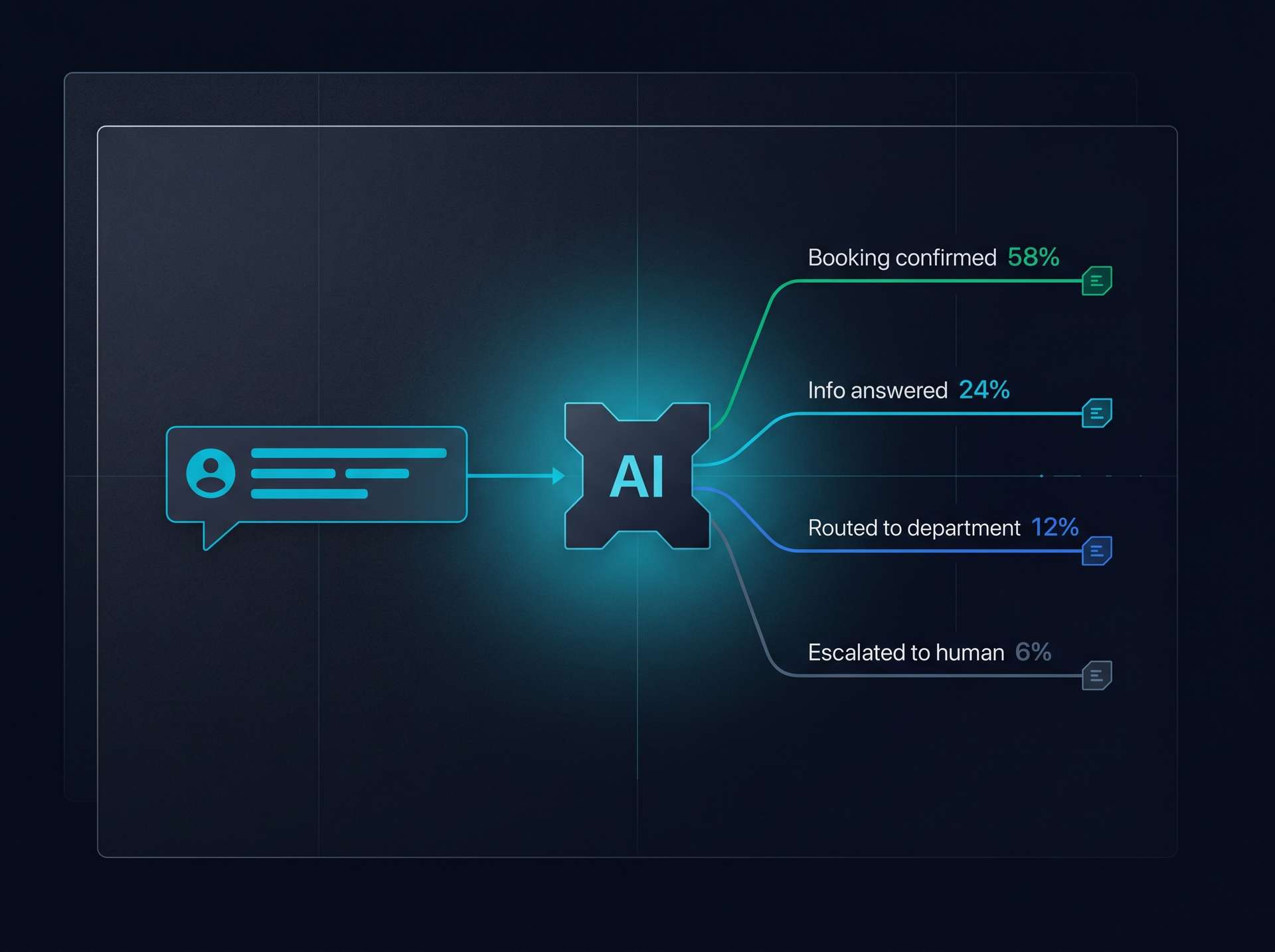
  <img src="https://cdn.sanity.io/images/1la98t0z/production/62e2cc21b1543f4e410237b11634082c038479e3-2400x1792.jpg" alt="Voice-AI routing flow diagram. A caller enters a central AI node that branches into four outcomes: 58% booking confirmed, 24% info answered, 12% routed to department, 6% escalated to a human agent." width="800" />
</a>
<p>Source: <a href="https://otelciro.com">OtelCiro</a> — AI Hotel Revenue Management</p>
Why Hotel Phone Reservations are Still Critical
As digitalization accelerates, it might be tempting to neglect the telephone channel. However, the data paints a very different picture: according to Phocuswright’s 2026 Hospitality Industry Report, 23% of hotel reservations are still made over the phone. More importantly, the average value of bookings made via telephone is 38% higher than those from online channels—largely because guests who call often request longer stays, suites, or special packages.
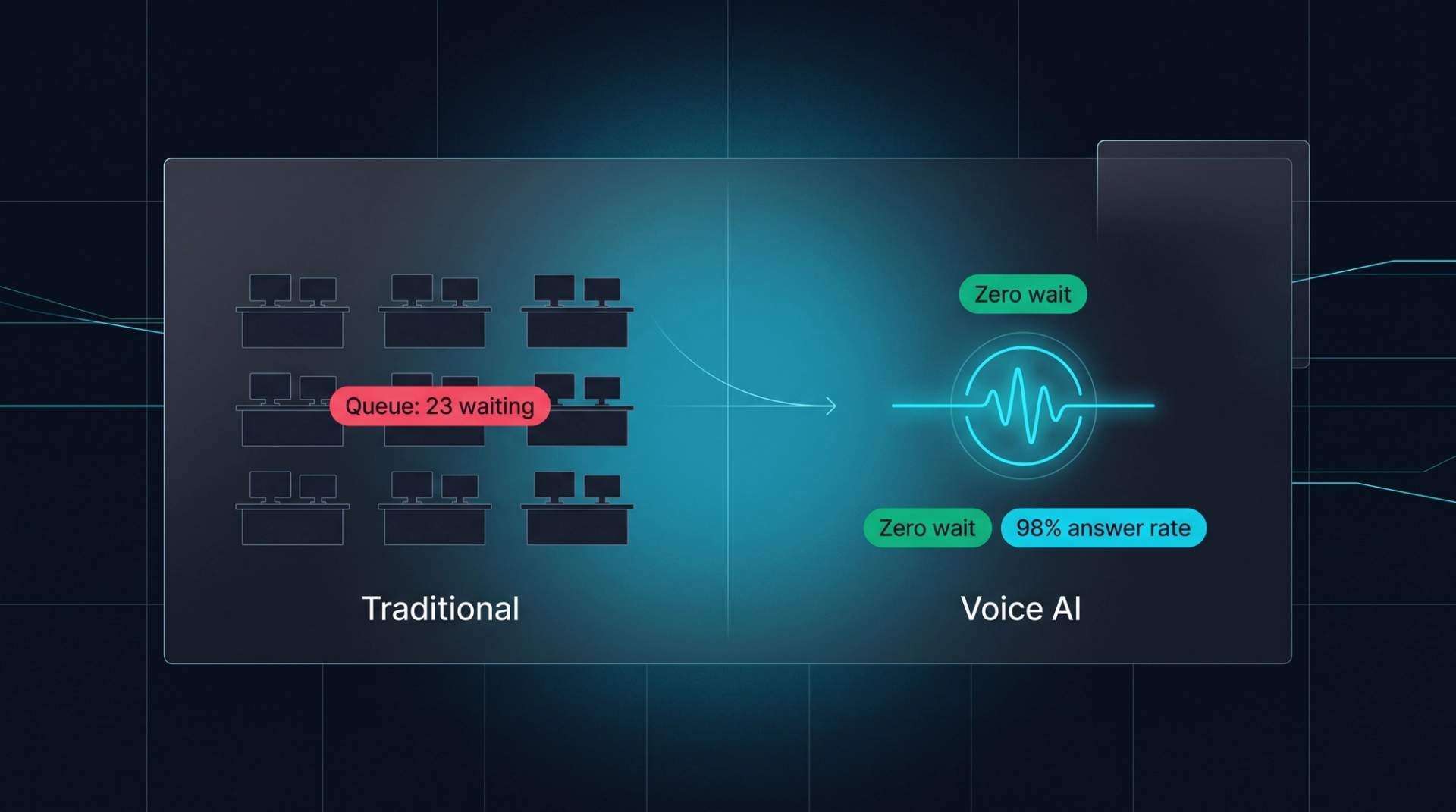
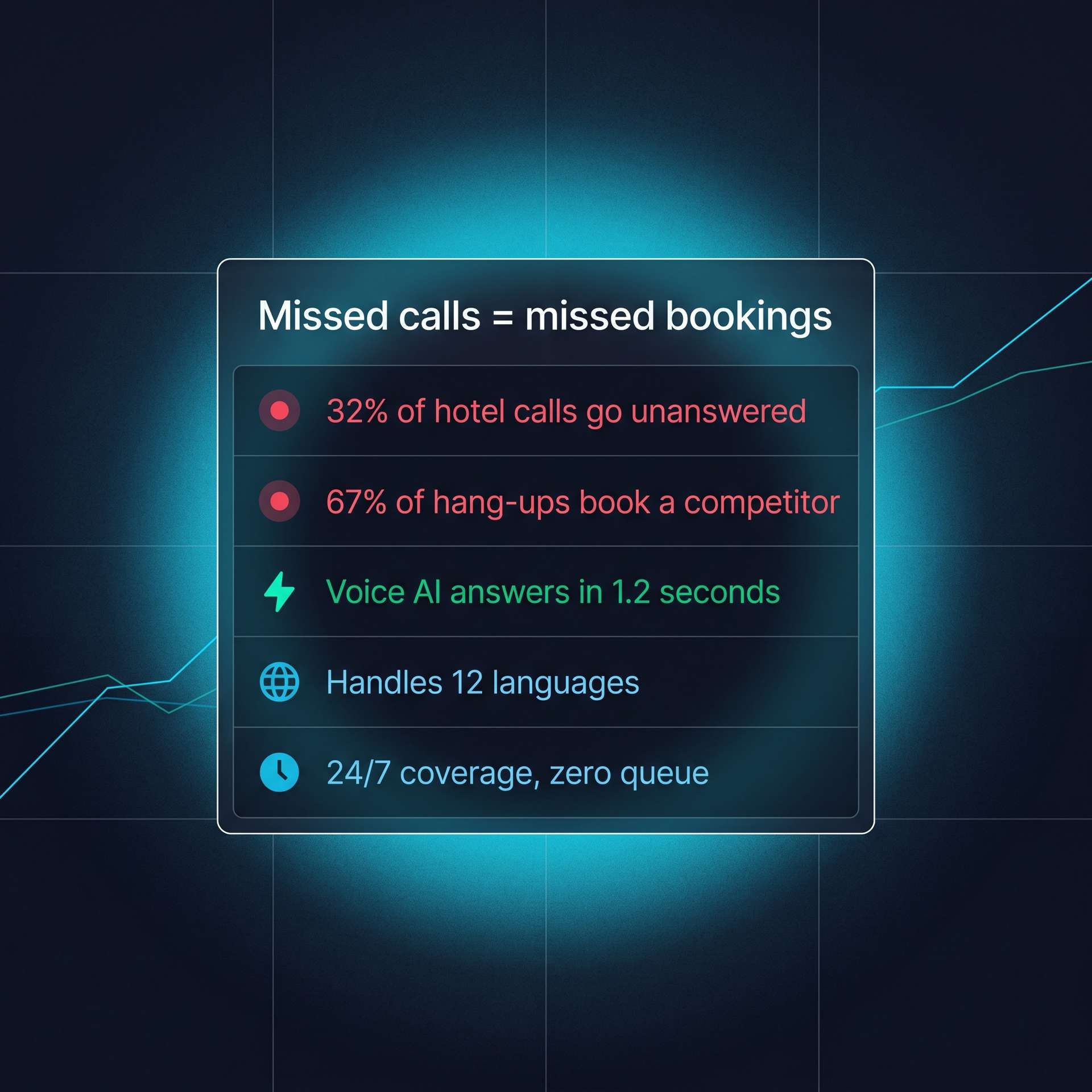
The problem is that traditional call centers cannot keep up with this demand. Research from Cornell Hotel Administration shows that 32% of hotel calls go unanswered or are terminated by the guest due to long wait times. Every missed call represents a potential revenue loss of $250-400 on average.
This is exactly where Voice AI comes into play.
Embed this image on your site
<a href="https://otelciro.com/en/news/hotel-voice-ai-and-phone-automation-2026-strategy-guide">
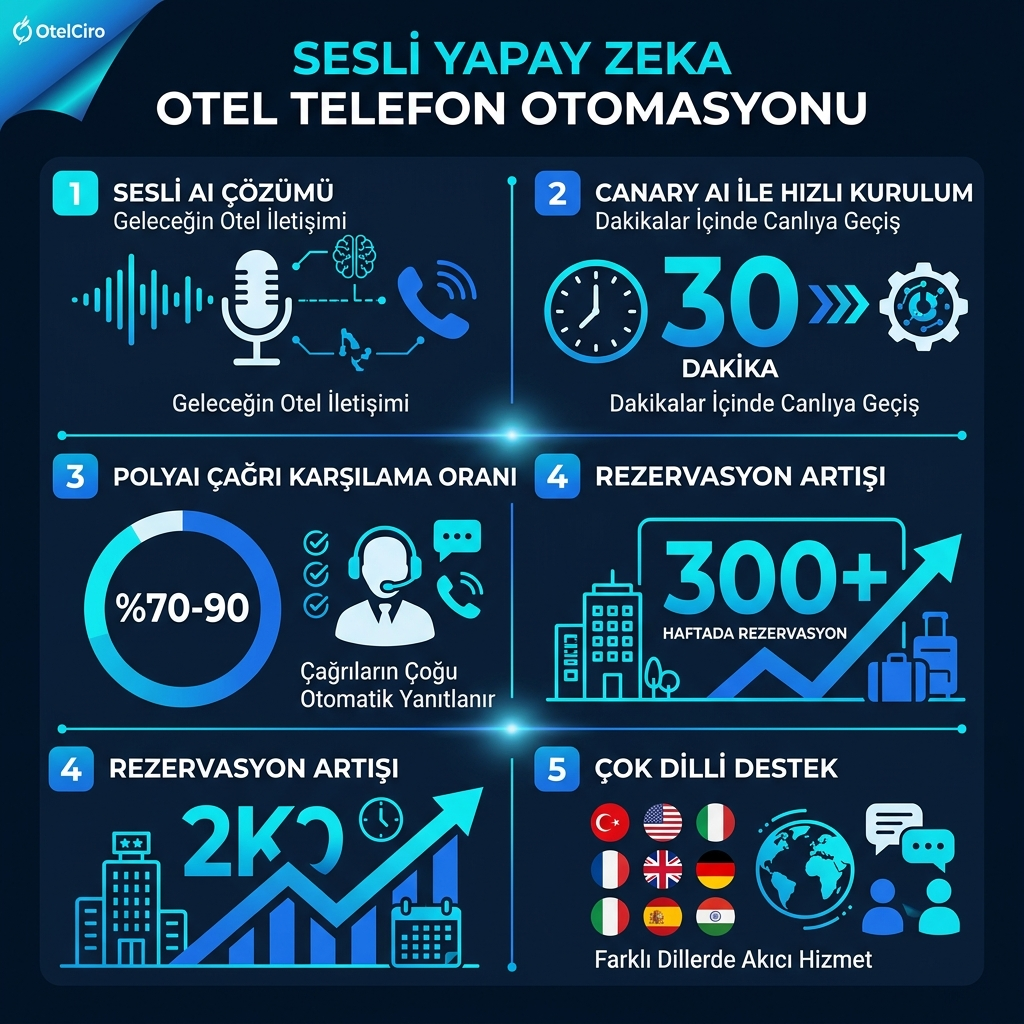
  <img src="https://cdn.sanity.io/images/1la98t0z/production/01f4c139ee23e9afa30f6639e7bd2797ebd21337-1024x1024.png" alt="Voice AI Hotel Phone Automation Infographic" width="800" />
</a>
<p>Source: <a href="https://otelciro.com">OtelCiro</a> — AI Hotel Revenue Management</p>
Related reading: AI Voice Assistant: How to Reduce Hotel Reception Calls by 43%
What is Voice AI and How Does It Differ from a Chatbot?
Voice AI is an artificial intelligence technology that understands, interprets, and responds to natural human speech over a telephone line. The fundamental difference from text-based chatbots is its ability to manage conversation flow in real-time, perform tone and sentiment analysis, and integrate directly with telephone infrastructure.
According to Gartner’s 2026 forecasts, 30% of global hotels will be using some form of Voice AI solution by the end of 2027. This rate was only 8% in 2024—nearly fourfold growth in three years.
The Technical Layers of Voice AI
A hotel Voice AI system consists of five integrated layers:
1. Automatic Speech Recognition (ASR): Converts the caller's voice into text in real-time. Modern ASR engines achieve 97%+ accuracy. Models supporting over 50 languages, including Turkish, can successfully parse even accented speech.
2. Natural Language Understanding (NLU): Determines the caller's intent from the converted text. It understands that "Is there a room for two next week?" and "We are thinking of visiting with my spouse next week, what do you suggest?" both correspond to the same intent—an availability inquiry.
3. Dialogue Management: Manages multi-turn conversations. It remembers that the caller's question "What is the price?" refers to the room type they asked about two minutes earlier, maintaining context.
4. PMS and CRS Integration: Queries room availability, pricing, and guest history in real-time. It can create, modify, or cancel reservations.
5. Text-to-Speech (TTS): Delivers the response in a natural, fluent voice. Next-generation TTS models like WaveNet and VALL-E X have moved away from robotic tones to produce output that is nearly indistinguishable from a human voice.
Embed this image on your site
<a href="https://otelciro.com/en/news/hotel-voice-ai-and-phone-automation-2026-strategy-guide">
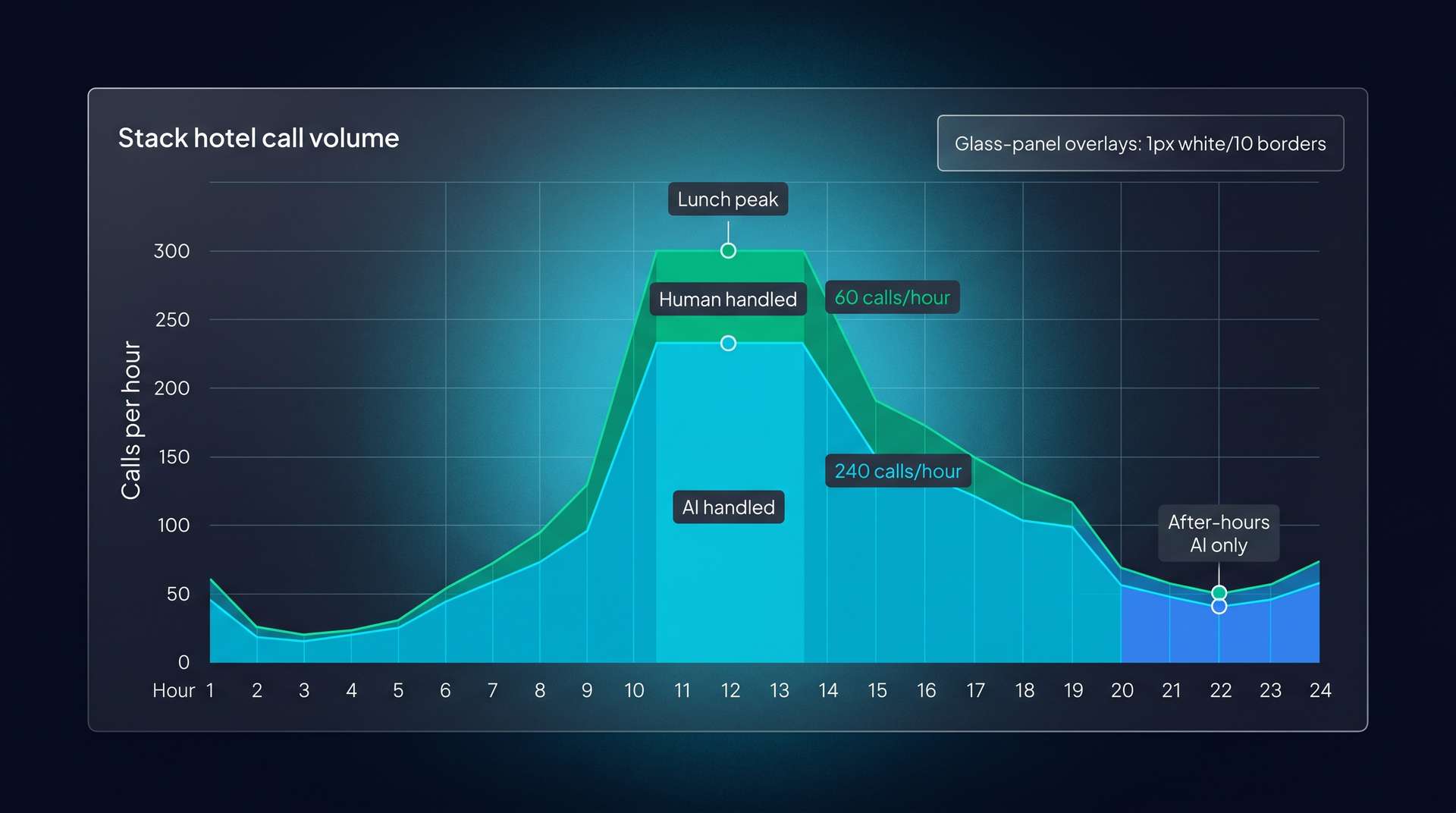
  <img src="https://cdn.sanity.io/images/1la98t0z/production/ef1ddcb5c977ad41b4fe7e848de4c6d7d5327d7c-2752x1536.jpg" alt="24-hour stacked area chart of hotel call volume. Peak at 10am-2pm reaches 300 calls per hour — cyan AI-handled band covers 240, emerald human-handled band covers 60. Annotations mark 'Lunch peak' at noon and 'After-hours AI only' at 10pm." width="800" />
</a>
<p>Source: <a href="https://otelciro.com">OtelCiro</a> — AI Hotel Revenue Management</p>
Cost Analysis: Human Agent vs. Voice AI
According to McKinsey’s 2025 "AI in Hospitality" report, the cost comparison for hotel call centers reveals striking figures:
Human Agent Costs
- Cost per call: $15-25
- Recruitment and training: It takes an average of 6-8 weeks for a new call center staff member to become productive.
- Turnover rate: Annual staff turnover in hotel call centers is 45-60%.
- Working hour constraints: Minimum 3 shifts for 24/7 operation, with at least 2 staff members per shift.
- Language constraints: Separate staff requirements for each additional language.
Voice AI Costs
- Cost per call: $5-8
- Implementation time: 2-4 weeks (including PMS integration).
- Scalability: Unlimited simultaneous call capacity.
- Working hours: 24/7/365, uninterrupted.
- Language support: 35+ languages, with no additional cost.
A 100-room hotel receives an average of 120-180 calls per day. 65-70% of these calls are fully resolvable by Voice AI (availability inquiries, pricing, location/transportation info, restaurant hours). Annual savings potential: $45,000-72,000.
Related reading: AI Chatbot vs AI Concierge: Making the Right Choice for Your Hotel in 2026
Telephone Booking with Voice AI: Real-World Scenarios
Scenario 1: Creating a New Reservation
A family calls to inquire about a room for a 5-night stay starting July 15th. The Voice AI system:
- Captures the dates and guest count within natural conversation.
- Performs a real-time availability check via the PMS.
- Verbally presents suitable room types and prices.
- Records the guest's preference and creates a preliminary booking.
- Redirects to a secure payment line for credit card details.
- Automatically sends the confirmation email.
The entire process takes an average of 3.5 minutes—compared to 7-12 minutes with a human agent.
Scenario 2: Modifying an Existing Reservation
A guest calls to change their stay dates. Voice AI:
- Recognizes the guest from their phone number or reservation code.
- Calculates availability and price difference for the new dates.
- Writes the change to the PMS after receiving confirmation.
- Sends updated confirmation details.
Scenario 3: Multilingual Greeting
A German tourist calls the phone number on the hotel's website. Voice AI:
- Detects the language from the first sentence (average 1.2 seconds).
- Switches to German.
- Conducts the entire dialogue in German.
- Creates the record in the PMS in Turkish (or the hotel's primary language).
- Sends a German confirmation email to the guest.
According to STR Global data, hotels that have switched to multilingual Voice AI see a 34% increase in international direct bookings.
Voice AI Adoption in the Turkish Market
Voice AI adoption in Turkey's hospitality sector is in its early stages but is accelerating. According to Deloitte Turkey's 2026 Tourism Technology Report:
- 12% of 5-star hotels in Turkey are testing some form of voice AI solution.
- 4% of boutique hotels are actively using it.
- This rate is expected to rise to 25% by the end of 2027.
Barriers to adoption include:
Turkish NLU Performance: Due to its agglutinative structure, Turkish requires more complex NLU processing than English. However, the latest versions of large language models achieve 94%+ intent recognition accuracy in Turkish—up from 82% in 2024.
Cultural Preferences: Turkish guests have a strong habit of speaking to a human voice on the phone. It is critical for Voice AI systems to possess "human-like" naturalness for adoption.
Infrastructure Requirements: Robust PMS integration and stable internet infrastructure are prerequisites. Cloud-based solutions like OtelCiro facilitate Voice AI integration thanks to their API-first architecture.
PMS Integration: The Key to Success
The true power of Voice AI comes from deep integration with hotel management systems. A standalone voice response system can only provide information; a system with PMS integration can take action.
Critical Integration Points
- Real-time Inventory: Instant availability, pricing, and restrictions.
- Guest Profile: Stay history, preferences, loyalty status, and previous complaints.
- Pricing Engine: Ability to relay dynamic rates accurately and identify upselling opportunities.
- Payment Processing: PCI DSS compliant secure card transactions.
- Housekeeping Status: Room readiness info and early check-in availability.
OtelCiro’s MCP (Model Context Protocol) integration allows Voice AI systems to access PMS data directly. This enables the voice assistant to query room status, pricing, and guest history via a single API layer, reaching accurate information in seconds.
Impact on Guest Satisfaction
The biggest concern regarding Voice AI applications is: "Will it negatively affect the guest experience?" J.D. Power’s 2026 Hotel Guest Satisfaction Study provides a clear answer:
- 72% of guests who interacted with well-designed Voice AI systems rated the experience as "positive" or "very positive."
- 84% prefer receiving an answer within 30 seconds over waiting 5 minutes for a human.
- 67% cite 24/7 accessibility as the most valuable feature.
- 91% expect a seamless transfer to a human agent if the Voice AI cannot resolve the issue.
The final point highlights a critical design principle: smart escalation. It is mandatory for Voice AI to know its limits and transfer complex, emotional, or exceptional situations to a human agent in a timely manner to maintain guest trust.
Escalation Scenarios
Voice AI should automatically redirect to a human agent when:
- It detects a complaint or dissatisfaction (negative sentiment analysis).
- It cannot produce a solution after three turns.
- The guest explicitly requests a human agent.
- On sensitive matters (health issues, security concerns).
- For VIP or top-tier loyalty program members (optional).
Implementation Roadmap: Setting Up Voice AI in 90 Days
Weeks 1-2: Analysis and Planning
- Analyze current call volume and distribution (hourly, daily, seasonal).
- Identify the 50 most frequently asked questions and request categories.
- Document PMS integration requirements.
- Define KPI targets (call resolution rate, average duration, cost).
Weeks 3-6: Development and Integration
- Selection and configuration of the Voice AI platform.
- PMS API integration (5-7 business days with OtelCiro’s API-first architecture).
- Design and development of dialogue flows.
- Training of Turkish, English, German, and Russian language models.
- Verification with internal test scenarios.
Weeks 7-10: Pilot and Optimization
- Launch pilot with 20% call volume.
- Monitor daily performance metrics.
- Improve the model by analyzing failed dialogues.
- Staff training (escalation protocols).
Weeks 11-12: Full Deployment
- Open to 100% of call volume (escalation line active).
- Establish a weekly performance reporting system.
- Activate the continuous learning loop.
Risks to Consider
Common mistakes that lead to failure in Voice AI implementation:
1. Over-automation: Instead of routing all calls to AI, prioritize automating repetitive and simple requests. The initial goal should be a 60-70% resolution rate, not 100%.
2. Inadequate Testing: Launching without testing Turkish variants and regional accents can cause frustration for guests calling from different regions.
3. PMS Sync Delays: If Voice AI operates with 5-minute-old inventory data, it will relay incorrect availability. Real-time synchronization is essential.
4. Privacy Compliance: Recording voice conversations requires explicit consent under KVKK/GDPR. Automatic notification and consent mechanisms at the start of the call are mandatory.
Future Perspective: 2027 and Beyond
Deloitte’s global hospitality report envisions the evolution of Voice AI in three phases:
Phase 1 (2025-2026): Information inquiries and simple transactions—where we are today.
Phase 2 (2027-2028): Proactive sales—Voice AI analyzing the caller's profile to perform automated upselling and cross-selling. Personalized offers like, "Shall we prepare a sea-view room like last time? It's only a 200 TL difference."
Phase 3 (2029+): Emotional Intelligence—Adapting response styles by understanding the guest's mood from their tone of voice. Empathic and slower speech for a stressed caller; fast and clear information transfer for a decisive caller.
Embed this image on your site
<a href="https://otelciro.com/en/news/hotel-voice-ai-and-phone-automation-2026-strategy-guide">
  <img src="https://cdn.sanity.io/images/1la98t0z/production/febd642d78b4e605f3c7631ebdb3be6d08f3acbf-2048x2048.jpg" alt="Card titled 'Missed calls = missed bookings'. 32% of hotel calls go unanswered; 67% of hang-ups book a competitor; Voice AI answers in 1.2 seconds, handles 12 languages, and provides 24/7 coverage with zero queue." width="800" />
</a>
<p>Source: <a href="https://otelciro.com">OtelCiro</a> — AI Hotel Revenue Management</p>
Conclusion: Don't Hang Up, Transform
The telephone channel isn't dead—it's transforming. Voice AI allows hotels to protect their most valuable yet most expensive communication channel while reducing costs by 60-70%, providing 24/7 availability, and offering multilingual service without additional staff.
According to Phocuswright’s projections, hotels that do not use Voice AI by 2028 will lose 15-20% of their telephone channel revenue—because guests will stop calling hotels that don't answer and turn to competitors instead.
OtelCiro’s MCP integration and API-first architecture allow hoteliers to realize this transformation quickly and securely by working seamlessly with Voice AI platforms. Don't abandon the phone—make it smart.
![AI Chatbot Revenue Impact for Hotels: 2026 Strategy [Data Analysis]](https://cdn.sanity.io/images/1la98t0z/production/28a6b8cebd12686a668a97549c9e9a619c6f4277-2752x1536.jpg?w=1920&q=50&auto=format&fit=max)
![Hotel AI Technology Budgets 2027: 8-Point Investment Framework That Delivers 15x ROI [2026]](https://cdn.sanity.io/images/1la98t0z/production/7e64ec0aab777ec433ec0f4f1257373a84f39d1d-2048x2048.png?w=1920&q=50&auto=format&fit=max)