
Key Takeaways
- Mass Adoption: AI chatbot adoption in the hotel industry has reached 92%, evolving from a novelty into a critical revenue-generating tool.
- Operational Efficiency: Automation now handles 70-80% of routine guest queries, reducing response times by 93% and freeing up staff for complex tasks.
- Revenue Growth: Direct interaction via chatbots increases conversion rates by 22% and boosts upselling success by 3-4x compared to traditional methods.
- System Integration: The true power of AI lies in deep integration with PMS and RMS, allowing for real-time dynamic pricing and personalized offers.
- Ancillary Success: Integrated chatbots generate an average of 35-60 EUR in additional in-stay revenue per guest through digital concierge services.
Embed this image on your site
<a href="https://otelciro.com/en/news/ai-chatbot-revenue-impact-for-hotels-2026-strategy-data-analysis">
  <img src="https://cdn.sanity.io/images/1la98t0z/production/b1a32b35c30164ec9e72ca88cd629ed8d4e88984-2400x1792.jpg" alt="Chatbot conversation. Guest asks about check-in time; AI responds with standard 3pm, early options at $25 (1pm) or $45 (11am), with a typing indicator below." width="800" />
</a>
<p>Source: <a href="https://otelciro.com">OtelCiro</a> — AI Hotel Revenue Management</p>
A Silent Revolution in Guest Communication
In the hotel industry, AI chatbots have transitioned from the "nice to have" technology of a few years ago to a critical component of the guest journey. As of 2026, 92% of hotel chains worldwide utilize some form of AI-powered chat system. However, the most striking development is that these systems have evolved from simple Q&A tools into high-performing revenue channels.
Chatbot Adoption Rates and Performance Metrics
According to industry data, the performance of AI chatbots in hotel operations is remarkably impressive:
| Metric | 2024 | 2026 | Change |
|---|---|---|---|
| Hotel adoption rate | 67% | 92% | +25 pts |
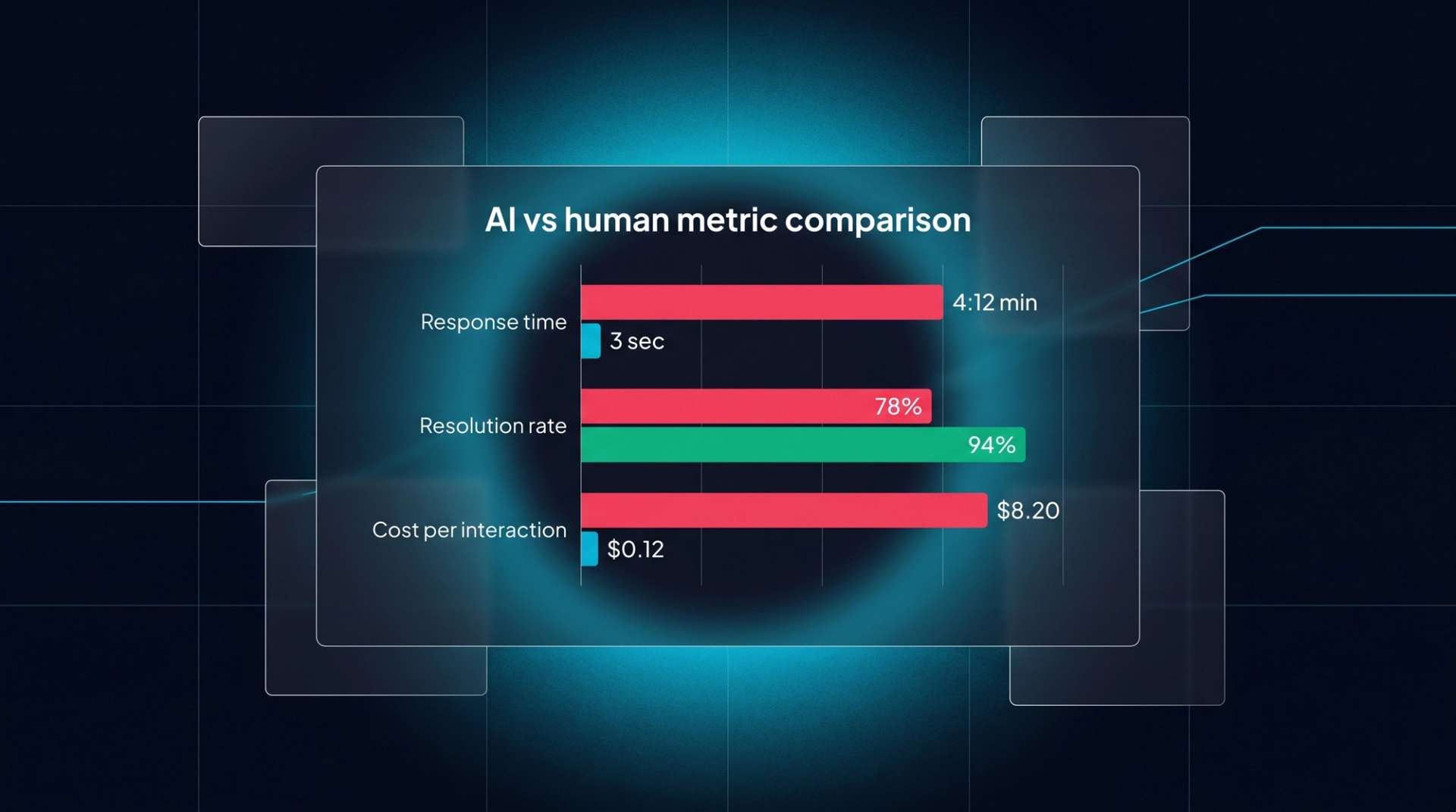
| Routine query resolution rate | 55% | 70-80% | +20 pts |
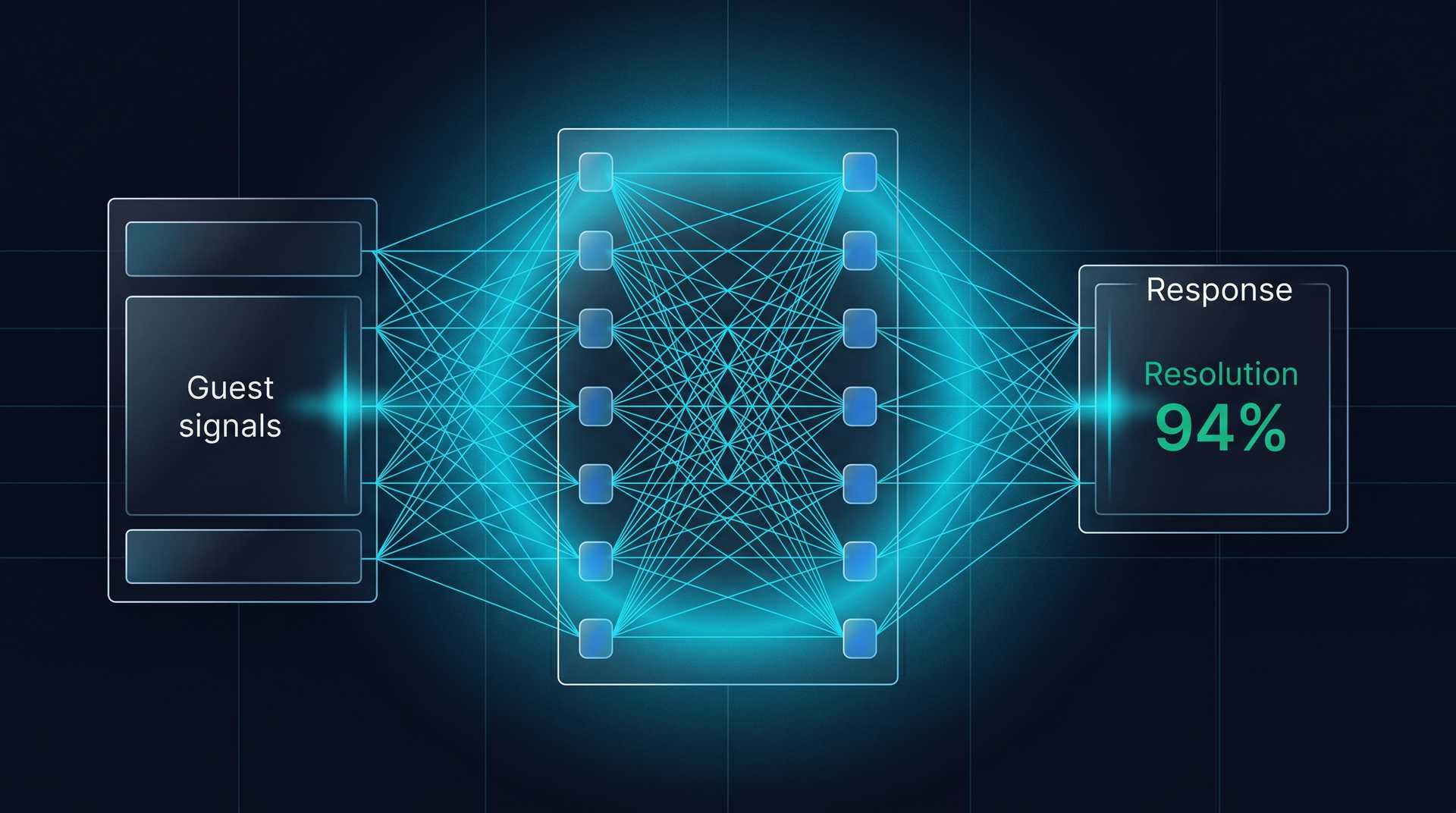
| Average response time | 45 seconds | 3 seconds | -93% |
| Guest satisfaction (chatbot interaction) | 3.2/5 | 4.1/5 | +28% |
| Upsell conversion rate | 4% | 12-18% | 3-4x increase |
| Queries requiring human intervention | 45% | 20-30% | -50% |
These figures demonstrate that chatbots are no longer an experimental technology; they have become an essential tool for operational efficiency and revenue optimization.
Embed this image on your site
<a href="https://otelciro.com/en/news/ai-chatbot-revenue-impact-for-hotels-2026-strategy-data-analysis">
  <img src="https://cdn.sanity.io/images/1la98t0z/production/907786777d25f022c39b4a82d897dcbfe3677be9-2752x1536.jpg" alt="AI vs human comparison. Response time: 4:12 min human vs 3s AI. Resolution: 78% human vs 94% AI. Cost: $8.20 human vs $0.12 AI." width="800" />
</a>
<p>Source: <a href="https://otelciro.com">OtelCiro</a> — AI Hotel Revenue Management</p>
Revenue Impact at Every Stage of the Guest Journey
1. Pre-Booking Phase: First Contact and Conversion
When potential guests visit your website, the AI chatbot takes center stage. Unlike the traditional "Contact Us" form process, the chatbot provides instant, personalized responses.
Revenue Impact:
- 35% of website visitors interact with the chatbot.
- 22% of these interactions convert into direct bookings.
- The average booking value via chatbots is 15-20% higher compared to OTA bookings (including commission savings).
The chatbot's greatest strength is capturing the guest's "micro-moment" of intent. A guest researching prices at 2:00 AM can receive an immediate answer even when the front desk is busy or unavailable.
2. Post-Booking to Pre-Arrival: The Golden Age of Upselling
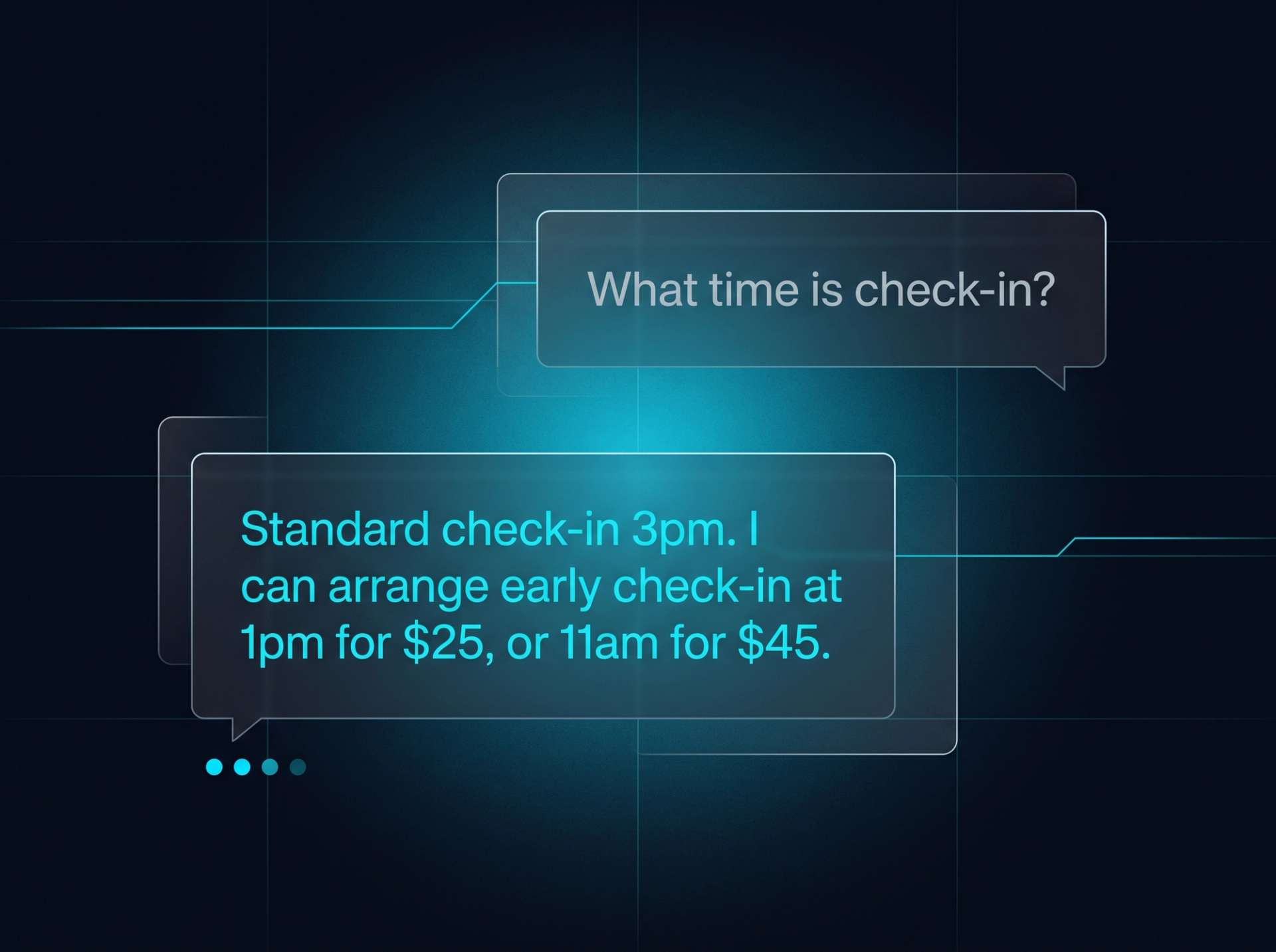
The window between booking confirmation and check-in is the most fertile period for upselling. During this phase, the chatbot handles:
- Room upgrade offers: "A sea-view room is currently available at a 30% discount; would you like to upgrade?"
- Transfer services: "Shall we arrange your airport transfer? We offer VIP options."
- Package offers: "Would you like to add a spa package to your stay? Save 20% with early booking."
Revenue Impact:
- Chatbot upsell conversion rate during this period: 12-18%.
- Average upsell revenue per guest: 25-45 EUR.
- Cost compared to a human sales team: 85% lower.
3. In-Stay: Instant Service and Cross-Selling
While the guest is at the hotel, the chatbot assumes the role of a digital concierge:
- Restaurant reservations and menu recommendations.
- Spa appointment management.
- Room service orders.
- Activity and tour bookings.
- Comfort requests such as room temperature or pillow preferences.
Revenue Impact:
- Ancillary revenue transactions via chatbot during stay: 35-60 EUR per guest.
- Increase in restaurant occupancy: 15-20%.
- Reduction in spa appointment gaps: 25-30%.
4. Post-Stay: Loyalty and Repeat Bookings
After check-out, the chatbot maintains the guest relationship:
- Automated satisfaction surveys.
- Personalized offers for return stays.
- Loyalty program registration and point notifications.
- Referral program invitations.
Revenue Impact:
- Repeat booking rate for guests who interacted with the chatbot: 28% (compared to 12% for those who didn't).
- Loyalty program participation rate: 45% (vs. 18% via traditional methods).
The Critical Importance of PMS and RMS Integration
The true revenue potential of a chatbot is unlocked through integration with the PMS (Property Management System) and RMS (Revenue Management System). An unintegrated chatbot is merely an information tool; an integrated chatbot is a revenue-generating engine.
Benefits of PMS Integration
- Real-time availability: The chatbot offers accurate deals by knowing the instantaneous room status.
- Guest profile access: Previous stays, preferences, and spending patterns are fed into the chatbot for personalization.
- Automated check-in/out: Digital processes reduce the workload at the reception desk.
Benefits of RMS Integration
- Dynamic pricing offers: The chatbot provides prices optimized based on real-time demand.
- Intelligent upsell timing: RMS data determines which offer to present to which guest and when.
- Total revenue optimization: Every transaction via the chatbot aligns with the overall revenue strategy.
24/7 Upselling Capacity: Human vs. AI Comparison
| Criteria | Human Sales Team | AI Chatbot |
|---|---|---|
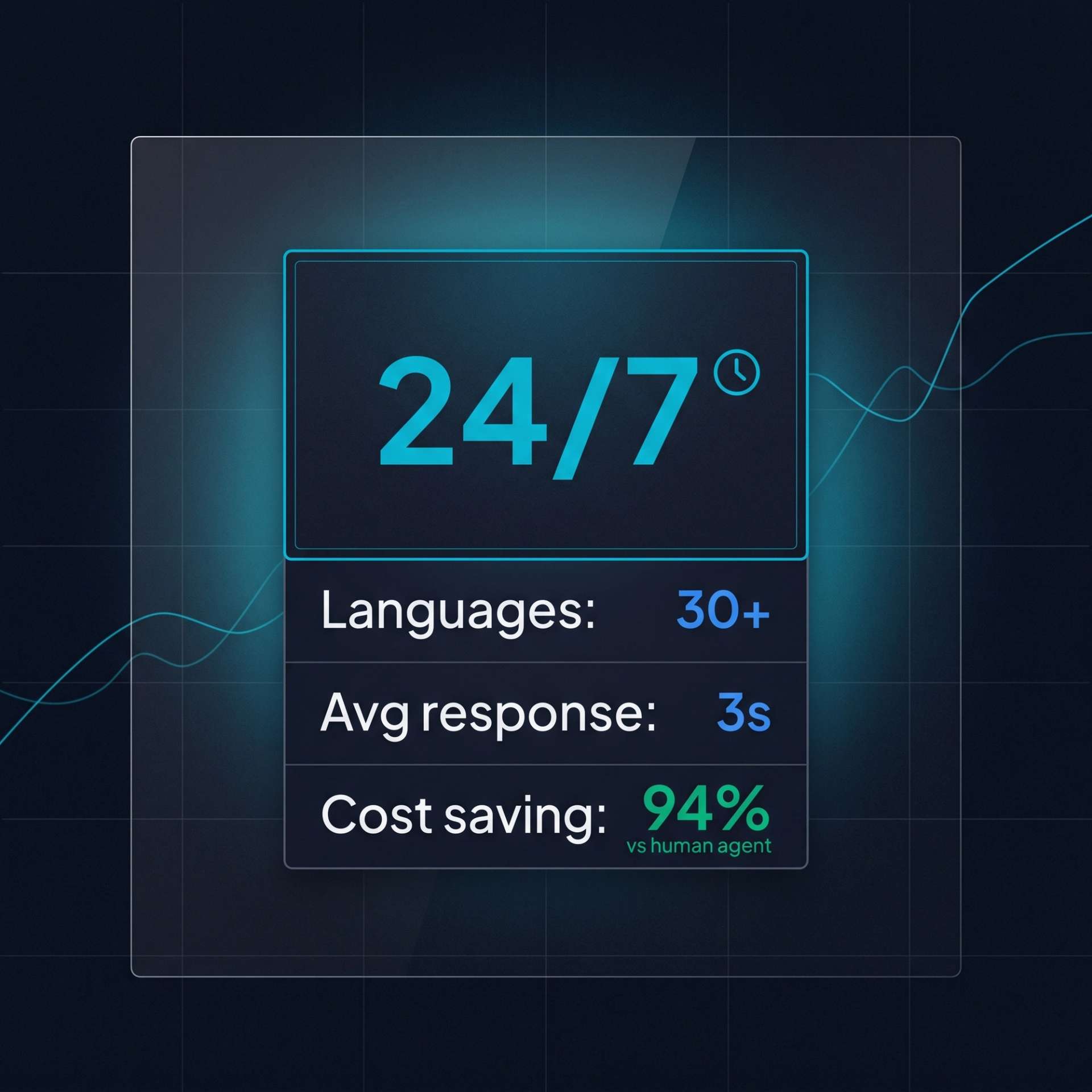
| Operating Hours | 08:00-22:00 | 24/7/365 |
| Concurrent Conversations | 1-3 | Unlimited |
| Language Support | 2-3 languages | 40+ languages |
| Response Time | 2-15 minutes | 2-5 seconds |
| Consistency | Variable | Consistently High |
| Personalization | Memory-dependent | Data-driven |
| Training Cost | High | One-time / Low |
| Scalability | Slow (requires hiring) | Instant |
This comparison does not suggest that chatbots will completely replace human teams. The most effective model is a hybrid approach, where the chatbot manages routine transactions and escalates complex, emotionally intelligent issues to the human staff.
Implementation Roadmap
Step 1: Current Guest Communication Analysis
Before implementation, analyze your existing communication channels:
- What are the most frequently asked questions?
- At what times is communication most frequent?
- Which queries contain the highest revenue opportunities?
Step 2: Integration Strategy
PMS and RMS integration capability should be the primary criterion when selecting a chatbot provider. Without integration, a chatbot is merely a voice-enabled version of an FAQ page.
Step 3: Design Upselling Scenarios
Create customized upselling scenarios for each guest segment. Offering the same deal to a business traveler and a family on vacation will lower your conversion rates.
Step 4: Continuous Optimization
AI is not a "set it and forget it" technology. It must be constantly optimized through weekly performance analysis, A/B testing, and scenario updates.
Future Perspective
By 2027, hotel chatbots are expected to connect with in-room control systems via voice assistant integration. When a guest tells an in-room device, "Book a table for dinner tomorrow," the chatbot will not only make the reservation but also suggest menu items based on the guest's profile.
Embed this image on your site
<a href="https://otelciro.com/en/news/ai-chatbot-revenue-impact-for-hotels-2026-strategy-data-analysis">
  <img src="https://cdn.sanity.io/images/1la98t0z/production/7c5f79e707251960c0874a3403571a7c5c28454c-2048x2048.jpg" alt="AI KPI tile. '24/7' headline with clock icon, sub-rows showing 30+ languages, 3-second response, 94% cost saving vs human agent." width="800" />
</a>
<p>Source: <a href="https://otelciro.com">OtelCiro</a> — AI Hotel Revenue Management</p>
Conclusion
AI chatbots have become the new standard for guest communication in the hotel industry. With a 92% adoption rate, the question is no longer "Are my competitors using it?" but rather "How well are my competitors using it?" Every month you delay your chatbot investment means missing out on the additional 60-100 EUR in revenue per guest that your competitors are already capturing.
OtelCiro's AI-powered revenue management system optimizes total guest revenue by analyzing chatbot data. Request a demo and discover the power of chatbot-RMS integration.
![Hotel AI Technology Budgets 2027: 8-Point Investment Framework That Delivers 15x ROI [2026]](https://cdn.sanity.io/images/1la98t0z/production/7e64ec0aab777ec433ec0f4f1257373a84f39d1d-2048x2048.png?w=1920&q=50&auto=format&fit=max)
![Lighthouse Revenue Agent: Autonomous Hotel AI [2026 Launch]](https://cdn.sanity.io/images/1la98t0z/production/132a5f6fe5204565a5ccac252ddcc02f935bb0fc-1024x1024.png?w=1920&q=50&auto=format&fit=max)