
Key Takeaways
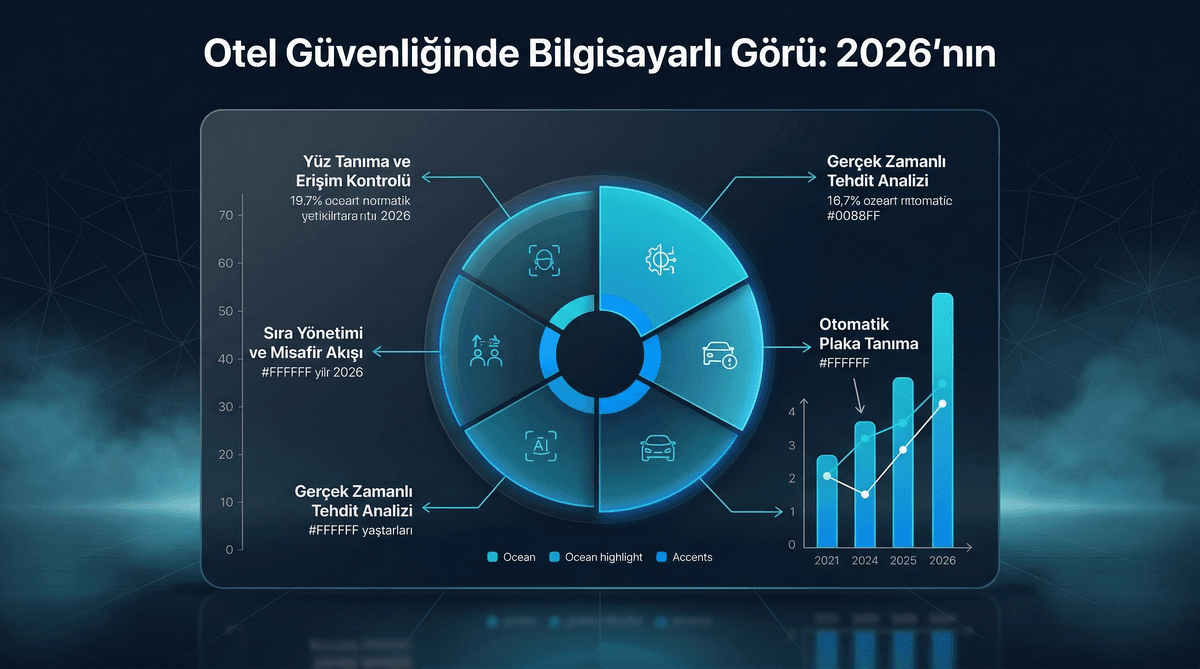
- Traditional security cameras are reactive; computer vision offers proactive, real-time threat detection, growing 38% annually in hospitality investments.
- AI systems enhance safety through anomaly detection, crowd management, and unauthorized access control, significantly reducing response times.
- Effective implementation requires robust infrastructure: 4K IP cameras, edge computing units, dedicated wired networks, and cloud or local servers.
- Compliance with personal data protection laws (like Turkey's KVKK) is crucial, demanding clear guest notification, strict data retention policies, and careful handling of facial recognition data.
- Future trends include federated learning, thermal imaging, drone integration, and audio-visual fusion for enhanced accuracy and comprehensive security.
A New Era in Hotel Security: From Passive Cameras to Smart Vision
Traditional security camera systems have been an indispensable part of hotels for decades. However, these systems have a fundamental weakness: recordings are only reviewed after an incident has occurred. A security guard attempts to monitor 16-32 camera feeds simultaneously, but research shows that attention levels drop by 45% after 20 minutes.
Computer vision technology is completely changing this paradigm. AI-powered camera systems analyze video in real-time, detecting abnormal situations within seconds. As of 2026, global hospitality sector investments in computer vision are showing annual growth of 38%.
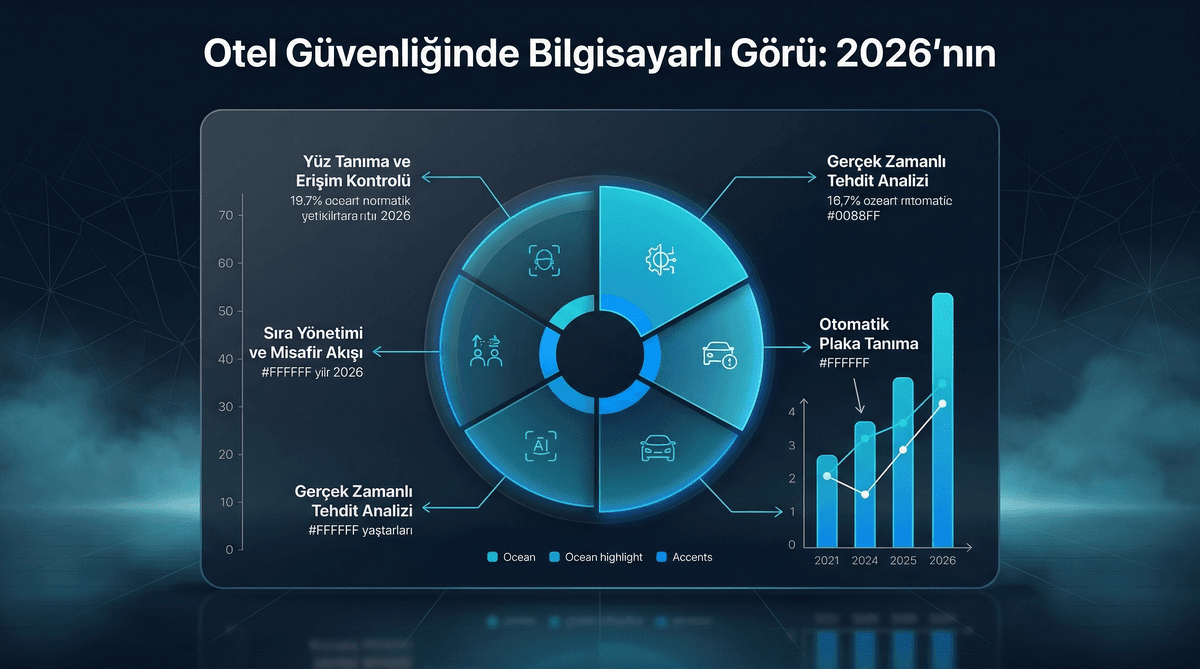
Embed this image on your site
<a href="https://otelciro.com/en/news/ai-vision-in-hotel-security-2026-strategy-guide">
  <img src="https://cdn.sanity.io/images/1la98t0z/production/63f46515dea260778c9d05136f8c6158d2fe8f33-1200x669.png" alt="Bilgisayarlı Görü Otel Güvenlik Sistemi İnfografiği" width="800" />
</a>
<p>Source: <a href="https://otelciro.com">OtelCiro</a> — AI Hotel Revenue Management</p>
Application Areas of Computer Vision in Hotel Security
Computer vision technology performs different functions at every layer of hotel security. Here are the most common and effective use cases:
Anomaly Detection and Behavioral Analysis
AI-based systems learn typical behavioral patterns in a normal hotel environment and automatically flag situations that deviate from these patterns. For example, a person waiting in the corridor for more than 15 minutes, an attempted unauthorized entry into a staff area, or an abandoned bag in the lobby are instantly reported to the security team.
In a pilot application conducted at an Antalya resort hotel, an AI-powered anomaly detection system identified 47 potential security incidents over a 6-month period at a stage traditional systems missed. Of these incidents, 12 were deemed to require serious intervention.
Crowd Management and Capacity Control
The system tracks the real-time number of people in hotel lobby areas, restaurants, poolside, and event halls. It automatically issues an alert when 80% of the fire safety capacity is reached. In the post-COVID-19 era, this feature also played a critical role in enforcing hygiene and social distancing protocols.
Unauthorized Area Access Control
Attempts at unauthorized entry into restricted areas such as staff kitchens, technical floors, and management offices are monitored in real-time. The system recognizes authorized personnel via facial recognition or ID card detection and instantly reports access attempts by unrecognized individuals to the security center.
OtelGPT AI assistant transmits security alerts to the operations team instantly, minimizing response time.
Related reading: Hotel Security and Emergency Plan Guide
Technological Infrastructure and Hardware Requirements
The right infrastructure investment is essential for the effective operation of a computer vision system. Here are the basic components:
Camera Hardware: Minimum 4K resolution IP cameras with night vision (IR) capabilities are required. IP67 protection rating is preferred for outdoor use, and PTZ (Pan-Tilt-Zoom) features for indoor use. An average of 80-120 camera points are planned for a 200-room hotel.
Edge Computing Units: A large portion of image processing is performed by edge computers deployed near the cameras. This approach reduces network bandwidth requirements by 70% and reduces latency to under 50 milliseconds.
Network Infrastructure: A dedicated security network with PoE (Power over Ethernet) support and a minimum 1 Gbps capacity must be established. Wireless connection is not recommended for security systems; a wired infrastructure is preferred.
Cloud or Local Server: NVIDIA GPU-supported servers or cloud-based processing platforms are used for deep learning models. A hybrid model—instant detection at the edge, long-term analysis in the cloud—is the most commonly preferred architecture.
While the total investment cost for a 200-room facility ranges between TL 350,000-600,000, with a 15-25% reduction in insurance premiums and security personnel optimization, ROI is typically achieved within 18-24 months.
Personal Data Protection and KVKK Compliance
The use of computer vision technology in hotel security creates serious data protection obligations. Key points to consider under Turkey's Law No. 6698 on the Protection of Personal Data (KVKK):
Obligation to Inform: Visible warning signs must be present in all areas under camera surveillance. Guests must be informed about camera monitoring during check-in.
Data Retention Period: Security camera recordings should be stored for a maximum of 30 days, unless there is a legal requirement otherwise. The AI system automatically flags recordings where anomalies are detected, ensuring timely deletion of the remaining data.
Facial Recognition Restrictions: Under KVKK, facial recognition data is considered "special category personal data." Processing this data requires explicit consent or legal necessity. Hotels typically prefer behavioral analysis-based systems over facial recognition.
Data Processing Inventory: All data collected by the computer vision system must be included in the VERBIS (Data Controllers Registry) record.
2026 Trends and Future Projections
Computer vision technology is rapidly evolving in hotel security. Here are the prominent trends for 2026:
Federated Learning: Each hotel trains a common AI model without sharing its own data. This approach both protects privacy and increases model accuracy.
Thermal Imaging Integration: By using thermal cameras alongside standard RGB cameras, 97% detection accuracy is achieved even in night conditions. It also opens the door to health security applications such as fever detection.
Drone Integration: In large resort hotels, AI systems supporting outdoor security with drones are becoming widespread. Automated patrol flights ensure 24/7 perimeter security.
Audio-Visual Fusion: Combining computer vision with audio analysis; cross-validating sound events such as glass breaking, shouting, or alarm sounds with visual data, reducing false alarm rates by 60%.
Computer vision technology transforms hotel security from a reactive discipline into a proactive strategy. When integrated with the right infrastructure, KVKK compliance, and staff training, it becomes a powerful tool that simultaneously elevates both guest safety and operational efficiency.
Related reading: Hotel Cybersecurity and Data Protection Strategies
![AI Chatbot Revenue Impact for Hotels: 2026 Strategy [Data Analysis]](https://cdn.sanity.io/images/1la98t0z/production/28a6b8cebd12686a668a97549c9e9a619c6f4277-2752x1536.jpg?w=1920&q=50&auto=format&fit=max)
![Hotel AI Technology Budgets 2027: 8-Point Investment Framework That Delivers 15x ROI [2026]](https://cdn.sanity.io/images/1la98t0z/production/7e64ec0aab777ec433ec0f4f1257373a84f39d1d-2048x2048.png?w=1920&q=50&auto=format&fit=max)