Key Takeaways
- The Digital Markets Act (DMA) has fundamentally changed rate parity rules in the EU, empowering hotels to offer lower direct rates.
- Hotels strategically managing rate parity can increase direct channel revenue by an average of 18-25%.
- A three-tiered pricing model is recommended: lowest on direct, standard on Booking.com, and flexible on other OTAs.
- Implement price monitoring automation, value-add strategies, and closed user group rates to navigate parity effectively.
- AI-powered tools like OtelCiro can automate real-time price optimization and compliance across all channels.
Is Rate Parity Still Valid in 2026?
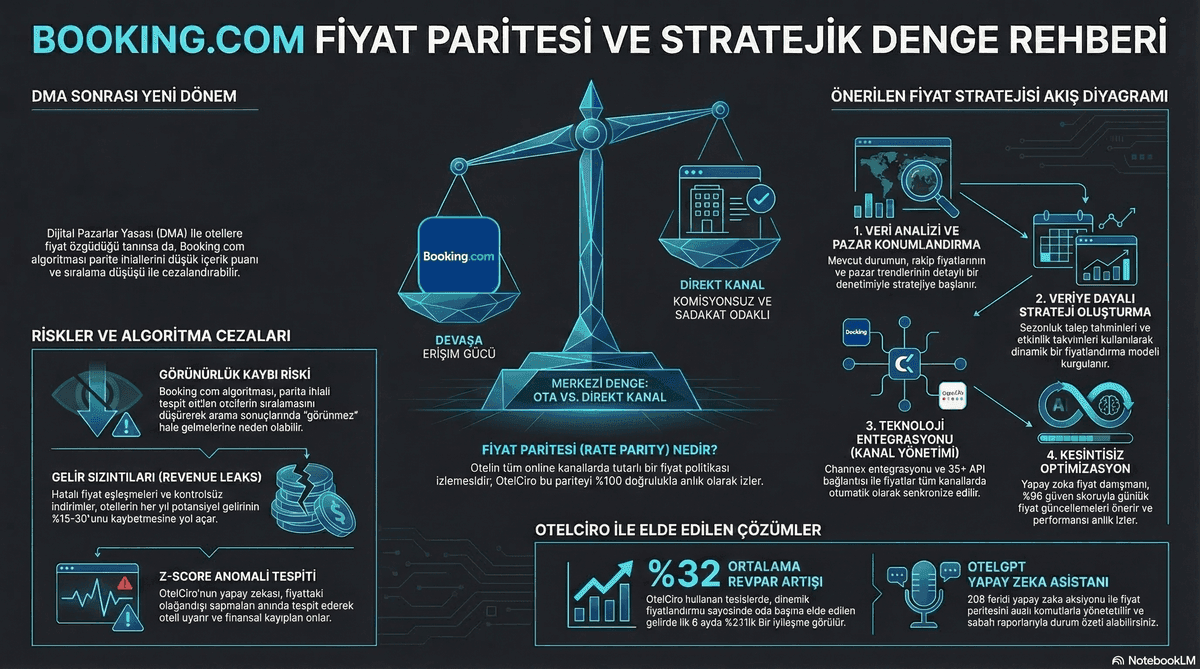
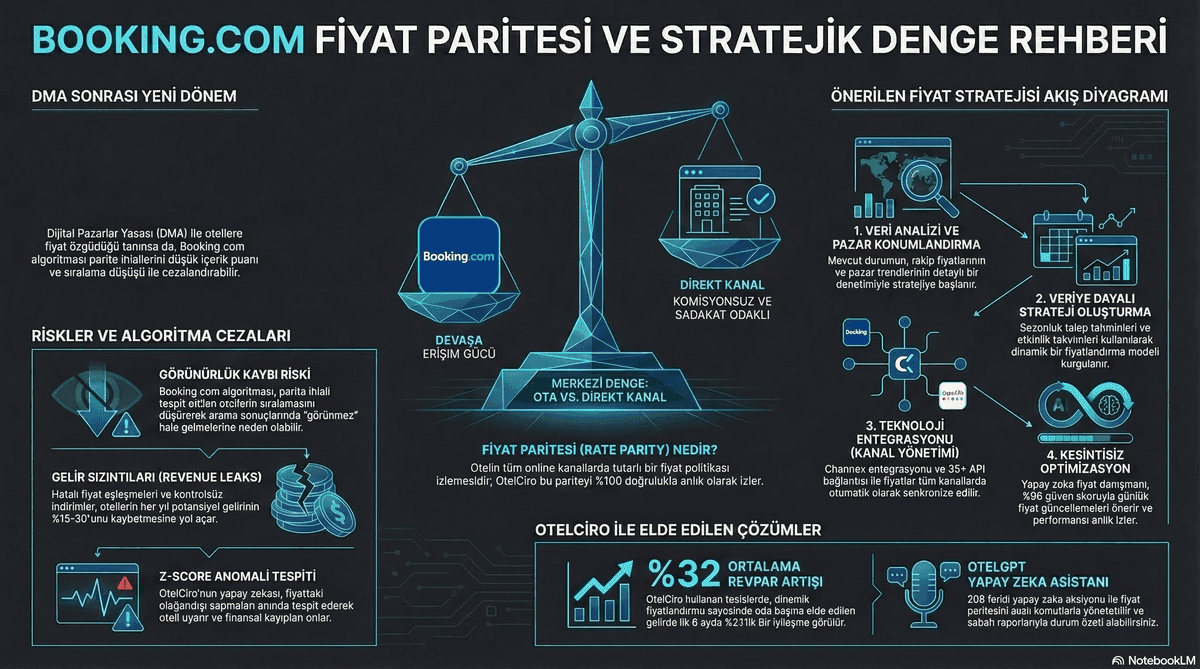
Rate parity has been one of the most debated topics in the hotel industry for years. Booking.com and other OTAs attempted to maintain control over the sector through contractual clauses that prohibited hotels from offering lower prices on their own websites. However, with the European Union's Digital Markets Act (DMA), this balance has fundamentally shifted.
As of 2026, hotels operating in EU member states now have the freedom to offer lower prices on their direct channels than on Booking.com. The situation for hotels in Turkey is slightly more complex: while the DMA does not directly apply, Booking.com's softening global policies indirectly offer new opportunities for Turkish hoteliers.
According to STR data, hotels that strategically manage rate parity successfully increase their direct channel revenues by an average of 18-25%.
Embed this image on your site
<a href="https://otelciro.com/en/news/booking-com-rate-parity-in-2026-a-strategy-guide">
  <img src="https://cdn.sanity.io/images/1la98t0z/production/4f7728bf30ed04afae74da7a4cfbc625e7e06010-1200x669.png" alt="Infographic showing Booking.com rate parity strategy and new opportunities post-DMA" width="800" />
</a>
<p>Source: <a href="https://otelciro.com">OtelCiro</a> — AI Hotel Revenue Management</p>
Related reading: Booking for Business: Revenue from the Corporate Booking Channel
Related reading: Boosting Booking.com Conversion Rate: 15% More Bookings
What Is Rate Parity and How Does It Work?
Rate parity is simply the obligation for a hotel to offer the same price across all its sales channels. This clause was part of Booking.com's contracts for many years, and various sanctions were applied to hotels that violated it.
Types of Parity
| Parity Type | Description | 2026 Status |
|---|---|---|
| Wide Parity | Same price across all channels (including direct) | Prohibited in the EU |
| Narrow Parity | Same price only across online channels | Still valid in some countries |
| Non-Parity | Hotel offers desired price | Possible with DMA |
Penalty Risks
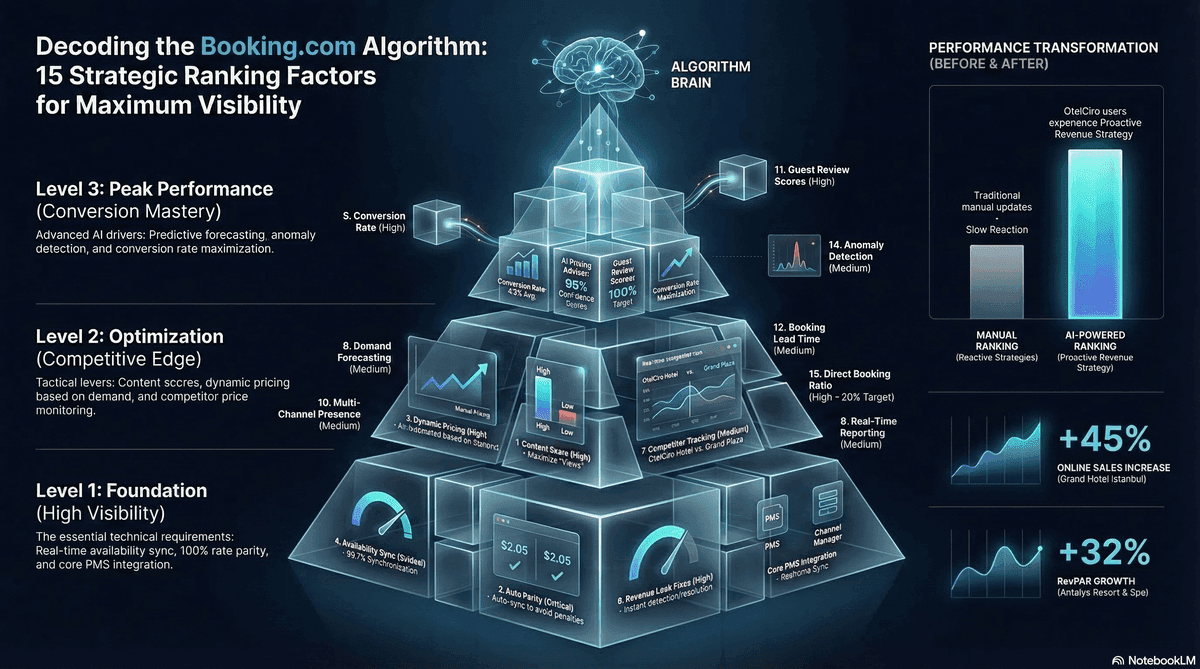
Violating rate parity still carries risks. Booking.com may apply the following sanctions when a parity violation is detected:
- Ranking demotion (loss of organic visibility)
- Loss of Preferred Partner badge
- Reduced effectiveness of Visibility Booster
- Drop in conversion rate (Booking marks its own price as "high")
Embed this image on your site
<a href="https://otelciro.com/en/news/booking-com-rate-parity-in-2026-a-strategy-guide">
  <img src="https://cdn.sanity.io/images/1la98t0z/production/acae4d068a81e17758f103e608a54f376cdac169-1200x669.png" alt="Booking.com ranking algorithm tips" width="800" />
</a>
<p>Source: <a href="https://otelciro.com">OtelCiro</a> — AI Hotel Revenue Management</p>
New Pricing Strategies Post-DMA
The Digital Markets Act designated Booking.com as a "gatekeeper" and limited its imposition of rate parity. This means an opportunity for hotels to create a multi-layered pricing strategy.
3-Layered Pricing Model
Layer 1 — Direct Channel (Lowest Price) Offer the most advantageous price through your website and booking engine. This price should be 5-10% lower than the Booking.com price.
Layer 2 — Booking.com (Standard Price) Maintain your standard BAR (Best Available Rate) on the OTA. With Genius and mobile discounts, this price will already decrease, so keep additional discounts limited.
Layer 3 — Expedia and Other OTAs (Flexible Price) Price according to each channel's conversion rate and commission structure.
Price Differentiation Table
| Channel | Commission | Recommended Price Difference | Net Revenue |
|---|---|---|---|
| Direct Web | %0-3 | Base price | Highest |
| Booking.com | %15-18 | +%5-8 | Medium |
| Expedia | %15-20 | +%5-10 | Medium-Low |
| GDS | %10-15 | +%3-7 | Variable |
Related reading: Booking.com Commission Management: Calculate Real Costs
Related reading: Booking.com Country Rate: Country-Based Pricing Strategy
Key Considerations for Hotel Rate Parity Strategy
When implementing a price differentiation strategy, there are some critical points to consider:
Price Monitoring Automation
Monitor your competitors' prices and your own prices across all channels 24/7. Manual monitoring is both a waste of time and a source of errors. AI-powered rate shopping tools instantly detect price inconsistencies.
Value-Add Strategy
Adding value instead of discounting prices is the most elegant way to overcome parity issues. Offer additional benefits for the same price on your direct channel, such as:
- Free breakfast
- Late check-out
- Room upgrade guarantee
- Welcome drink
This can direct guests to your direct channel.
Closed User Groups (CUG)
While Booking.com has its own CUGs (Genius, mobile), you can also offer closed group rates through your loyalty program or email list. These prices fall outside the scope of parity.
Embed this image on your site
<a href="https://otelciro.com/en/news/booking-com-rate-parity-in-2026-a-strategy-guide">
  <img src="https://cdn.sanity.io/images/1la98t0z/production/e4a81170ea23bc3464834633cf98f17b6e55f514-1200x669.png" alt="Comparison of hotel dynamic pricing strategies" width="800" />
</a>
<p>Source: <a href="https://otelciro.com">OtelCiro</a> — AI Hotel Revenue Management</p>
Rate Parity Management with OtelCiro
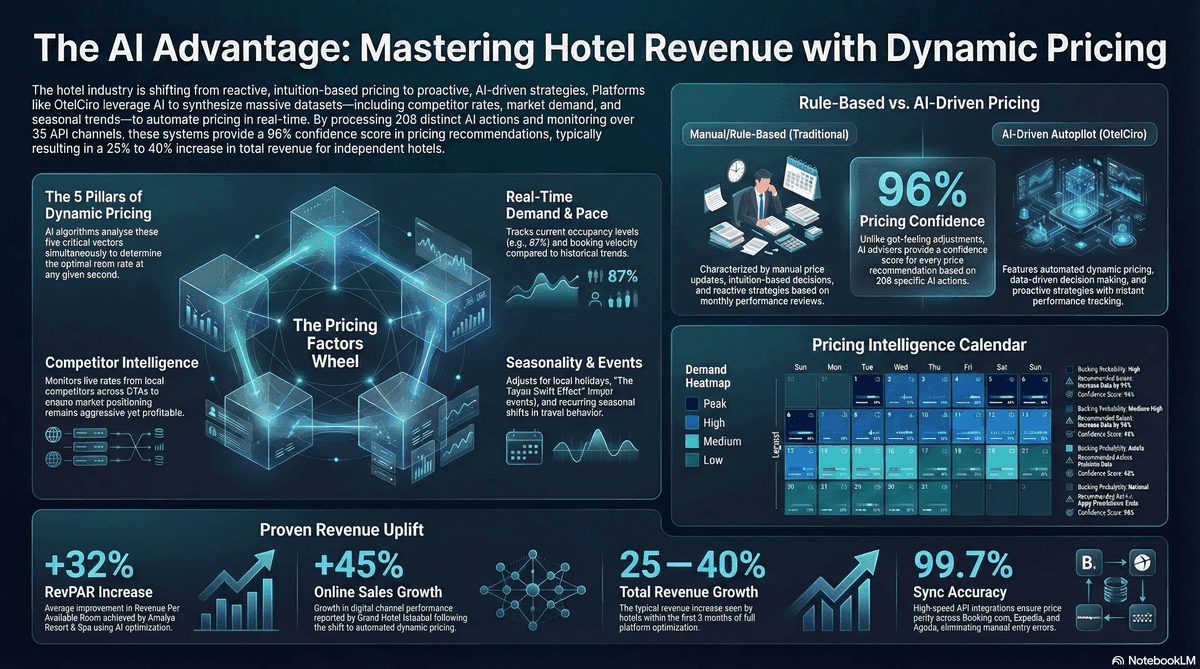
Manually managing a rate parity strategy is an extremely challenging process, especially for hotels selling on multiple channels. OtelCiro's AI-powered pricing engine monitors and optimizes your prices across all channels in real-time.
- Automatic price equalization: Define your channel-specific pricing rules once, and the system applies them automatically.
- Parity violation alerts: Receive instant notifications when there's a price inconsistency on any channel.
- Leverage DMA opportunities: Smartly manage your direct channel price advantage.
For more information on related topics, you can check out our articles Booking.com Visibility Booster Guide and Booking.com Algorithm Brain.
Related reading: Booking.com Connectivity Provider: Channel Manager Integration
Frequently Asked Questions
How does Booking.com detect rate parity violations? Booking.com uses automated price scanning bots to compare your prices across all channels 24/7. It also detects price differences through meta-search engines (Google Hotel Ads, Trivago). As the number of violations increases, so do the sanctions.
Is DMA valid in Turkey? DMA is not directly valid in Turkey. However, Booking.com's global policy updates and the flexibilities granted to hotels in Europe create indirect opportunities for Turkish hoteliers as well. Particularly, closed channel strategies can be implemented smoothly in Turkey.
How much lower should I keep my direct channel price? A direct channel price that is 5-10% lower than your Booking.com price provides an ideal balance. More aggressive discounts may trigger parity warnings.
Conclusion
Rate parity in 2026 should no longer be viewed as a restriction but as a strategic tool. Hotels that intelligently utilize the pricing freedom brought by the DMA can increase their direct channel revenues while maintaining OTA visibility. The key is to create a balanced, multi-layered pricing strategy and manage it with AI-powered tools.
Automate your rate parity strategy and maximize revenue from every channel with OtelCiro's sales and channel management module.
![How Booking.com Uses Machine Learning to Rank Hotels [2026]](https://cdn.sanity.io/images/1la98t0z/production/b5e42eae20b08b1a662436df1775c657f98f7871-2752x1536.jpg?w=1920&q=50&auto=format&fit=max)